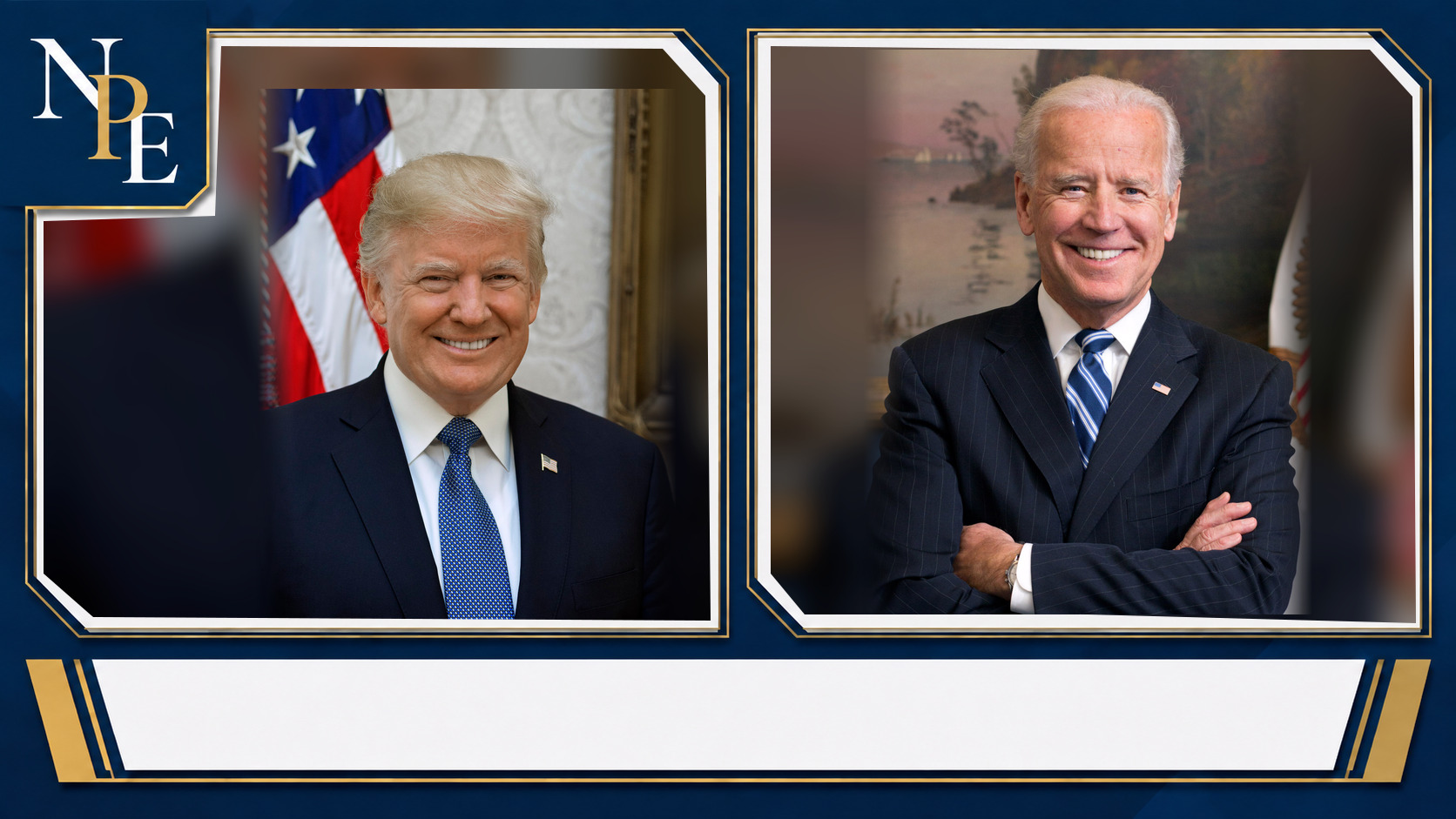
Trump’s argument that Biden is responsible for lingering economic strain has sharpened a familiar question for voters: when does a president inherit a problem, and when does the response become his own record? The answer is rarely as simple as a campaign message.
Donald Trump has blamed Joe Biden for a weak economy and still-high inflation, even though Biden has been out of office for more than 18 months. The dispute has revived questions about presidential accountability: whether Trump or Biden should be held responsible for current economic and inflation concerns.
Trump’s claims matter because inflation and economic anxiety are felt in daily life, from grocery bills and rent to job security and borrowing costs. They also put pressure on a basic political expectation: a president may inherit difficult conditions, but voters still judge the administration now in power by its response.
Trump’s argument centers on Biden
Trump’s position is that the economic problems Americans are experiencing did not start during his administration. As summarized in a Washington Post report on August 15, Trump said Biden left him with a weak economy and persistently high inflation, despite Trump’s earlier promise of a quick turnaround.
That case has an understandable political logic. Presidents enter office amid circumstances they did not create by themselves, including previous laws, budget choices, labor-market conditions and regulations. Global energy prices, business decisions, supply disruptions and consumer confidence can also affect the prices people pay and how secure they feel.
Inflation especially cannot be reduced to a single White House decision. A president does not directly set Federal Reserve interest rates, and price pressures can arise from developments well beyond Washington. Those limits apply to assessments of both Trump and Biden.
Inherited conditions are not a blank check
Recognizing that a president can inherit trouble does not settle the accountability question. A new administration also inherits the obligation to choose a response, advance policies, accept tradeoffs and explain how its approach will improve conditions.
There is no fixed point at which a predecessor’s influence disappears. Earlier decisions can continue to affect prices, employment and investment long after an administration ends. But the longer a president serves, the more voters can reasonably examine whether current policies are helping, hurting or failing to change the situation.
The more-than-18-month gap since Biden left office makes that test more pointed. By then, an administration has had time to establish priorities, pursue executive actions, negotiate with Congress, appoint officials and make a public case for its economic agenda.
Trump supporters may view his references to Biden as an accurate account of the conditions he inherited. Critics, meanwhile, argue that he is extending the transition period too far and avoiding responsibility when problems occur. The central factual issue is which outcomes remain tied to earlier decisions and which are shaped by choices being made now.
Why voters hear this personally
Economic language has particular political power because it connects quickly to household experience. Voters may measure the economy through the cost of food, housing, credit, or whether a paycheck goes as far as it once did.
That helps explain why an argument over responsibility can resonate beyond partisan debate. Saying a problem was inherited offers a straightforward explanation for public frustration. Yet it also raises a practical expectation: what will the current administration do, how long might improvement take, and what risks come with its plan?
A broad claim that a predecessor caused inflation or economic weakness does not by itself answer those questions. Any convincing case ultimately depends on specifics: policies, timing, measurable effects and the outside forces that no administration fully controls.
Credit and blame follow different rules
Presidents often claim credit for positive economic news even when several forces contributed to it. When conditions worsen, the same political incentives can encourage leaders to point toward Congress, global events, the Federal Reserve or prior administrations.
That pattern is not unique to Trump. But blame assignment has been a prominent feature of Trump’s public political style. A National Archives transcript from January 2020 records a similar argument during his first term.
At a White House event for the U.S.-China phase-one trade agreement, Trump said he did not blame China for the trade imbalance. Instead, he blamed “the people that stood here before me” and prior presidents.
The statement reflected a substantive point as well as a political one: trade relationships can develop over decades, and presidents can inherit them. Still, it illustrates the tension that arises when a leader presents successes as personal proof of leadership while framing disappointments as the failure of those no longer in office.
The presidency still owns the response
The phrase “The buck stops here,” associated with President Harry Truman’s desk sign, captures an enduring expectation of the office. It does not mean that one president causes every national problem. It means responsibility cannot be delegated away entirely.
For Trump, the dispute is not simply whether Biden-era decisions can still affect the economy. They can. The sharper question is whether that influence removes responsibility for Trump’s agenda, his administration’s economic choices and the promises made to voters.
Voters do not have to choose an all-or-nothing answer. They can distinguish between inherited pressures and an incumbent president’s response to those pressures. The evidence they weigh will include economic data, policy results, continuing outside pressures and whether the White House can connect its actions to real-world outcomes.
Trump’s attacks on Biden have therefore turned an inflation argument into a larger test of governing. The presidency has significant power to set priorities and shape the national agenda, but it does not control every economic outcome. The lasting accountability question is what a president does once the problem reaches his desk.
Leave a Reply