
Newt Gingrich’s assessment puts the midterm political fight at the center of his argument about the conflict with Iran. It is a partisan interpretation, but it spotlights the pressure that military campaigns can place on public support, energy prices and presidential power.
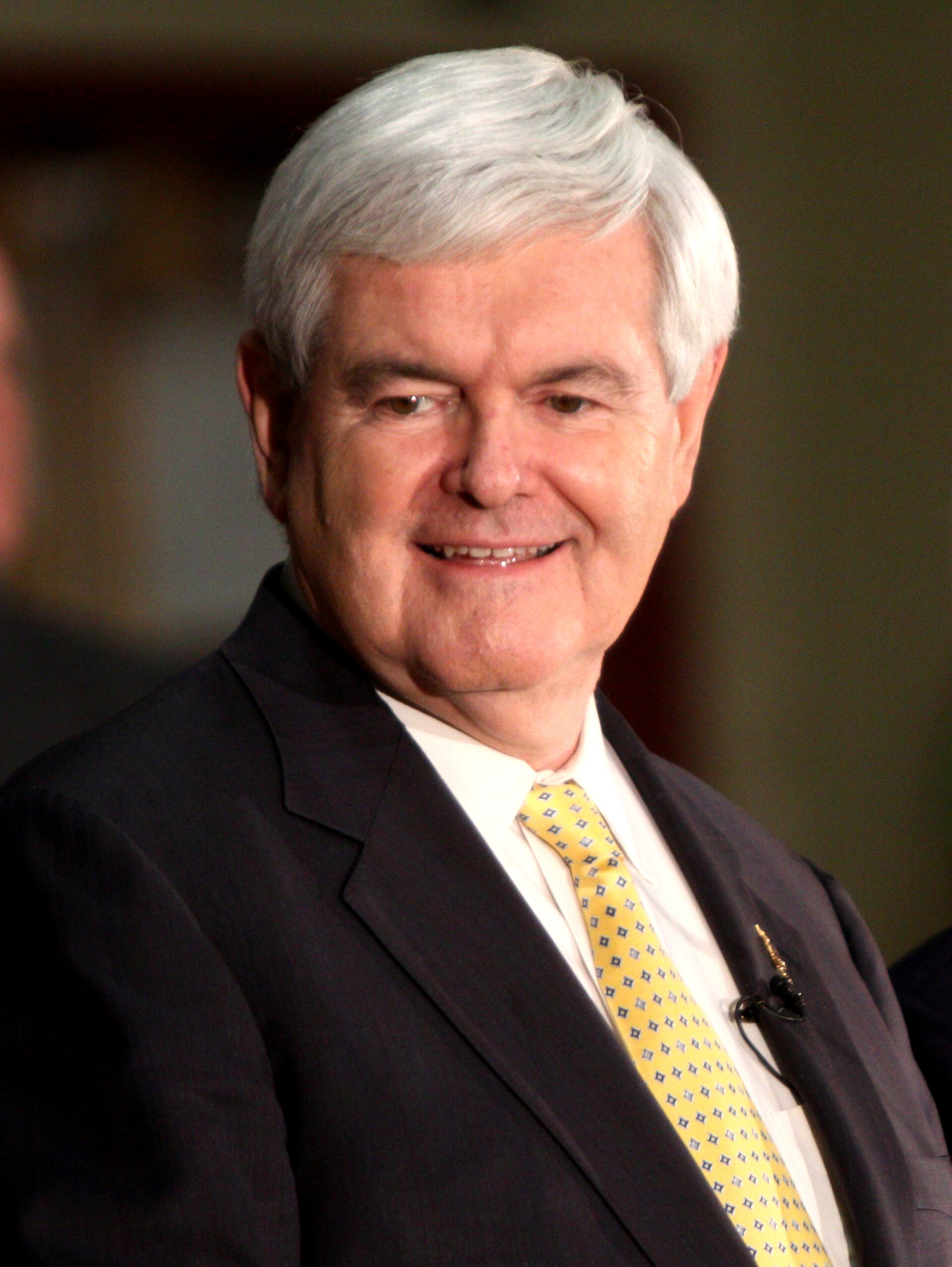
Iran is trying to outlast Donald Trump politically and could benefit if Democrats take control of the U.S. Congress, former House Speaker Newt Gingrich argued in a radio interview. Gingrich compared Iran’s approach to North Vietnam during the Vietnam War, saying Tehran is “trying to win in America politically” what it cannot win militarily.
His claim is an assessment, not evidence of a publicly documented Iranian plan. But it puts a sharp focus on the domestic stakes surrounding the Iran conflict: whether public dissatisfaction, higher fuel costs and congressional oversight could constrain Trump’s ability to sustain military pressure.
Gingrich’s case centers on political endurance
Speaking on John Catsimatidis’ Cats Roundtable, Gingrich said Iran’s central goal is survival rather than a conventional military victory over the United States. In his telling, Tehran is counting on a prolonged conflict to erode American support.
That distinction matters. A government facing a militarily stronger opponent may seek leverage through time, economic disruption, diplomacy and public opinion rather than through direct battlefield gains. Gingrich argued that Iran is attempting exactly that kind of strategy.
He said Iran could be looking toward a Democratic return to power in Congress, which he believes could produce investigations and political pressure on Trump. Gingrich’s theory is that such scrutiny would divert the president’s attention from his military objectives.
There is an important limit to the claim: Gingrich described what he believes Iran is calculating, rather than citing intelligence assessments or statements from Iranian officials showing that a congressional election strategy is guiding Tehran’s decisions.
Why North Vietnam is the comparison
Gingrich invoked North Vietnam’s experience in the Vietnam War to make a broader point about political resilience. He said North Vietnamese leaders understood they could not defeat the United States militarily but could benefit if American public support for the war weakened.
The comparison is designed to shift attention away from military hardware and toward the home front. In Gingrich’s framing, wars are sustained not only by battlefield operations but also by public consent, media coverage, congressional action and a president’s ability to hold together a governing coalition.
Vietnam remains a potent, and contentious, analogy in American politics. It captures the idea that a militarily powerful country can still face strategic limits when a conflict becomes unpopular or appears open-ended. At the same time, the history, scale, regional dynamics and military circumstances of Vietnam differ substantially from the current conflict described by Gingrich.
That makes the analogy more useful as a statement of Gingrich’s concern than as a direct historical match. It explains the political risk he sees, but it does not establish that Iran’s leaders are following an identical playbook.
The election argument behind the warning
Gingrich’s argument depends on a specific political scenario: Democrats gaining control of Congress in the upcoming midterm elections. A change in congressional control would not automatically end a military campaign, but it could alter the environment in which the White House operates.
Congress has oversight powers, control over appropriations and the ability to hold hearings. A Democratic majority could investigate the conduct, costs and legal basis of the Iran operation, seek more detailed administration briefings or press for limits on executive action.
Supporters of Gingrich’s view may see that prospect as leverage for Tehran, especially if a conflict is already producing visible economic costs or public frustration. They argue that adversaries can benefit from divisions inside the United States without needing to dictate the outcome of an election.
Critics would likely counter that congressional oversight is a normal feature of the U.S. system, not proof of foreign influence or a concession to an adversary. They may also argue that treating scrutiny as inherently harmful risks blurring the line between a strategic debate and a partisan campaign message.
Public fatigue is the pressure point
The source account says polling has found the Iran war unpopular, though it does not provide figures or identify the surveys. It also describes Trump’s approach as an air campaign rather than a large-scale ground invasion comparable to the Vietnam War.
That difference is significant. The level of U.S. casualties, the duration of operations, the scale of deployment and the direct effects on households all shape whether a public sees a military action as limited, necessary or unsustainable.
According to the account, Iran’s disruption in the Strait of Hormuz has affected oil flows and contributed to higher gasoline prices. Energy costs can turn a foreign-policy decision into an immediate kitchen-table concern, particularly during an election season.
Trump has said his objective is to prevent Iran’s Islamist government from obtaining a nuclear weapon. He has also argued that temporary pain at the gas pump is worth that goal. The political challenge is whether voters accept that trade-off if costs persist and the conflict shows no clear endpoint.
Military pressure and negotiation signals
The account describes the administration as maintaining pressure through a naval blockade and tightened sanctions while also pursuing what Trump has called “semi-negotiating” with Iran. It says a memorandum of understanding collapsed in July and that concerns over munitions supplies have affected decisions about a major renewed offensive.
Those details point to a familiar tension in coercive diplomacy. Military pressure may be intended to improve bargaining leverage, but prolonged pressure can carry costs of its own: depleted inventories, economic disruption, escalation risks and political backlash.
For Iran, endurance may be a strategic asset if its leaders believe the United States will eventually reduce pressure. For the Trump administration, sustaining a campaign means showing that the objectives remain achievable and that the costs are justified.
Neither side’s private calculations are fully public. Gingrich’s analysis assumes Tehran sees American political division as its best route to relief; the available account does not establish how Iranian officials themselves describe their strategy.
What remains unsettled
The immediate dispute is not simply whether Iran can withstand U.S. military pressure. It is whether domestic American politics will become the decisive arena, as Gingrich predicts.
A Democratic congressional victory could bring more oversight, but the scope and effect of that oversight would depend on election results, party priorities, legislation, public opinion and the state of the conflict at the time. It would not by itself determine U.S. policy toward Iran.
Gingrich’s North Vietnam comparison is likely to resonate with readers who view public division as a strategic vulnerability. Others will see it as an effort to frame legitimate debate over war powers, costs and strategy as a benefit to an adversary.
What is clear is that the Iran conflict, as described in the source account, is no longer only a question of military operations abroad. It is also a test of whether the White House can maintain public support and political room to act at home.
Leave a Reply