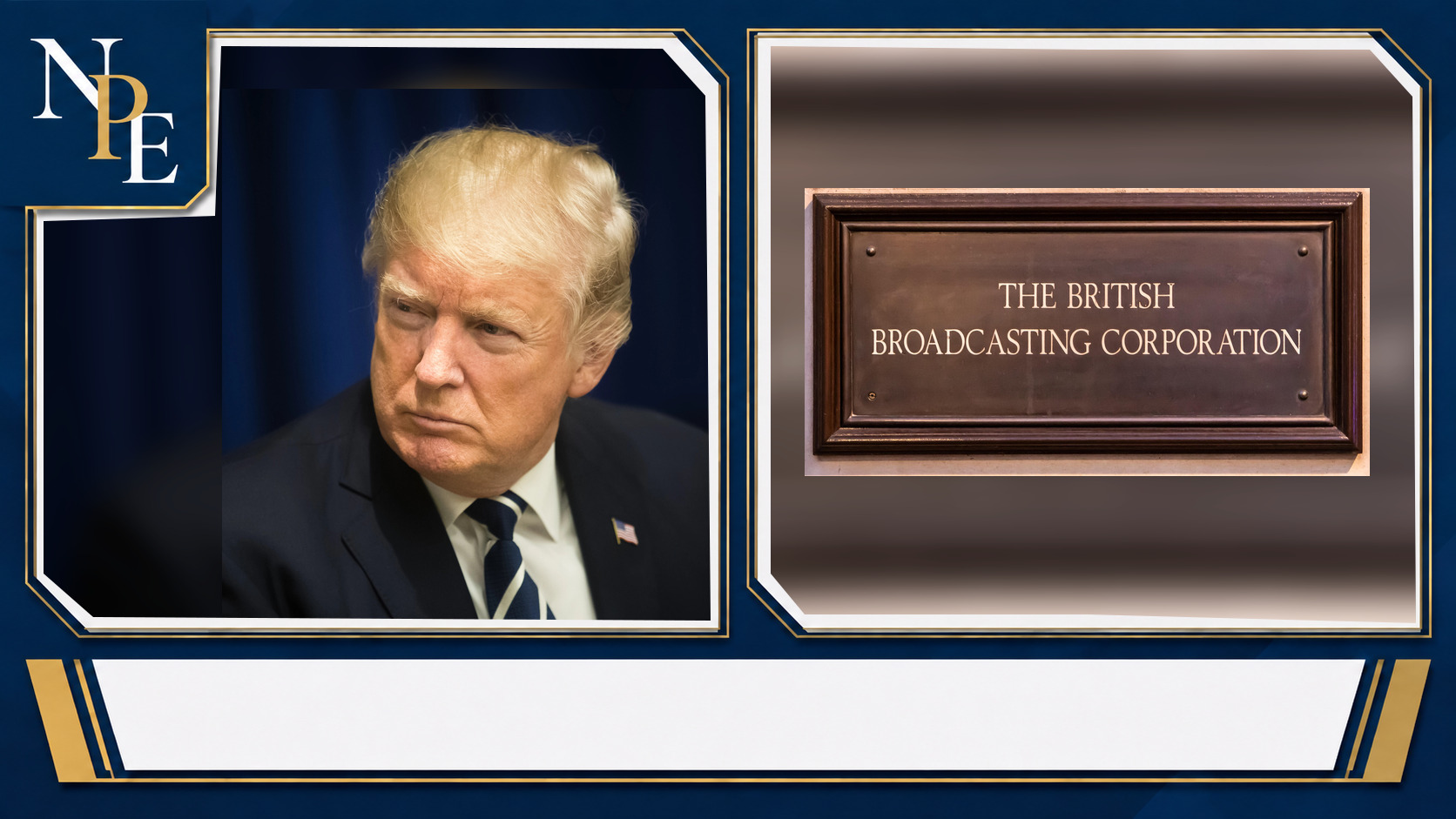
The fight over a disputed Panorama edit has moved into discovery, with the BBC arguing that three members of President Donald Trump’s family may have firsthand information about his January 6 speech. The court must still decide whether and how the subpoenas can be served.
The BBC sought subpoenas for Donald Trump Jr., Ivanka Trump and Jared Kushner, seeking documents and testimony from President Donald Trump’s family members as it defends against his $10 billion defamation lawsuit. The request is tied to a disputed Panorama episode that edited portions of Trump’s January 6, 2021, speech together.
The filings put the president’s relatives at the center of a case that has become a test of what the BBC must disclose—and what Trump must prove—to sustain a major claim against a news organization. The immediate question is not whether they will testify, but whether the court will permit the BBC’s proposed methods of serving subpoenas after attempted in-person delivery failed.
Why the BBC wants family evidence
The BBC’s lawyers argue that Donald Trump Jr., Ivanka Trump and Jared Kushner have “personal knowledge” relevant to Trump’s defamation claim. Their requested evidence concerns Trump’s intentions in preparing and delivering the speech outside the U.S. Capitol before the riot.
According to the court filing, Donald Trump Jr. and Ivanka Trump were present as their father revised and delivered the remarks. The BBC also says Kushner drafted a proposed statement that would have condemned violence.
That does not mean the family members have been accused of wrongdoing. It means the BBC believes their testimony or records could help establish facts surrounding the speech, its preparation and the broader issues raised in the lawsuit.
In civil litigation, parties can seek information from people who are not themselves plaintiffs or defendants when they can show the material is relevant and proportional to the issues in dispute. The court can limit, deny or narrow such requests.
The disputed Panorama edit
Trump sued the BBC and related entities last December over a 2024 Panorama program. The lawsuit alleges that the broadcaster intentionally and deceptively edited two separate sections of his January 6, 2021, speech to make it appear he had issued a direct call for violence.
The BBC has apologized for what it described as an editing error that gave that mistaken impression. But an apology does not amount to an admission that the legal standard for defamation has been met.
The broadcaster has asked the court to dismiss the suit, arguing that the program was not defamatory under the applicable legal standard and was not made available through its U.S. platforms. The distinction matters because a flawed edit can create serious editorial and reputational consequences while still falling short of a successful defamation claim in court.
Trump’s legal team, in a statement reported by the BBC, called the subpoena effort an attempt to harass Trump, his family and supporters through the deposition process. It said the broadcaster was trying to divert attention from what the team views as the BBC’s liability.
Service attempts became part of case
The BBC is not merely asking for subpoenas; it is asking the court to permit service by email and certified mail. Its filing says representatives tried unsuccessfully in May to serve the documents in person.
One attempt involved Ivanka Trump and Kushner’s Florida home, where the filing says a process server was refused entry at a police checkpoint. The filing says the Secret Service later indicated it could not accept the subpoenas.
For Donald Trump Jr., the BBC says a representative went to Trump Tower in New York and was told the person who normally accepted such documents might be at lunch. A second attempt, two days later, reportedly brought word that the legal department was not present.
Those accounts are allegations in the BBC’s court filing, not findings by a judge. Still, they explain why the broadcaster is seeking alternatives to hand delivery. A court’s approval of alternate service would not decide whether the requested testimony is ultimately admissible or useful at trial.
Discovery is widening the dispute
The subpoena fight is one part of the discovery phase, when each side seeks records and testimony before trial. The BBC has also sought financial information tied to Trump’s claim that the program harmed his business interests.
Earlier this month, the judge granted Trump’s request to delay the production of some financial records. Trump’s legal team argued that disclosure would cause irreparable harm.
Financial evidence can be crucial in a defamation case when a plaintiff seeks substantial damages. A claimant generally must connect the allegedly false statement to actual reputational or economic harm, though the exact burden depends on the claims and governing law.
Another complication emerged last month, when Trump’s lawyers acknowledged they had no evidence that the documentary had been available in the United States through BritBox, BBC.com, BBC Select or U.S. broadcasters, despite earlier assertions about distribution. Trump also agreed to drop the BBC’s commercial arm, BBC Studios, after the company argued it had no role in making or producing the documentary.
An apology is not the finish line
The case illustrates a tension familiar in media law: a newsroom can concede a serious editorial mistake while disputing that the mistake justifies damages on the scale sought by the plaintiff.
Trump’s side frames the edit as intentional defamation. The BBC’s position is that it has apologized but that the program did not meet the legal threshold for defamation. The competing accounts put focus on intent, publication, factual context and proof of damage.
The subpoena request adds a more personal layer. If the court permits service and the subpoenas survive objections, the case could produce testimony from relatives who were close to Trump during a moment central to the broadcast. If the court restricts the requests, the BBC will need to build its defense from other evidence.
Neither result would resolve the larger lawsuit on its own. Discovery disputes often decide what information reaches the record, but they are separate from a jury or judge deciding whether defamation occurred.
What comes before the 2027 trial
A trial is scheduled for February 2027 if the case proceeds that far. Before then, the court may rule on the BBC’s request for alternate service, disputes over the scope of family-member evidence, financial-document production and the broadcaster’s bid to dismiss the case.
The BBC press office declined to comment on the subpoena issue, according to its report. Trump’s legal team has publicly criticized the request, while the BBC’s court filings maintain that the three relatives’ knowledge is relevant.
For now, the most significant development is procedural: the BBC is trying to obtain evidence from Donald Trump Jr., Ivanka Trump and Jared Kushner to defend itself against Donald Trump’s $10 billion lawsuit. Whether those subpoenas are served, enforced or narrowed will shape the next phase of a high-profile dispute over journalism, editing and legal accountability.
Leave a Reply