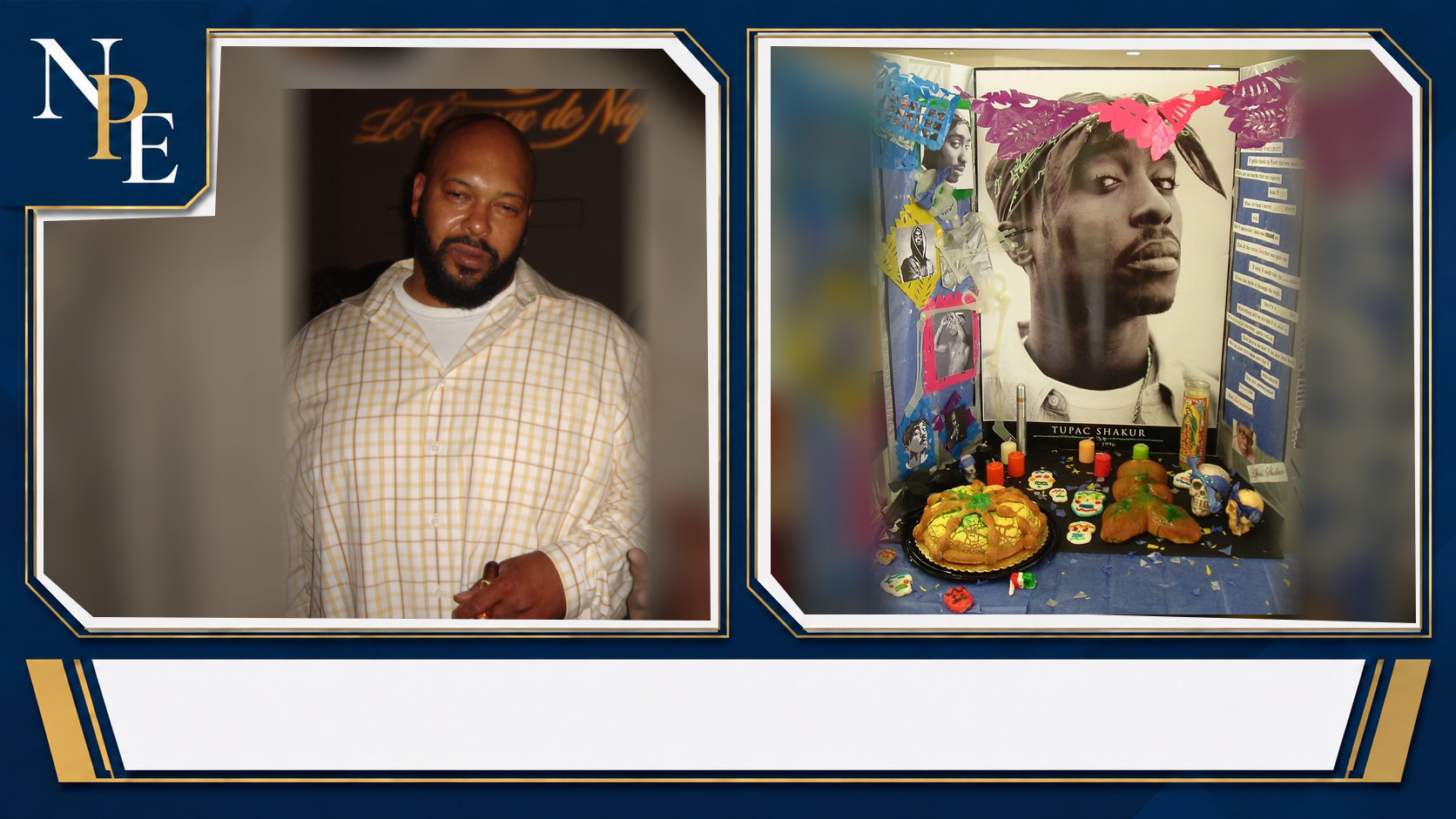
The former Death Row Records chief survived the shooting that killed Tupac Shakur, making him a central figure in the long-running case. But his past refusal to testify could complicate a closely watched trial.
Suge Knight has spoken out ahead of the trial of the suspect in Tupac Shakur’s murder: Duane “Keffe D” Davis, who faces a murder charge in the 1996 Las Vegas shooting. Knight, who was driving with Shakur when both men were shot, has previously said he would not testify, even though his name appears on the prosecution’s potential witness list for the trial set to begin Aug. 10.
The trial concerns the murder of Tupac Shakur, one of music’s most enduring unsolved killings. Nearly 30 years after the shooting, the case will test how prosecutors use old statements, witnesses and a disputed account of what happened that night.
Knight’s connection to the shooting
Knight was not a distant observer of Shakur’s final night. The former Death Row Records co-founder was behind the wheel of the BMW carrying Shakur on Sept. 7, 1996, when a vehicle pulled alongside them near the Las Vegas Strip and gunfire erupted.

Shakur was hit multiple times and died several days later. Knight was wounded but survived. That places him among the few living people directly tied to the immediate aftermath of the attack, though being named as a potential witness does not mean he will necessarily take the stand.
USA Today reported that Knight was included in a supplemental prosecution witness list containing more than 200 names. Such lists can be broad: prosecutors may identify people they could call, not people guaranteed to give testimony.
Knight’s presence also carries unavoidable historical weight. Shakur was signed to Death Row at the time, and Knight was the label’s high-profile chief during the era when the rivalry between Death Row and New York’s Bad Boy Records became a defining storyline in hip-hop.
What Knight has said publicly
The key point in Knight’s public position is his resistance to testifying. In a 2023 interview with TMZ, he said he would not testify in the case, adding that he was “1000%” not going to appear.
That statement is not the same as a legal determination about whether he can be compelled to testify. Courts can issue subpoenas, and witnesses can challenge or respond to them through attorneys. The available reporting does not establish whether Knight has been subpoenaed for this trial or whether he has reached any agreement with prosecutors.
Knight is serving a 28-year California prison sentence after pleading no contest to voluntary manslaughter in a separate 2015 hit-and-run case. His incarceration is another practical issue surrounding any potential court appearance, whether in person or by another court-approved method.
His past comments should also be read narrowly. They describe his willingness to participate, not the full universe of evidence prosecutors may seek to present. A witness list can include people whose prior testimony, recorded statements or limited factual knowledge becomes relevant even if they do not offer dramatic live testimony.
The charge against Duane Davis
Davis has pleaded not guilty to one count of murder with a deadly weapon, with an allegation that the crime was committed to promote, further or assist a criminal gang. He is the only person charged in Shakur’s death.
Prosecutors allege Davis supplied the gun and directed members of the South Side Compton Crips to shoot from the car involved in the attack. Davis has long been associated with accounts of the shooting through media interviews and his 2019 memoir, but allegations and past statements will have to be tested under courtroom rules.
His defense has challenged the use of material tied to the memoir, arguing that the involvement of a co-author could affect how Davis’ words are understood. Prosecutors have argued that his statements are admissible. The trial is where a judge and jury will confront those competing positions.
The distinction matters. Public discussion of the killing has been shaped for decades by documentaries, books, police interviews and rumor. A criminal trial has a higher bar: the state must prove its case beyond a reasonable doubt, and Davis is presumed innocent unless and until a jury finds otherwise.
A case shaped by old rivalries
The shooting followed a confrontation earlier that evening at the MGM Grand involving Shakur, Knight and people connected to the Bloods, according to accounts cited in reporting on the case. The confrontation involved a relative of Davis, who was linked to the rival South Side Compton Crips.
Investigators have described retaliation as part of their theory of the crime. But the case also sits within the larger and often oversimplified story of the 1990s East Coast-West Coast rap feud, gang affiliations and the business rivalry surrounding Death Row and Bad Boy.
That history helps explain why the witness list reportedly includes people from several corners of that world: Shakur’s family members, former Death Row associates, people linked to Bad Boy, law enforcement figures and others who may have knowledge of the events or relationships at issue.
It does not, by itself, settle criminal responsibility. Claims involving prominent names have circulated for years, including allegations concerning Sean “Diddy” Combs. Combs has denied involvement in Shakur’s death, and Las Vegas police have said he has never been a suspect, according to USA Today.
Why the witness list matters
A potential witness list offers a preview of the prosecution’s possible path, but it is not a verdict map. Some listed people may never be called. Others may be used to establish only a small but important detail, such as who was present, what was said, or how key relationships developed.
Knight could be particularly significant because he was in the car with Shakur. At the same time, the passage of nearly three decades creates obvious challenges: memories fade, witnesses become unavailable, and prior statements can become central points of dispute.
The defense is likely to scrutinize the reliability and motivation of any witness whose account changed over time or emerged in media settings. Prosecutors, meanwhile, will seek to connect physical evidence, witness testimony and Davis’ own alleged statements into a coherent narrative.
For a case that has generated endless speculation, the trial’s value may be its limits. It will not answer every theory surrounding Shakur’s death. It is designed to answer a narrower legal question: whether the evidence proves Davis committed the charged crime.
What remains unresolved before trial
It remains unclear whether Knight will actually testify and, if he does, what precise subjects prosecutors would ask him to address. His inclusion on a list makes his role possible, not certain.
The eventual witness lineup could change as the court rules on objections, scheduling and evidentiary disputes. The handling of Davis’ interviews and memoir will be closely watched because those materials may shape how directly prosecutors can place him within their account of the shooting.
For Shakur’s family, fans and the people who have followed the case since 1996, the proceedings represent a rare move from cultural mythology toward a formal legal record. Knight’s stated reluctance underscores how much of that record may still depend on evidence beyond the people most visibly tied to the night Shakur was killed.
Leave a Reply