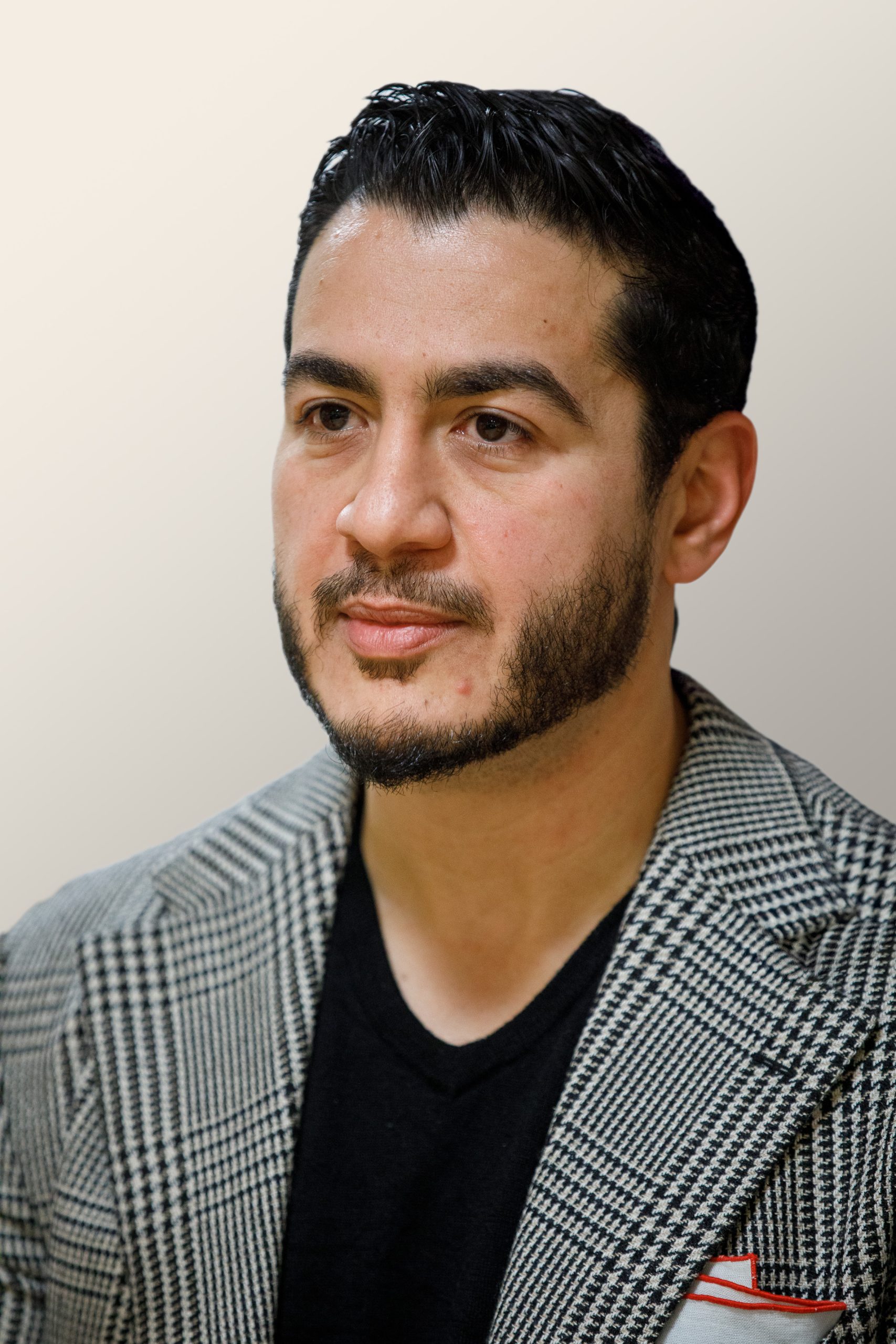
The exchange is more than a viral insult contest: it previews how El-Sayed plans to confront Trump’s attacks as Michigan’s Senate campaign moves toward November. The candidate is pairing pointed responses with a broader argument about affordability and power.
Abdul El-Sayed responded to Donald Trump after Trump called him “full of s—,” delivering a crude Oval Office comeback that implied Trump had soiled himself there. El-Sayed made the remark to Sky News after Trump’s criticism, turning the president’s insult back on him as Michigan’s newly chosen Democratic Senate nominee prepares for a consequential November race.
The exchange matters because it offers an early look at El-Sayed’s approach to a campaign likely to feature sharp attacks on his politics, identity and public profile. Rather than sidestep Trump’s language, El-Sayed answered in kind, then continued to frame the contest around household costs and economic inequality.
Trump’s insult set off the response
According to reporting by The Guardian, Trump used a speech Thursday to call El-Sayed a communist and say he was “full of shit.” The crowd responded with cheers.

Asked by Sky News about that remark, El-Sayed replied: “At least I don’t let mine go in the middle of the Oval Office.” The line was a taunt, not substantiated evidence of any event in the Oval Office. Its point was to return Trump’s vulgar phrasing with an even more provocative personal jab.
That distinction is important amid the speed of political clips and headlines. El-Sayed did not present proof for a literal allegation; he used a crude rhetorical comeback in response to a crude attack from the president.
A Michigan Senate race takes shape
El-Sayed, an epidemiologist, won the Democratic primary for the US Senate seat in Michigan, setting up a general-election contest against former Republican Representative Mike Rogers.
Michigan is a pivotal state with a recent history of close, shifting presidential results. It backed Barack Obama in 2008 and 2012, Donald Trump in 2016, Joe Biden in 2020, and Trump again in 2024, according to The Guardian.
For Democrats, the race carries national significance because a Michigan win could help the party’s effort to regain control of the Senate. For Republicans, Rogers has an opening to argue that El-Sayed is too far left for the state.
If elected, El-Sayed would become the first Muslim US senator. That prospect gives the campaign historic weight while also making the rhetoric around him likely to receive heightened scrutiny.
El-Sayed embraces the contrast
Trump also shared a Truth Social post contrasting a photo of himself and first lady Melania Trump with an image of El-Sayed and his wife, Sarah Jukaku, who wears a hijab. The caption described the images as “Two VERY DIFFERENT America’s.”
El-Sayed did not reject the premise when CNN asked him about it. He said Trump was right that the candidates represented different versions of the country, then drew his contrast around who benefits from political power.
His argument was that Trump’s vision leaves voters asking whether they can afford gas and groceries, while El-Sayed’s campaign describes itself as focused on families’ ability to meet basic costs. That message gives the insult exchange a political function: it reinforces a larger contrast he wants voters to associate with the race.
The attacks will not stay personal
Republicans have described El-Sayed as “the most radical Senate candidate in America,” while Trump has repeatedly used his full name, Abdulrahman Mohamed El-Sayed. El-Sayed has said such tactics recall the way opponents emphasized Barack Obama’s middle name, Hussein.
El-Sayed ran to the left of Haley Stevens in the Democratic primary, but he is not a member of the Democratic Socialists of America. He has described himself as a capitalist who wants capitalism to work better.
That leaves both sides with clear lines of attack. Republicans can focus on ideology and portray El-Sayed as outside Michigan’s political mainstream. El-Sayed can argue that labels such as “communist” are designed to distract from a debate over prices, healthcare, wages and the influence of wealthy interests.
Obama’s call adds another signal
Former President Barack Obama spoke with El-Sayed after his primary victory, an early sign that the nominee may have access to a prominent Michigan political voice. El-Sayed told NBC News the discussion focused on what it would take to win.
Obama also spoke with Stevens, who urged him to campaign for Democrats in Michigan, Politico reported. Whether Obama will actively campaign for El-Sayed remains unclear, but his involvement could matter in a state where his political record is unusually strong.
For now, the Oval Office exchange is a vivid example of the campaign’s emerging style. Trump is using blunt ideological attacks; El-Sayed is showing he is willing to answer with blunt language of his own, while trying to steer the larger conversation back to what Michigan households can afford.
The bigger test is still ahead
Viral lines can energize supporters, frustrate opponents and dominate a news cycle. They do not settle a Senate race. El-Sayed will still need to introduce himself to voters beyond the primary electorate and explain how his policy agenda would affect everyday life.
Rogers, meanwhile, will seek to make the election a referendum on El-Sayed’s ideological record and on the national Democratic brand. The eventual contest is likely to feature both personal confrontation and substantive disputes over the economy, healthcare and who gets to define Michigan’s political center.
El-Sayed’s retort made clear that he does not intend to absorb Trump’s attacks quietly. The next question is whether that confrontational style helps his campaign keep attention on its economic message—or allows the race to become defined by its harshest exchanges.
Leave a Reply