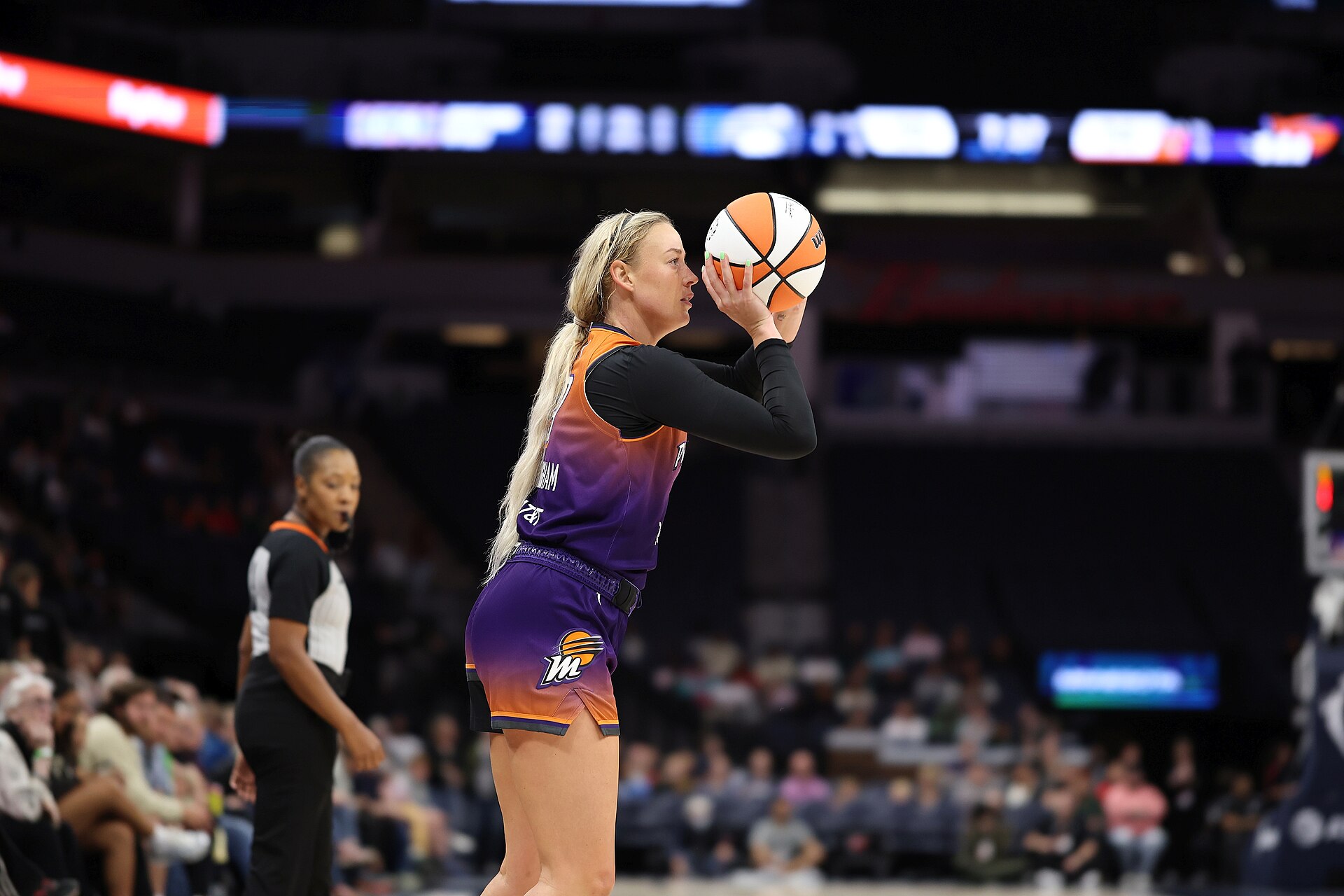
The replay did not end the argument. It raised a familiar question for basketball fans: when does hard contact become flagrant?
Sophie Cunningham takes an elbow to the face in Minnesota, and the WNBA officials’ review of Nia Coffey’s contact is now the flashpoint. The play, circulated in a “Watch Sophie Cunningham” clip on MSN via Fadeaway World, was reviewed by referees, but the referees’ decision sparked debate because many viewers expected harsher punishment for above-the-shoulder contact.
The issue is not only whether Coffey meant to hit Cunningham. It is whether the reviewed contact met the WNBA’s threshold for a flagrant foul, and whether fans can predict how officials will handle similar elbows from game to game.
The elbow everyone is debating
The sequence at the center of the argument shows Cunningham absorbing contact to the face from Coffey during live action. The clip spread quickly because it had the ingredients that make officiating debates explode online: a visible blow, a player reacting to it, and a review that did not satisfy a large chunk of the audience.
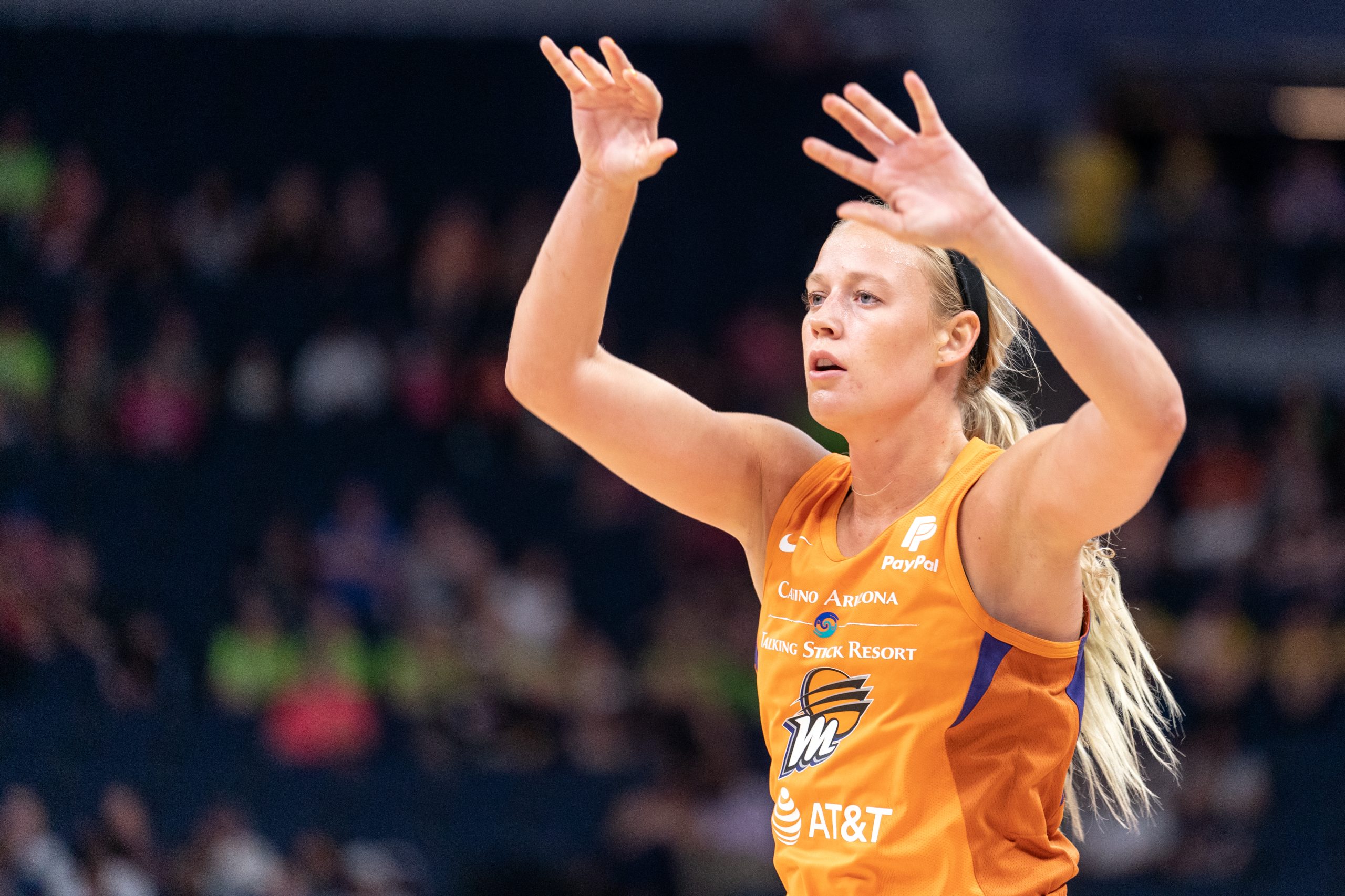
Fadeaway World’s MSN-distributed report framed the moment around Cunningham taking the elbow and the officials’ decision afterward. The public reaction followed a familiar pattern. Fans who saw direct contact to the head wanted an upgrade. Others argued that not every elbow to the face is automatically a flagrant act.
That distinction matters. Basketball is full of accidental contact, especially when players are fighting for position, turning through pressure or clearing space in traffic. The harder question is when that contact crosses from incidental to unnecessary.
Why the ruling bothered fans
For many viewers, the slow-motion replay made the case feel simple: elbow, face, review, flagrant. That is the emotional logic of the reaction. Head and face contact looks dangerous, and fans tend to expect officials to treat it differently from routine body contact.
Officials, though, are not supposed to rule only from the result of the contact. They weigh the action that created it. Was there a windup? Was the elbow part of a natural basketball move? Did the player extend into an opponent? Was the contact unnecessary, excessive or both?
That is where debate starts. If Coffey’s movement was viewed as a normal play that resulted in accidental contact, officials had room to keep the penalty lower. If viewers saw the elbow as avoidable or forceful above the shoulders, they saw the same replay and reached the opposite conclusion.
The gap between those two readings is why a reviewed play can still leave people angry. Replay can clarify what happened. It does not always settle how severely the rulebook should treat it.
What officials are weighing
Flagrant-foul reviews are not supposed to be popularity contests. The standard generally turns on whether contact is unnecessary and whether it rises to an excessive level. A Flagrant 1 typically signals unnecessary contact. A Flagrant 2 means unnecessary and excessive contact, with ejection attached.
Above-the-shoulder contact usually receives extra scrutiny because it carries greater injury risk. But it is not a simple automatic trigger. Referees still judge the body movement, the player’s control, the angle of contact and the game context.
That is why two elbow plays can look similar in a replay clip and produce different punishments. A player swinging through with force after a whistle may be treated differently from a player pivoting in traffic. A deliberate extension is different from incidental contact created by bodies converging.
A separate Associated Press report on an NBA playoff elbow earlier this year showed how consequential those judgments can be. In that case, officials reviewed Victor Wembanyama’s elbow to Minnesota’s Naz Reid, upgraded it to a Flagrant 2 and ejected him; AP later reported the NBA did not impose further discipline. Different league, different play, but the example underscores the same principle: the review decision carries real weight.
Cunningham’s profile shapes reaction
Cunningham is not a neutral figure in WNBA discourse. She plays with visible edge, embraces physicality and often becomes part of the emotional temperature of a game. That can cut both ways when a controversial play involves her.
Supporters see the elbow as another example of a tough guard absorbing contact without getting the whistle they believe she deserves. Critics may be less sympathetic because Cunningham herself is known for playing with contact and attitude.
Neither reaction should decide the call. But player reputation does influence how fans process a clip. A hard-nosed player taking a shot to the face creates a different online conversation than a quieter star being hit in the same way.
That is part of the WNBA’s current reality. With more attention on regular-season moments, every whistle involving recognizable players is turned into a referendum on fairness, star treatment and league consistency.
The consistency problem is bigger
The WNBA’s officiating debate is not new, but the visibility of the league has changed the stakes. More fans are watching, clipping and slowing down plays that might have passed with less national scrutiny a few years ago.
That attention is good for the league, but it also exposes every gray area. Physical defense is part of the product. So is player safety. Officials are being asked to protect players without draining games of intensity, and that balance is rarely clean.
The Cunningham-Coffey sequence lands in that messy middle. One side wants a stronger deterrent for elbows to the face. The other worries that punishing every awkward collision like a flagrant would make normal basketball impossible to officiate.
The best solution is not necessarily harsher calls across the board. It is clearer consistency. Fans can accept tough rulings more easily when similar plays are treated similarly and when the explanation matches what the replay appears to show.
What remains unclear
The immediate question is whether the WNBA will say anything more about the play. Leagues can review controversial sequences after games, but not every review leads to public discipline, an explanation or a changed ruling.
Without a league statement, the on-court decision remains the practical answer, even if the debate keeps moving. That leaves fans comparing this elbow to other reviewed contact and trying to reverse-engineer the standard from scattered examples.
For Cunningham, the moment is another physical flashpoint in a season where WNBA contact has been dissected constantly. For Coffey, the debate turns on how people interpret her movement and intent. For officials, it is another reminder that replay does not protect them from criticism when the rule itself leaves room for judgment.
The clean takeaway is this: the controversy is not just that Cunningham was hit in the face. It is that officials reviewed the play and still landed on a decision many fans did not understand. Until the WNBA makes those thresholds feel clearer, the next elbow will spark the same argument all over again.
Leave a Reply