Cunningham has defended her view that transgender athletes should be barred from women’s sports. The response showed how quickly that argument now moves from policy fights to courts, locker rooms and WNBA culture.
A WNBA coach responded to Sophie Cunningham’s anti-trans comments with a visible pro-trans gesture, according to a HuffPost report that circulated on MSN, after the Indiana Fever guard addressed transgender athletes in women’s sports. The coach made a pro-trans gesture by wearing a pro-trans shirt, turning a policy argument into a public sideline statement.
The response was tied to the debate over transgender athletes in women’s sports, where Cunningham has said it is “common sense” to keep trans athletes out of women’s competition. That is why the moment traveled: it was less a long rebuttal than a simple, highly readable signal.
A shirt became the rebuttal
The reason the gesture cut through is that it did not require a press conference. A WNBA coach, facing a league already comfortable with Pride nights and social-justice messaging, answered Cunningham’s remarks with visible pro-trans support rather than a point-by-point argument.
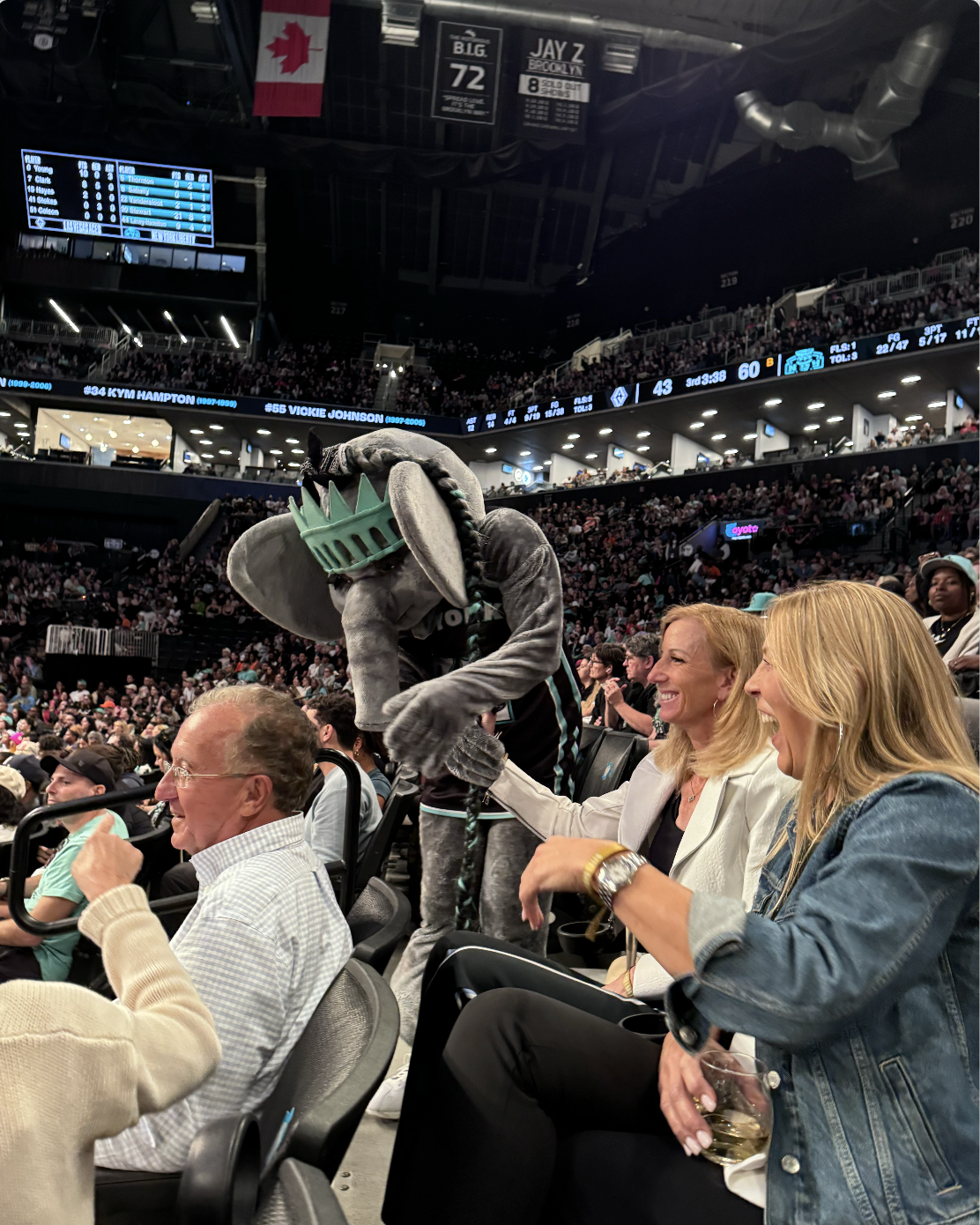
That is the kind of response sports culture understands instantly. Jerseys, shoes, warmup tops and sideline clothing have long carried meaning in basketball. A shirt can be a message, a boundary and a challenge all at once.
The headline version of the moment was that a WNBA coach “dunks” on Sophie Cunningham’s anti-trans remarks. The more useful reading is simpler: someone inside the WNBA ecosystem publicly signaled that transgender people belong in the conversation, not just as an abstract policy category.
What Cunningham said
Cunningham’s comments became news after an ESPN article quoted her saying she wanted to “protect young girls in the locker room” and that girls and women “shouldn’t have to go against biological men,” according to The Athletic.
She did not back away when asked about the comments before the Fever’s 123-88 win over the Connecticut Sun. “I said what I said. I think it’s kind of common sense,” Cunningham said, according to The Athletic. She added that she would “always believe” in that position and framed it as protecting children and girls.
Cunningham also said she is “not a very political person,” but felt her morals pushed her to speak. She argued that her view should not be read simply as a partisan label and said she had “never once stated” that she hated the trans community.
That distinction is central to how supporters of restrictions often frame the issue: they describe their position as a defense of fairness, safety or Title IX rather than hostility toward transgender people. Critics hear something different. They argue that blanket exclusion casts trans athletes as threats and makes already-vulnerable people less welcome in sports.
The Fever drew a line
The Indiana Fever did not endorse Cunningham’s comments. The franchise released a statement after her pregame remarks emphasizing that players have their own perspectives and that the organization is committed to welcoming fans from every background, according to The Athletic.
That statement matters because teams often have to separate an athlete’s personal speech from the values a franchise wants to project. The Fever can support a player’s right to speak while also telling LGBTQ+ fans that they are not being pushed out of the building.
It is also a practical business issue. WNBA teams have spent years cultivating inclusive fan communities, including Pride nights and outreach to LGBTQ+ supporters. A player’s comments can land not just as a sports opinion, but as a test of whether those communities feel protected when the topic gets uncomfortable.
Why this lands in the WNBA
The WNBA is not just another league in this debate. Its players and coaches have often been more openly engaged on social issues than many peers in men’s professional sports. That history raises expectations when questions involving gender, sexuality and civil rights enter the arena.
That does not mean everyone in the league agrees. Cunningham’s remarks show that women’s sports are not politically uniform, even inside leagues with strong LGBTQ+ fan bases. The same locker room can include players who view the issue through fairness, religion, law, personal experience or solidarity with transgender people.
The coach’s pro-trans gesture stood out because it was not an official league policy. It was a cultural response. In a league where visibility carries weight, a sideline statement can tell fans and players where at least one prominent figure stands.
It also placed pressure back on institutions. If athletes and coaches are going to speak publicly, teams and leagues have to decide how much clarity they owe fans, sponsors and players about inclusion and eligibility.
The bigger fight is legal
The WNBA moment is unfolding inside a much larger national fight over transgender participation in sports. The Athletic noted that the Supreme Court recently upheld individual state bans on transgender athletes competing alongside cisgender athletes. It also cited President Donald Trump’s executive order aimed at blocking trans athletes from girls’ and women’s sports.
Those legal and political moves have made the issue feel unavoidable, even in professional leagues where the day-to-day eligibility questions may be different from youth, school and college sports. Arguments that begin in state legislatures often end up shaping how athletes talk, how teams message and how fans interpret everything.
Supporters of bans say women’s sports require sex-based categories to preserve fair competition and opportunities created under Title IX. Opponents say many restrictions are overly broad, target a small number of athletes and invite surveillance of bodies that can harm cisgender and transgender girls alike.
Both sides frequently use the language of protection. The conflict is over who is being protected, from what, and at whose expense.
What remains unresolved
The coach’s shirt did not settle the policy debate, and Cunningham’s comments did not define the WNBA’s position. What the exchange did was reveal how little room there is for neutrality when public figures discuss transgender athletes.
There are still unanswered questions about how leagues should write eligibility rules, how those rules should differ by age and level of competition, and how teams should respond when players make statements that some fans see as discriminatory and others see as honest.
For Cunningham, the likely fallout is continued scrutiny of her words as much as her play. For the Fever, the challenge is maintaining a welcoming identity while one of their guards takes a public stance that many LGBTQ+ advocates reject.
For the WNBA coach who answered with a pro-trans gesture, the message was deliberately compact. In a debate filled with court rulings, executive orders and loaded phrases, a shirt did what a statement sometimes cannot: it made the response impossible to miss.
Leave a Reply