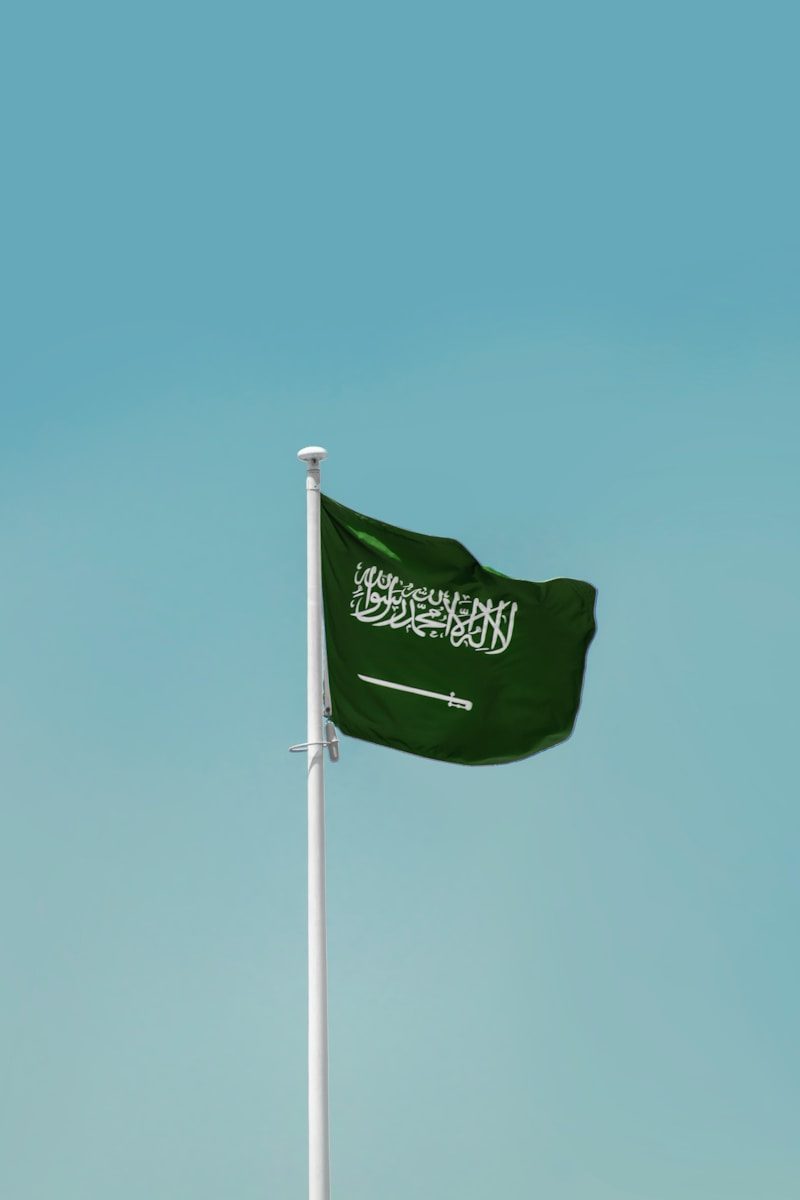
Riyadh has not publicly declared war on Iran, but reported U.S. access to King Fahd Air Base could make Saudi territory more central to a widening conflict.
Saudi Arabia’s reported agreement to give U.S. forces access to King Fahd Air Base places Riyadh in a risky middle ground: short of a formal declaration of war, but closer to direct involvement in the U.S.-Iran conflict. Bloomberg, citing a Wall Street Journal report based on people familiar with the matter, said the access followed Iranian attacks on U.S. forces and U.S.-used facilities in the region.
The public record still leaves a critical distinction intact. Saudi Arabia has not publicly declared war on Iran, and available reporting does not establish that Saudi forces are carrying out offensive missions against Tehran. The significance is that military access, logistics and air-defense cooperation can change the shape of a conflict even without a formal war announcement.
Saudi Arabia is not publicly at war
The phrase that Saudi Arabia is joining the war goes beyond what has been publicly confirmed. A government can host foreign troops, defend its airspace, share intelligence or permit access to facilities without formally becoming a belligerent in the same way as a country conducting its own offensive strikes.
That distinction matters for Riyadh, Washington and Tehran. Saudi leaders may try to keep any role limited to access arrangements or defensive measures. The United States may see that support as necessary to protect forces and sustain operations. Iran could view Gulf facilities that support U.S. activity as part of the battlefield.
Key details remain unclear in public reporting, including the scope of any U.S. access, whether it covers combat aircraft, whether Saudi officials set mission limits, and whether the arrangement is temporary. Those gaps are part of the risk: ambiguity can give governments flexibility, but it can also make miscalculation more likely.
The Prince Sultan strike changed the pressure
The reported King Fahd access came after attacks on U.S. forces and U.S.-used installations. Associated Press reporting carried by PBS said Iran fired six ballistic missiles and 29 drones at Prince Sultan Air Base in Saudi Arabia, an installation operated by the Royal Saudi Air Force and used by U.S. troops.
That report said at least 15 troops were injured, including five seriously, according to people briefed on the matter. It also described earlier attacks in the same week that injured U.S. personnel and damaged a U.S. aircraft.
Prince Sultan Air Base is roughly 60 miles from Riyadh. For Saudi officials, strikes so close to the capital make the conflict harder to treat as something happening elsewhere in the region. Even a restrained Saudi posture does not remove the danger if missiles and drones are reaching Saudi territory.
U.S. forces are expanding across the region
The Saudi report is unfolding as the United States builds out its regional posture. U.S. Central Command said the amphibious assault ship USS Tripoli, carrying about 2,500 Marines, arrived in the region, according to the AP account.
The ship carries elements of the 31st Marine Expeditionary Unit, along with aircraft and amphibious capabilities. AP also reported that the USS Boxer and two additional ships carrying another Marine expeditionary unit had been ordered from San Diego toward the region.
Before those movements, the United States had already deployed a large force that included aircraft carriers, warships and roughly 50,000 troops, AP reported. Secretary of State Marco Rubio said the United States could meet its objectives without ground troops while also preparing for multiple contingencies.
Analysts could see a larger U.S. footprint as potentially strengthening deterrence, but it also increases the number of ships, bases, aircraft and partner facilities that Tehran might regard as connected to U.S. operations.
King Fahd access would be a meaningful shift
Bloomberg’s account, citing the Wall Street Journal, said Saudi Arabia agreed to give the U.S. military access to King Fahd Air Base. If confirmed, that would mark a notable change from Riyadh’s previously reported effort to keep Saudi territory from being used as a launchpad for attacks on Iran.
Base access can matter even when the host country is not flying its own strike missions. It can support refueling, aircraft staging, intelligence sharing, air-defense coordination, emergency landings and the movement of personnel and equipment.
Those functions can increase the speed and reach of U.S. operations. They can also complicate how Iran assigns responsibility for attacks that are launched from, supported by or sustained through facilities in the Gulf.
Riyadh and Abu Dhabi face a narrow path
Saudi Crown Prince Mohammed bin Salman has spent years balancing a close security relationship with Washington against a broader economic transformation agenda. A direct and open conflict with Iran could collide with Riyadh’s need for stability as it pursues that agenda.
The United Arab Emirates faces a related calculation. Reporting cited by Bloomberg said the UAE had also taken steps toward involvement, though the available public details were thinner. Abu Dhabi has extensive security ties with the United States, while its role as a commercial, aviation and logistics hub gives it a strong interest in avoiding a prolonged Gulf confrontation.
For both governments, the challenge is to respond to attacks and protect U.S.-linked facilities without inviting a cycle in which more regional infrastructure becomes a target.
The unresolved risk is escalation
The immediate question is whether reported U.S. access to Saudi facilities remains limited, defensive and temporary, or becomes part of sustained offensive operations against Iran. That line may be central to Saudi decision-making, but Tehran may draw its own conclusions if it believes Gulf territory is enabling attacks.
A wider conflict could place military bases, ports, energy infrastructure, shipping lanes and civilian air travel under greater pressure. The effects would not necessarily stop at the region, because the Gulf remains central to energy markets and international trade routes.
For now, the most careful reading is narrower than a claim that Saudi Arabia has formally entered the war. Riyadh appears to be considering, or providing, a more consequential form of support after attacks on U.S.-used bases. Whether that support deters further strikes or pulls Saudi Arabia deeper into the U.S.-Iran conflict remains the central uncertainty.
Leave a Reply