
The Eva Braun comparison is deliberately provocative, but it is rooted in reports about Natalie Harp’s extraordinary proximity to Donald Trump and her role in shaping what reaches him. The more important issue is what that access can mean inside the White House.
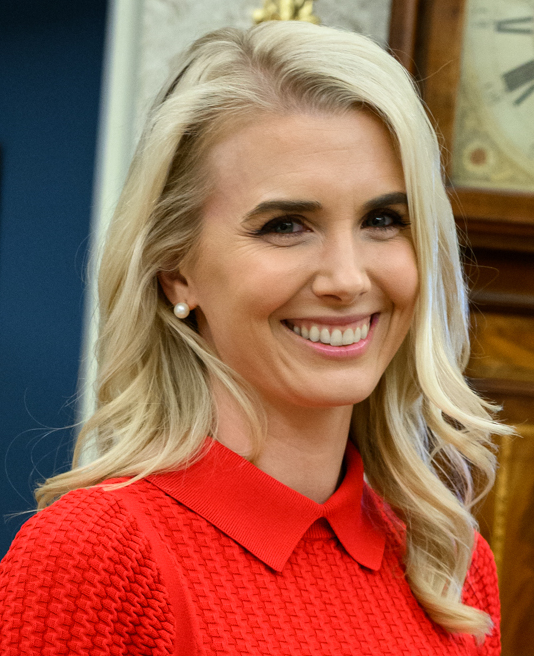
Donald Trump’s close aide Natalie Harp is being compared to Eva Braun, and the newly unearthed details behind that comparison have prompted a strong, unsettled reaction. The comparison is not a literal claim about Harp or Trump; it is a charged shorthand for reports that Harp has gained extraordinary personal proximity to Trump and influence over the information that reaches him.
What makes the story consequential is not the online insult. It is the account of a little-known aide who has reportedly followed Trump closely, supplied him with a steady stream of favorable material and emerged as a conduit around the Oval Office.
Why the Eva Braun analogy surfaced
Eva Braun was Adolf Hitler’s longtime companion, a figure whose public image became inseparable from intimate proximity to a dictator and the insulated world around him. Invoking her name is therefore meant to convey alarm about devotion, access and the absence of meaningful distance from power.
That framing is inflammatory by design, and it has limits. Harp is a political aide in a modern American administration; Braun’s relationship to Hitler belongs to the history of Nazi Germany and the Holocaust. Treating the two as equivalent would be inaccurate and would flatten profoundly different historical realities.
Still, the analogy has circulated because it points to a narrower concern: what happens when one trusted person appears to have unusual personal access to a leader, particularly one known to prize loyalty and personal attention.
Reports describe unusual proximity
The New York Times reported in November 2024 that Harp, then 33 and a former host on a far-right cable channel, had become one of Trump’s closest aides. The report said she was nearly always at his side and was expected to hold a potentially influential role near the Oval Office.
According to the Times, Harp had written Trump devotional letters, including one saying, “You are all that matters to me.” The newspaper also described an episode in Scotland in which she ran behind Trump’s golf cart while keeping him updated on positive stories and social-media posts.
Those details are the source of much of the public discomfort. They present a relationship that looks less like a conventional staff assignment and more like a highly personal form of political service centered on Trump’s preferences.
The ‘human printer’ role mattered
Harp’s influence, as described in the Times report, was not merely symbolic. Campaign colleagues reportedly called her the “human printer” because she followed Trump with a portable printer and battery pack, delivering hard-copy information in a format he preferred.
She also reportedly shared text messages, articles and gossip with Trump—material that could later be reflected in his social-media posts. In a White House where the president’s attention can shape policy, personnel decisions and public messaging, control over the daily information stream can carry real weight.
That does not mean every item Harp passed along drove a decision, nor does the available reporting establish that she held formal authority over policy. But informal access can matter as much as an official title when an aide is routinely present, trusted and able to frame what a president sees first.
Concerns center on information flow
The Times said some other aides were concerned that Harp was too willing to channel conspiratorial information to Trump. The report identified Gateway Pundit, a website known for promoting far-right conspiracy theories, as one of the sources observers said she used.
That concern gets to the core of the story. Presidents receive vast amounts of information, but nobody can read everything. Advisers, assistants and gatekeepers inevitably decide which clips, articles, alerts and opinions rise to the top.
Supporters may see Harp’s approach differently: as attentive service to a president who prefers direct, unvarnished material rather than a bureaucracy filtering his choices. Critics see the same arrangement as a risk that flattering or unreliable content could be elevated while dissenting analysis is sidelined.
The disagreement is not simply about one aide’s personality. It is about whether a president is receiving a broad enough range of credible information before acting.
Loyalty is central to Trump’s operation
Trump has long put a premium on personal loyalty, and Harp’s reported role fits a broader pattern in his political world: aides who demonstrate unwavering allegiance can gain unusual influence. That model can create speed and trust, especially for a leader skeptical of traditional institutions.
It can also make independent advice harder to deliver. When staff members believe that the person closest to the president controls access or reliably brings him the content he wants to see, they may tailor their own messages—or stop trying to challenge him altogether.
That is why the most useful question is not whether a viral historical comparison is tasteful. It is whether the White House has clear processes for vetting information, documenting decisions and ensuring that a president hears competing views.
The comparison should not replace scrutiny
Calling Harp “Trump’s Eva Braun” may capture attention, but it risks turning a substantive question of governance into a spectacle. The reported details worth examining are her access, her role as an information conduit and the concerns raised by colleagues about the material reaching Trump.
It also remains unclear how much formal power Harp has, what checks apply to information she provides and how her influence compares with that of other senior aides. Those are the facts that will determine whether the alarm around her role is warranted.
The provocative label has spread because it conveys unease in a few words. The deeper story is more concrete: proximity to power is not the same as authority, but in a president’s inner circle, it can become one of the most consequential forms of influence.
Leave a Reply