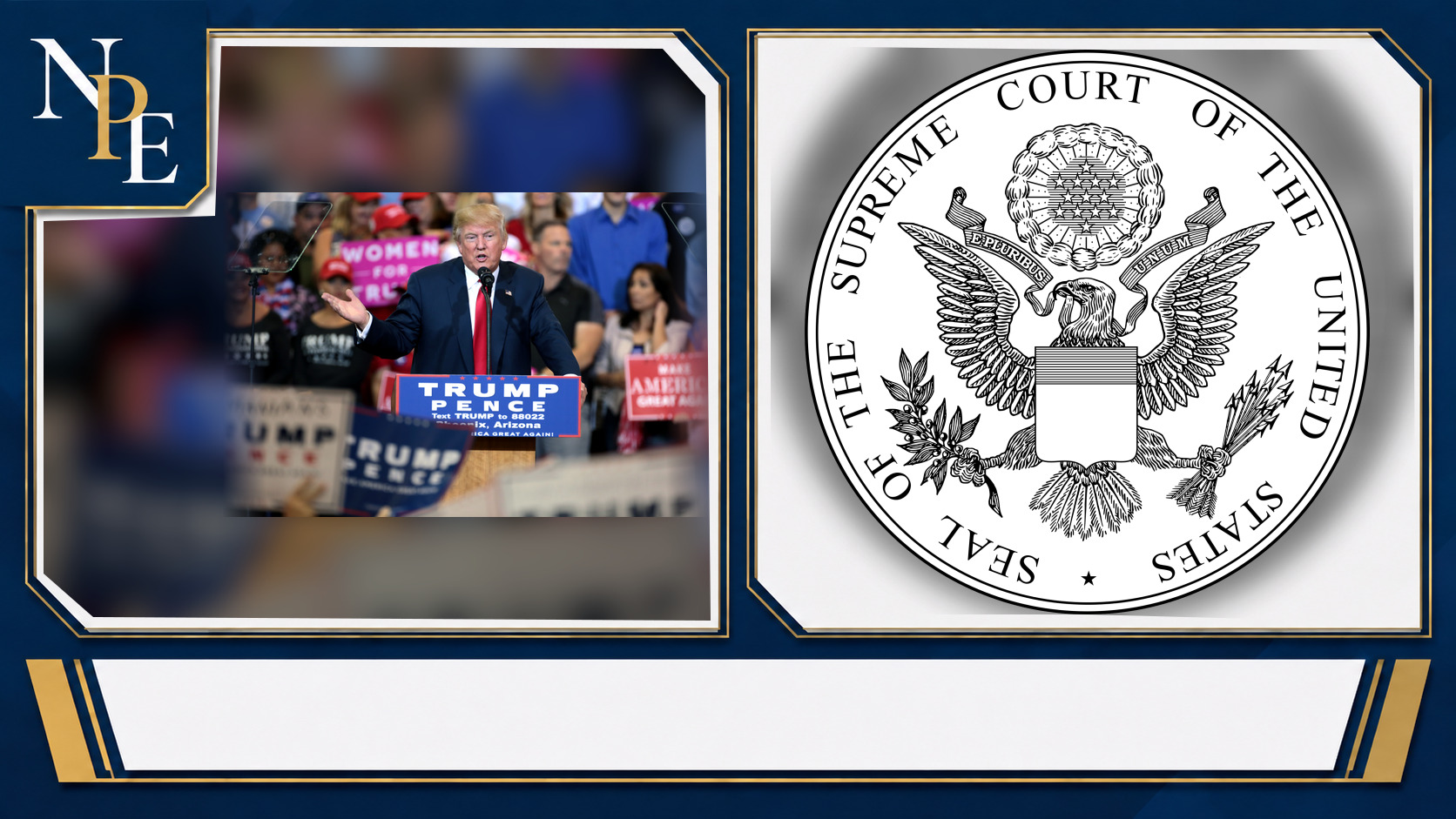
The dispute could determine whether an executive order can narrow the long-standing understanding of citizenship for some children born in the United States. It also puts a 19th-century Supreme Court precedent under renewed scrutiny.
Donald Trump’s birthright citizenship order faces a Supreme Court test on April 1, when the Supreme Court will hear a challenge to the order. The case concerns the Fourteenth Amendment’s Citizenship Clause and Trump’s effort to restrict birthright citizenship for some children born in the United States.
The hearing in Trump v. Barbara will examine whether the administration’s interpretation of the Constitution can support a major change to automatic citizenship. The order has not taken effect, but the court’s review could shape the citizenship status of future children and the limits of presidential authority.
The order remains blocked
Trump issued the executive order after beginning his second term in January 2025. According to SCOTUSblog’s summary of the case, it would deny automatic citizenship to certain babies born in the United States when their parents are in the country unlawfully or temporarily.
That proposed change has been tied up in court almost from the start. Federal judges temporarily blocked enforcement while the constitutional challenge moved forward, meaning the policy has not gone into effect.
Every lower court that has considered the order’s constitutionality so far has ruled against the administration, according to SCOTUSblog. Those rulings are preliminary rather than a final nationwide resolution, but the courts found sufficient constitutional concerns to prevent implementation during the litigation.
One key decision came from U.S. District Judge Joseph Laplante, whose preliminary injunction protected a class of children born after Feb. 20, 2025, who otherwise would be denied citizenship under the order. He wrote that the directive likely conflicts with the Fourteenth Amendment and “the century-old untouched precedent” interpreting it.
A phrase carries the dispute
The central constitutional language is not complicated to quote, but it is fiercely contested in application. The Citizenship Clause, ratified in 1868, says that people born or naturalized in the United States and “subject to the jurisdiction thereof” are citizens of the United States and the state where they live.
For decades, that provision has generally been understood to confer citizenship on nearly everyone born on U.S. soil. The recognized exceptions have included children of foreign diplomats.
The Trump administration argues that “subject to the jurisdiction” has been interpreted too broadly. Its position is that physical presence in the United States does not automatically establish the fuller obligation of allegiance to the country that it believes the Constitution requires.
Critics argue that this construction improperly narrows a constitutional protection whose text, court decisions and long-standing application point the other way. At issue, then, is not simply the broad idea of birth in America. It is how the justices define jurisdiction under the Citizenship Clause.
Competing views of Reconstruction
The administration does not argue that the Fourteenth Amendment lacks importance. It says the amendment was adopted to overturn the Supreme Court’s notorious Dred Scott v. Sandford decision and secure citizenship for formerly enslaved people and their children.
From that history, the administration argues that the amendment did not establish an unlimited rule of birthright citizenship for the children of all noncitizens. That argument seeks to connect citizenship with allegiance rather than birthplace alone in the categories covered by the executive order.
Opponents see the history and text differently. They contend that Trump is trying to use executive action to make a fundamental revision to an established rule of American citizenship, rather than pursuing a change through the constitutional process.
The April 1 argument may show which questions matter most to the justices: the wording of the Citizenship Clause, the history of Reconstruction, present-day immigration categories, or the administrative effects of changing a rule embedded in public life for more than a century.
The 1898 case in focus
The major precedent is the Supreme Court’s 1898 decision in United States v. Wong Kim Ark. Wong Kim Ark was born in San Francisco to parents of Chinese descent and was denied reentry to the United States after traveling abroad because officials said he was not a citizen.
The Supreme Court disagreed. Its majority held that he was a U.S. citizen and described the Fourteenth Amendment as affirming the longstanding principle of citizenship by birth in the country for children of resident aliens.
The administration cites the Fourteenth Amendment’s history and earlier cases in arguing that Wong Kim Ark does not resolve every category addressed in Trump’s order. Its opponents say the decision is the clearest reason the order cannot stand, because it broadly interpreted the amendment and rejected a citizenship rule based on ancestry, race or parental nationality.
That leaves the court with several possible paths. The justices could treat the 1898 decision as controlling, distinguish it based on the immigration status of parents today, or reconsider how much weight its language holds in the modern immigration system.
Procedure has shaped protection
The citizenship dispute has already produced a separate Supreme Court fight over the power of lower courts. In Trump v. CASA, the administration initially asked the court to limit nationwide injunctions instead of directly deciding whether the birthright citizenship order was constitutional.
The Supreme Court ruled 6-3 against universal, or nationwide, injunctions by lower courts. Justice Amy Coney Barrett’s majority opinion said courts historically did not issue that kind of broad relief.
That ruling addressed the reach of lower-court orders, not whether Trump’s citizenship directive complies with the Constitution. The distinction matters because litigation procedures can affect which families are protected while the underlying legal question remains unresolved.
The April 1 hearing is therefore the more direct constitutional test. A ruling for the administration could alter the citizenship status of future children born under the circumstances specified in the order and create disputes over documentation, public records and federal and state responsibilities. A ruling against the order would preserve the prevailing understanding of birthright citizenship and reinforce limits on executive authority to change a constitutional rule.
What the court will decide
The Supreme Court’s review will not end the broader political argument over immigration. It will, however, address whether this executive order can narrow citizenship protections that have broadly applied for generations.
Until the justices hear arguments, it remains unclear whether their focus will fall chiefly on constitutional text, Reconstruction-era history, the reach of Wong Kim Ark, or the practical consequences of a new citizenship standard. What is clear is that April 1 places one of the administration’s most consequential immigration policies before the court for direct review.
Leave a Reply