
Michigan’s Senate contest is more than a fight between candidates. It is a test of whether Democrats can hold together the coalition they need in a state where small shifts can reshape the national Senate map.
Democrats face a do-or-die division over a key voting bloc in Michigan’s razor-close U.S. Senate race. The split matters because Michigan is rated a toss-up in the 2026 Senate map, and Democrats’ ability to keep their coalition together could shape both the state’s result and the party’s prospects for control of the U.S. Senate.
The available reporting points to a broader Democratic challenge: a party that needs support from progressives, moderates, younger voters and diverse communities is trying to compete in an election where none of those groups can be treated as automatic.
Michigan is central to Senate math
Michigan is one of the races drawing national attention because it is an open Democratic-held seat. Sen. Gary Peters’ retirement created a contest that Democrats must defend while also seeking Republican-held seats elsewhere.
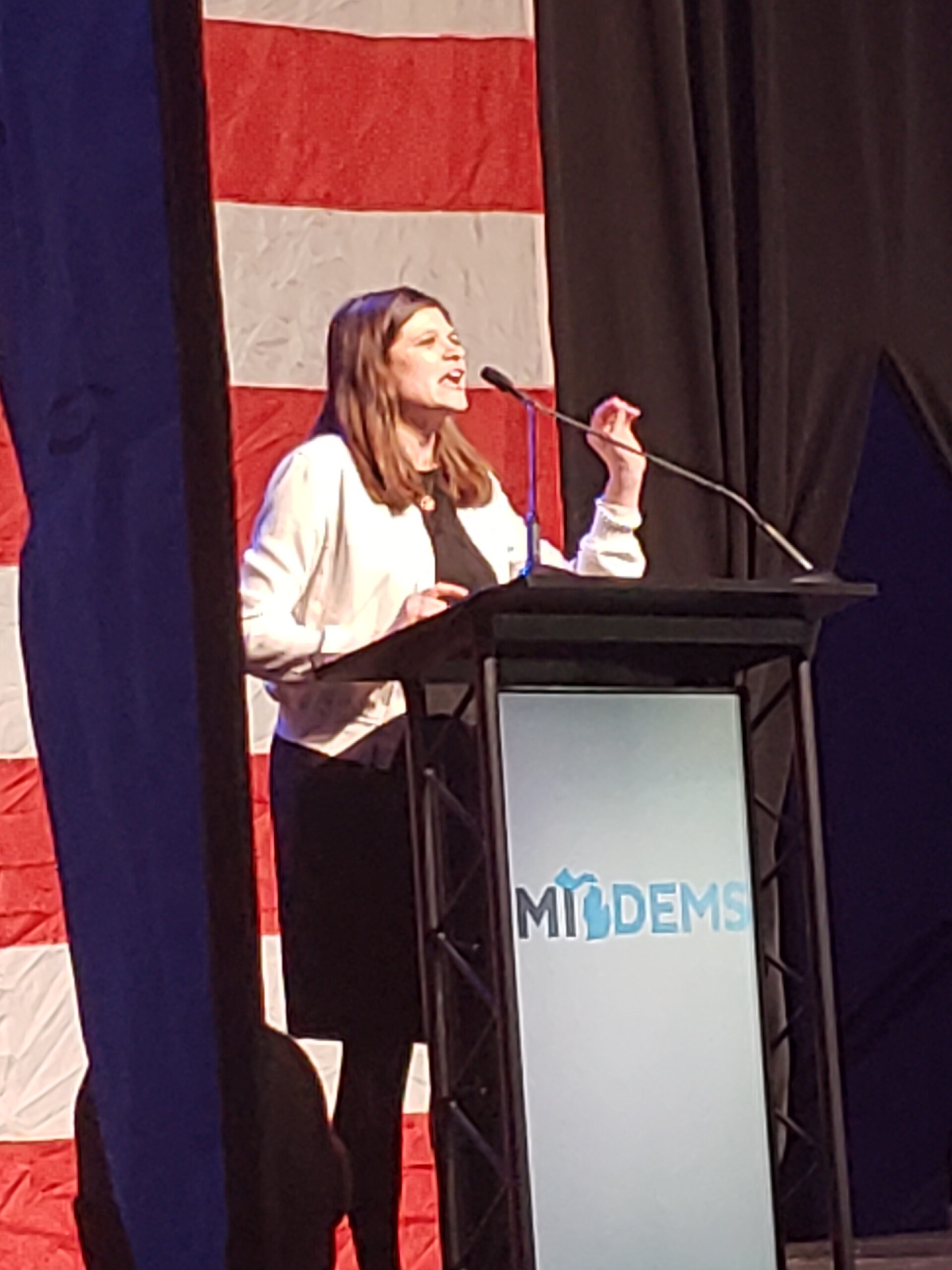
NPR’s midterm Senate overview lists Michigan among its toss-up contests and says Democrats need to flip four Republican-held seats to take control of the chamber, assuming a Republican president and vice president remain in office. That arithmetic makes losses in Democratic-held battlegrounds especially costly.
A party can win a national message battle and still lose the Senate if it cannot protect the seats already in its column. Michigan is therefore both a defensive test and a measure of how durable the Democratic coalition remains after a hard-fought primary.
A coalition is not a single bloc
The phrase “key voting bloc” can make a complicated electorate sound uniform. It rarely is. Voters grouped by age, race, religion, geography or ideology can share some priorities while differing sharply on candidates, foreign policy, economic concerns and confidence in party leadership.
That distinction matters in Michigan, where statewide elections are often decided by narrow margins and campaigns cannot afford to write off voters who are disappointed, skeptical or simply less motivated than they were in the last election.
For Democrats, the task is not only turning out reliable supporters. It is also limiting defections, rebuilding trust with voters who feel overlooked and making a case to independents without worsening strains inside the party’s own base.
The primary exposed familiar tensions
The Michigan contest has reflected a national Democratic debate over ideology and electability. The New York Times described a matchup involving Rep. Haley Stevens on one side of the party’s internal argument, while NPR identified a contest between Stevens and Detroit health official Abdul El-Sayed after state Sen. Mallory McMorrow left the race.
Those kinds of primaries can sharpen differences that do not disappear once a nominee is chosen. Supporters of a more progressive candidate may question whether the eventual nominee represents their priorities. More moderate Democrats may worry that policy positions designed to energize activists could complicate a statewide general election.
Neither concern is automatically decisive. Primary competition can also build name recognition, recruit volunteers and force candidates to develop clearer positions. The risk comes when a campaign assumes that a formal party nomination automatically produces enthusiasm among every faction.
Why turnout could decide it
In a toss-up Senate contest, a modest decline in turnout in one region or community can matter as much as a dramatic national swing. Michigan’s recent political history has repeatedly shown that margins can be thin enough for campaigns to focus intensely on a handful of counties, suburbs and urban neighborhoods.
That is why a split with an important voting bloc has consequences beyond headlines. It can affect volunteer activity, small-dollar fundraising, local endorsements and whether voters who lean Democratic actually cast ballots in a midterm election.
- For Democrats: the imperative is to make the coalition feel heard without losing voters who want a more centrist message.
- For Republicans: the opening is to persuade dissatisfied Democrats, win independents and benefit if Democratic turnout softens.
- For voters: the contest is likely to bring intense attention to issues that divide the parties and issues that divide each party internally.
Republicans often argue that progressive Democratic positions create an opening with general-election voters. Democrats counter that disengagement among younger and more progressive voters is itself a serious threat, particularly when the party needs every part of its coalition to compete.
National stakes raise local pressure
The Michigan race is local in its candidates and voter concerns, but the stakes are national. Senate majorities determine which party controls committees, sets the floor agenda and has greater leverage over legislation and confirmations.
That means outside groups, national party organizations and high-profile political figures are likely to invest heavily. Their involvement can bring money and attention, but it can also turn a state race into a proxy fight over national disputes that local candidates cannot fully control.
The pressure is particularly acute for Democrats because their path to a Senate majority, according to NPR’s assessment, requires several gains. A defeat in a competitive Democratic-held state would narrow that path even further.
What remains unclear before November
The central unanswered question is whether the apparent division becomes a lasting electoral problem or a temporary disagreement that fades as the general-election choice becomes clearer. Voters’ priorities can shift quickly as campaigns intensify and as economic, international and local issues develop.
It is also unclear how much any single voting bloc will move as a whole. Polling can identify broad trends, but it cannot capture every voter’s motivation or reliably predict who will turn out months before Election Day.
What is clear is that Michigan gives Democrats little room for complacency. In a razor-close Senate race, coalition politics is not background noise. It is the contest: who feels represented, who shows up, and whether a party divided during the campaign can still unite when the ballot is cast.
Leave a Reply