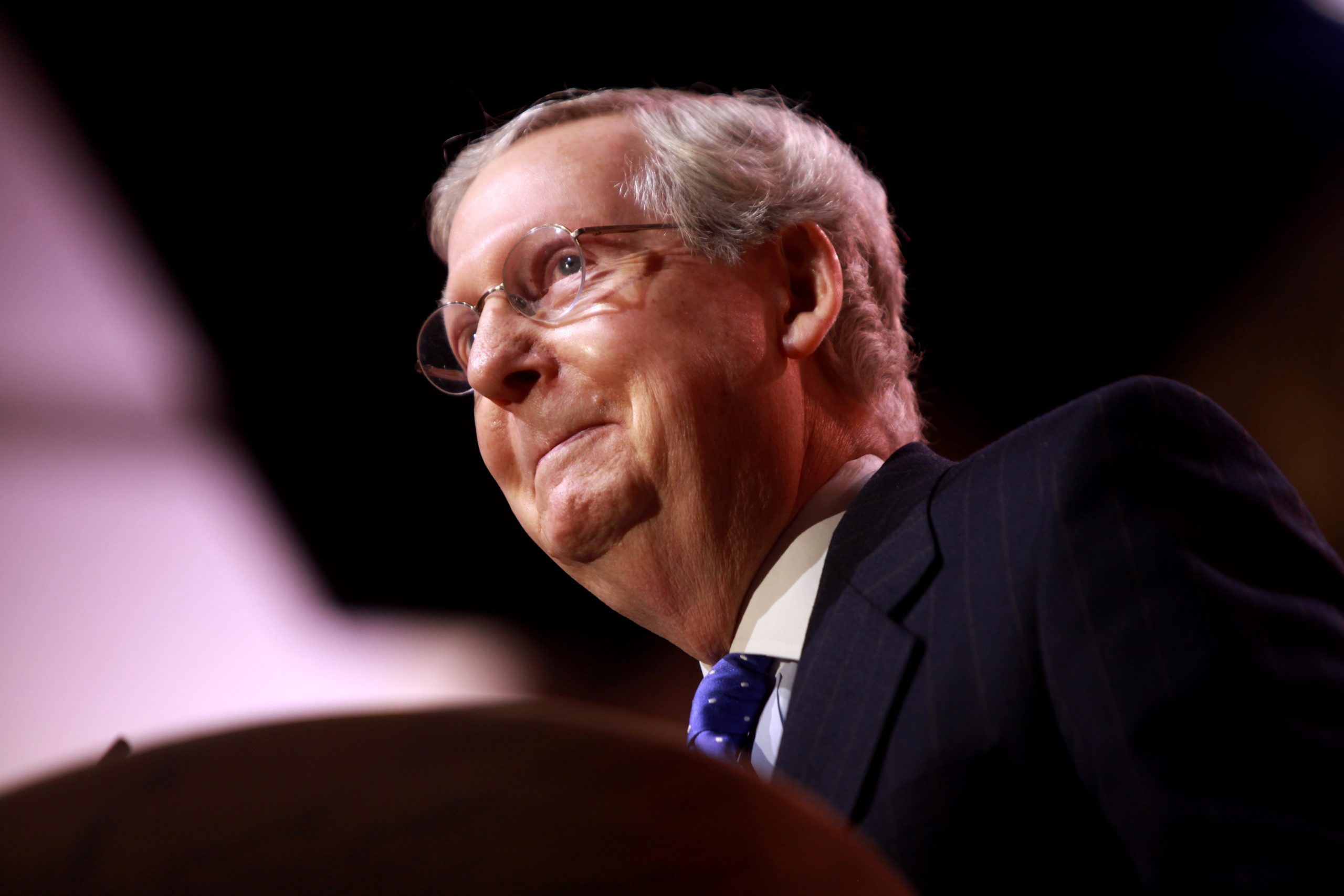
The Kentucky Republican says doctors have not cleared him to vote on the Senate floor. His temporary absence is drawing bigger scrutiny because he has already said he will not seek reelection in 2026.
Mitch McConnell will not return to the Senate on Monday, the 84-year-old Kentucky Republican said, explaining why he is absent from the Senate after a fall, hospitalization and a mild case of pneumonia. The U.S. Senate and Senate Republicans now face what this means for his future in 2026, after Reuters reported that McConnell said on Thursday he would not seek reelection.
The key distinction is timing: McConnell has not announced an immediate resignation. But his prolonged absence, his own description of aging and mobility challenges, and his planned retirement at term’s end have turned a temporary medical leave into a larger succession story.
The immediate reason for absence
McConnell said he is not ready to return to the Senate floor to vote on the advice of his doctors, according to reporting from the BBC and Reuters. His office described a fall that led to a hospital stay, followed by treatment that included care for what McConnell called a mild case of pneumonia.
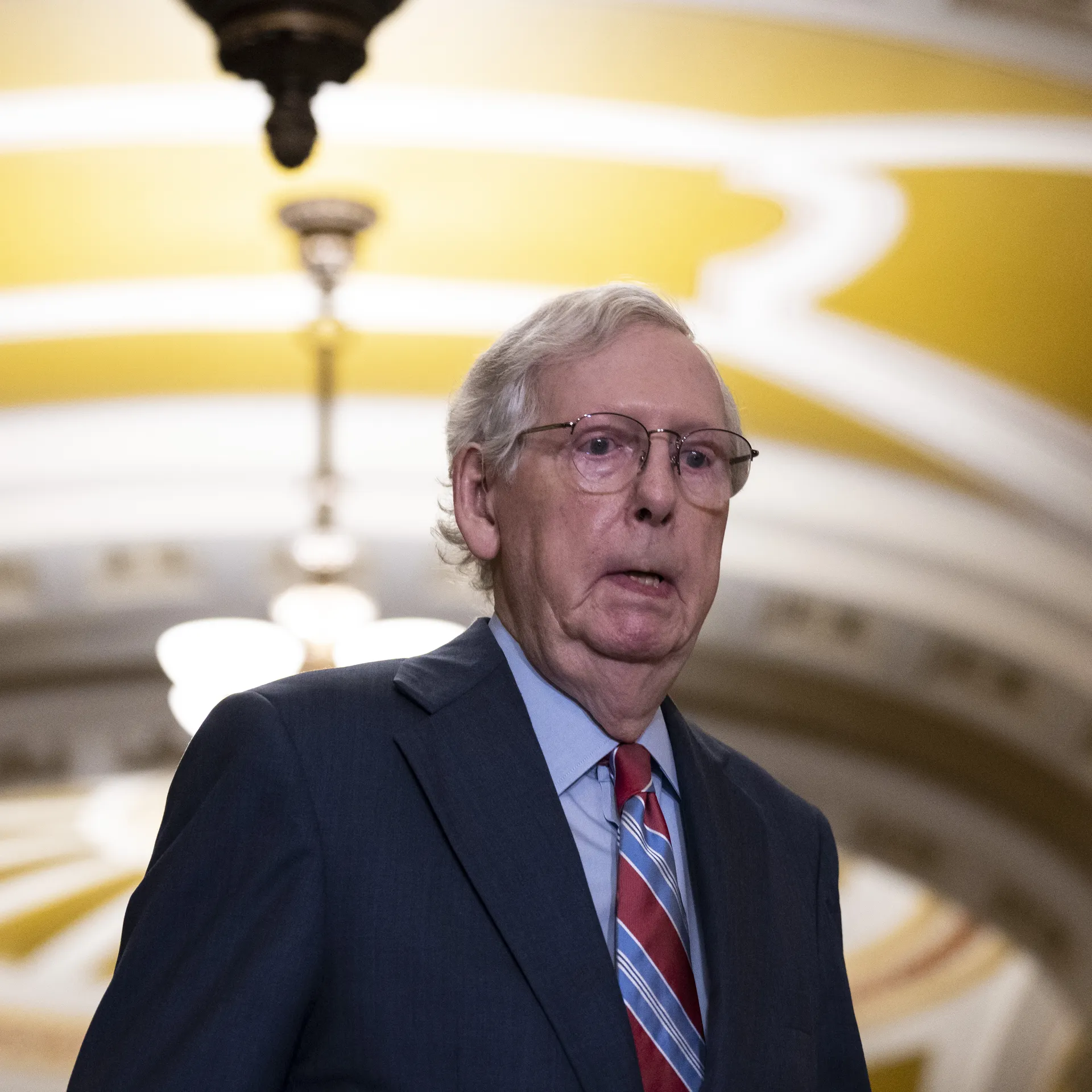
In his statement, McConnell said he had been briefly unconscious after the fall and underwent extensive testing. He said doctors told him he did not break bones, suffer a concussion, have a heart attack or stroke, or show tumors or hemorrhages.
That level of detail matters because the public had been given little information during the weeks after his mid-June hospitalization. The BBC reported that McConnell was admitted on June 14 and that his team later said he was receiving excellent care and continuing to improve, but offered few specifics at first.
His office also released a photo showing McConnell with his wife, Elaine Chao, alongside a recent newspaper. The image was meant to answer one part of the speculation: whether the senator was alert, visible and engaged enough to communicate publicly.
A rare personal explanation
McConnell’s statement stood out because it moved beyond a standard medical update. He spoke about the reluctance of people in his generation to discuss vulnerability, especially the kind that comes with aging in public.
He also connected the fall to longer-running mobility challenges. McConnell contracted polio as a child, and he has often described the rehabilitation that helped him walk again. In the new statement, he said those challenges have not become easier with age.
That framing helps explain why the absence has drawn so much attention. This is not a first-term senator missing a vote for a short illness. McConnell is the longest-serving Senate party leader in U.S. history, a figure whose physical presence has long been tied to Republican strategy, judicial confirmations and the mechanics of Senate power.
He has also had visible health episodes in recent years, including falls and hospital treatment. None of that automatically means he cannot finish his term, but it makes every extended absence politically meaningful.
Why Republicans are watching
Senate Republicans have already moved into the post-McConnell leadership era, but McConnell remains more than a symbolic figure. His vote, his institutional memory and his relationships still matter in a chamber where tight margins can turn absences into leverage.
Reuters reported earlier that McConnell said he would not seek reelection in 2026, ending a Senate career that reshaped the Republican Party’s approach to courts, campaign finance, obstruction and party discipline. That retirement decision gave Washington a calendar. His latest absence raises a different question: how active he can be until that calendar runs out.
Supporters are likely to see his statement as a responsible update from a senator recovering under medical guidance. They can point to his insistence that he has unfinished business and intends to complete the job voters elected him to do.
Critics and anxious constituents see a different problem. A senator can be entitled to medical privacy and still owe voters enough information to assess whether he can perform the duties of the office. McConnell’s power makes that tension sharper, not softer.
Kentucky pressure got louder
The pressure for clarity has not come only from national pundits. Kentucky Gov. Andy Beshear, a Democrat, sent a letter to McConnell’s office urging transparency about the senator’s health and ability to hold office, according to the BBC.
That request carried obvious political weight. Beshear is a Democratic governor in a Republican-leaning state, and McConnell has been one of Kentucky’s most consequential political figures for decades. Any extended uncertainty around McConnell’s role quickly becomes both a health story and a state-power story.
There is also a voter-service issue that is less dramatic but more practical. Senators do more than cast floor votes. Their offices handle constituent cases, communicate with federal agencies, weigh in on funding and coordinate with state officials. McConnell’s staff can keep much of that operation running, but the senator’s own capacity still matters.
For Kentucky voters, the central question is not whether McConnell remains influential in Washington history. It is whether he can continue representing them in the months left before his planned exit.
The word ‘yet’ is doing work
McConnell’s own phrasing leaves room for a return. He said he would not be able to return to vote quite yet, not that he was resigning or permanently leaving the Senate before his term ends.
That word matters because it separates verified fact from speculation. The verified fact is that he is absent now, says doctors have not cleared him to return, and has already said he will not seek reelection. The speculation is whether this absence becomes, in practice, the end of his active Senate service.
It is easy to turn a long silence into a final verdict, especially in the case of an elderly senator who has already announced a political endpoint. But the available record does not show an immediate resignation. It shows a senator trying to recover while the political system around him prepares for life after him.
That is why this moment is getting attention. McConnell built a career around control: of votes, timing, nominations and Senate procedure. Now the uncertainty is about the one thing he cannot manage by whip count: whether his health allows him to return before the end of his final term.
What remains unresolved
The biggest unknown is the simplest one: when, or whether, McConnell will be physically present again for Senate votes. His statement did not give a return date, and his doctors’ advice remains the controlling factor.
It is also unclear how much information his office will provide going forward. The new statement answered several questions about the fall, the hospitalization and pneumonia, but it came only after weeks of growing concern. If his recovery continues slowly, pressure for regular updates will likely continue.
The political consequences depend on timing. A short absence may fade into a late-career health episode. A longer absence could affect close votes, intensify scrutiny from Kentucky officials and make McConnell’s planned retirement feel less like a future transition than a present-tense handoff.
For now, the most careful reading is this: McConnell is not returning to the Senate floor yet, he says he intends to finish his term, and his already-announced 2026 exit has made every day away from Washington part of a broader question about the end of one of the most powerful Senate careers in modern American politics.
Leave a Reply