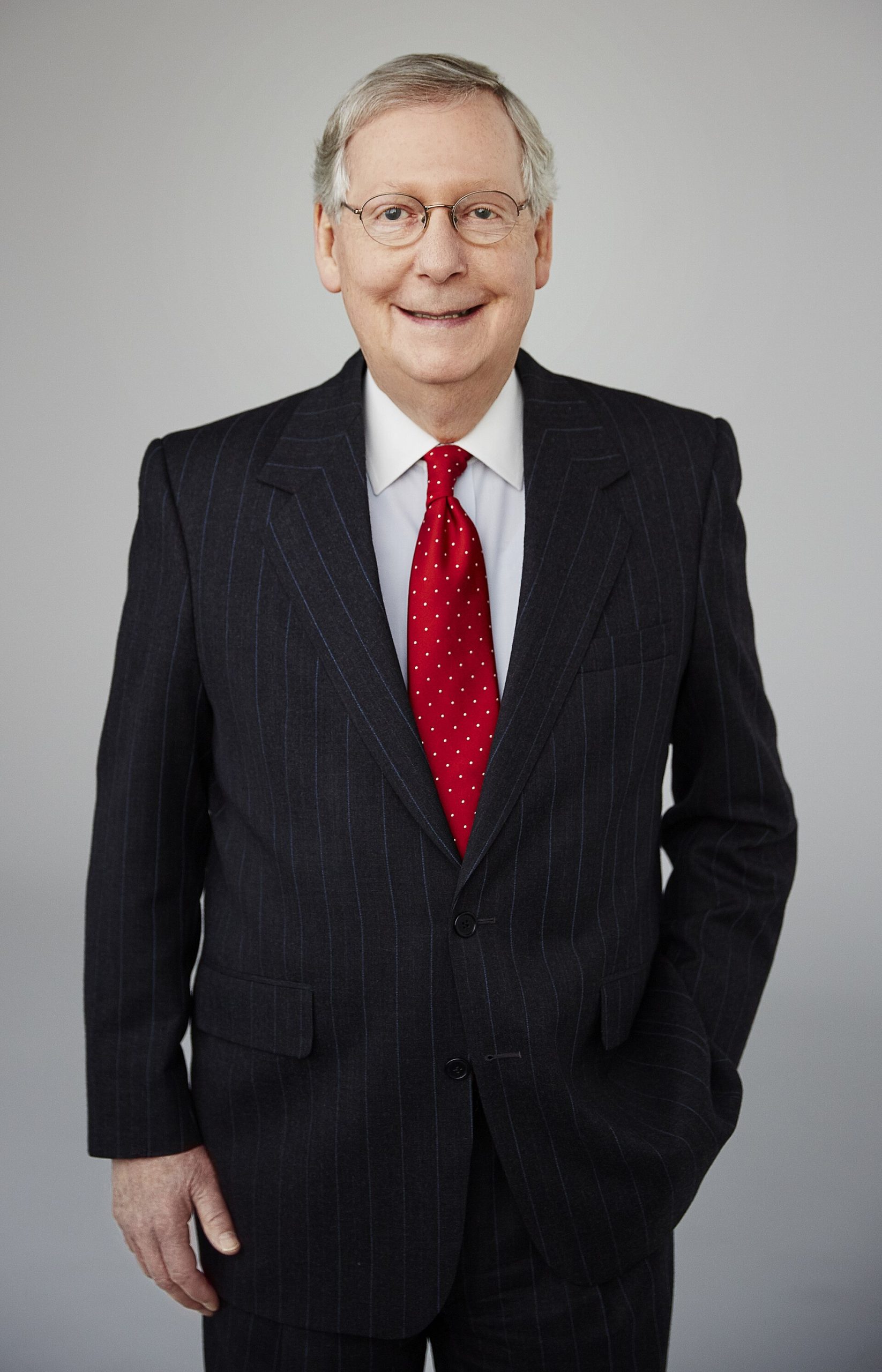
The dispute is still hypothetical, but it has exposed a real legal and political fault line in Kentucky. McConnell’s health-related absence has turned succession rules into a live partisan test.
Sen. Mitch McConnell’s absence has sparked a political showdown in Kentucky and Washington, D.C., as Gov. Andy Beshear, Secretary of State Michael Adams and Kentucky officials clash over the dispute over how Kentucky would replace him if his Senate seat became vacant. McConnell has been absent from Congress since June, last voted in the Senate on June 11, 2026, and the fight burst into public view Aug. 3, 2026, before USA TODAY updated its report Aug. 4, 2026.
The seat is not vacant. McConnell has not resigned. But questions about his health and political future are now colliding with Kentucky law, and Senate Republican leadership has reason to watch how the state frames the rules before any vacancy exists.
A hypothetical with real stakes
The immediate fight is over succession mechanics, not a confirmed transition. USA TODAY reported that McConnell has not appeared in the Senate since being hospitalized in June after a fall and a pneumonia diagnosis. His office has released few details about his recovery.

That information gap has created a political vacuum. In a chamber where attendance can shape vote timing and nominations, an extended absence from a senior senator becomes more than a private health matter. It becomes a question of representation, leverage and preparation.
According to GovTrack.US data cited by USA TODAY, McConnell has missed 46 roll call votes since his last vote on June 11. Those missed votes included the annual defense policy bill, legislation related to Iran and confirmation proceedings for several high-profile Trump administration nominees.
McConnell said in a July 27 statement that he remained in intense physical therapy and would miss Kentucky’s Fancy Farm picnic, one of the state’s best-known political gatherings. That absence added symbolism to an already sensitive moment: Kentucky politics was talking about McConnell even when McConnell was not there.
Beshear challenges the deadline talk
The public clash accelerated Aug. 3 when Beshear pushed back on claims that an election deadline could restrict his options if McConnell’s seat later became vacant. In a post on X, Beshear argued that a date being treated by some observers as important under Kentucky’s Senate vacancy law had no legal impact if a vacancy occurred later in the year.
That was a carefully chosen intervention. Beshear, a Democrat in a heavily Republican federal delegation, was not announcing an appointment or declaring that McConnell would leave office. He was disputing the premise that the calendar had already boxed him in.
The governor has also raised a broader constitutional argument. He has suggested that Kentucky’s special-election-only law for U.S. Senate vacancies may conflict with Section 152 of the Kentucky Constitution, which addresses statewide vacancies and gubernatorial appointments.
That does not mean a court would agree with him. It does mean the state’s replacement process could become contested if a vacancy occurs, especially if one side believes the statute and state constitution point in different directions.
Adams says law is settled
Adams, a Republican and Kentucky’s secretary of state, responded sharply. In a statement to The Courier Journal, part of the USA TODAY Network, Adams said Kentucky law is clear: a U.S. Senate vacancy must be filled through a special election, and the governor has no authority to appoint a senator.
His criticism went beyond legal interpretation. Adams accused Beshear of irresponsibility for suggesting that the Kentucky Constitution could empower him to appoint someone to a federal office that is not vacant. Adams said that kind of talk fed online conspiracy theories he has spent his career combating.
That line matters because it shows the fight is also about narrative control. Beshear is trying to preserve legal flexibility. Adams is trying to shut down the idea that the governor could name a temporary replacement.
Both positions carry political weight. A special election would leave the seat vacant until results are certified. A temporary appointment, if found legally available, could immediately affect Senate head counts. That is why a procedural fight in Frankfort has drawn attention far beyond Kentucky.
How Kentucky would fill it
Under Kentucky law as described by USA TODAY, a U.S. Senate vacancy is filled through a special election called by the governor. The winner serves the remainder of the senator’s term. Until the election results are certified, the seat remains empty.
The timing is where the dispute gets complicated. The statute requires the governor to issue a proclamation calling the election. Legal experts told CNBC that the law does not set a firm deadline for when that proclamation must be issued.
Once a proclamation is issued, candidates and counties face a series of filing and administrative deadlines before voters can cast ballots. That makes the proclamation date powerful, even if the law does not clearly say when the governor must act.
The result is a system that looks simple from a distance and messy up close. Everyone agrees a vacancy would trigger a process. The fight is over who controls the first move, how fast that process must run and whether the state constitution leaves room for a temporary appointment.
Why Republicans are watching
McConnell has been one of the defining Republican figures in the Senate for decades. Even without a vacancy, his absence is being measured not only in missed votes but in uncertainty for party strategy.
Senate Republican leadership does not need an immediate succession fight to care about this. If a senior Republican seat from Kentucky were vacant for weeks or months during a special-election process, the party would have one fewer vote available during that window.
For Democrats, the legal question has a different edge. Beshear’s position keeps open the possibility that a Democratic governor may have a role beyond simply setting a special election date. For Republicans, Adams’ position protects the legislature’s chosen replacement structure and limits the governor’s discretion.
That is the core tension: the vacancy has not happened, but both parties are behaving as though the rulebook needs to be settled before it does.
What remains unclear now
The most important unknown is McConnell’s condition and timetable. His office has said little publicly beyond acknowledging physical therapy, and there has been no resignation announcement.
The second unknown is legal. If a vacancy occurred and Beshear asserted appointment authority, or delayed a proclamation in a way opponents challenged, Kentucky could end up in court quickly. A judge would then have to sort out the relationship between the Senate vacancy statute and the state constitution.
The third unknown is political patience. Voters may tolerate limited health disclosures for a time, but a long absence from Congress can sharpen demands for clarity, especially when a state’s representation in Washington is affected.
For now, the showdown is about a seat that remains occupied. That is what makes it so combustible: Kentucky officials are not fighting over who replaces McConnell today, but over who gets to decide the rules if that moment arrives.
Leave a Reply