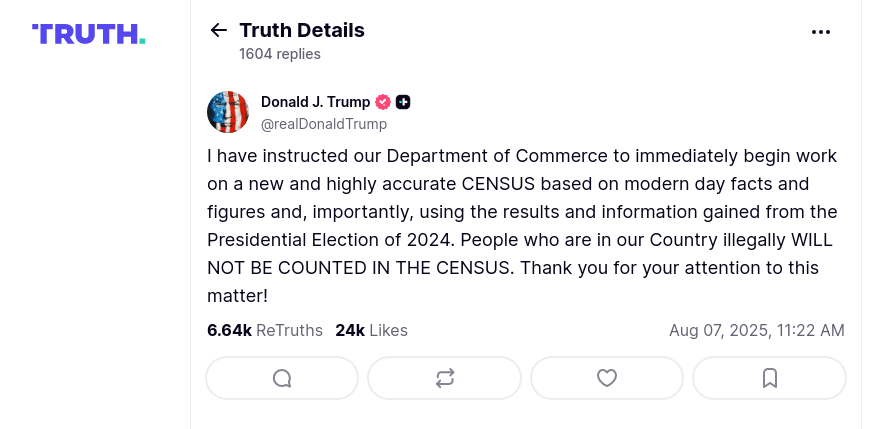
A faster feed of President Donald Trump’s posts could be valuable to traders who react in milliseconds. The controversy is whether selling that speed is just another data product or a new way to monetize the presidency.
Trump Media is selling a $100,000 monthly subscription service to Wall Street that gives traders and investors faster access to Trump’s posts, according to reports on a pitch for a high-speed feed. Critics say the plan amounts to insider trading because President Donald Trump’s posts can move stocks, currencies and expectations about policy before slower readers see them.
The controversy is about more than a pricey data feed. It is about how Trump Media could further monetize the presidency by turning the president’s public statements into a premium signal aimed at market professionals.
The product Wall Street wants
Reuters reported, citing the Financial Times, that Trump Media pitched a fee of as much as $100,000 a month for the fastest feed of the U.S. president’s posts. The core sales point is speed: paying customers would see Trump’s posts faster than ordinary users or investors relying on slower channels.
That matters because Wall Street already pays heavily for time advantages. Hedge funds, trading firms and data vendors buy direct feeds, low-latency connections and machine-readable alerts because a few seconds can change the price of a trade.
In that world, a presidential post is not just political content. It can be a market input, especially when it touches tariffs, regulators, corporate winners and losers, cryptocurrency, energy policy, foreign policy or government spending.
The reported price tag makes clear who the product is for. A $100,000 monthly subscription is not aimed at casual political followers. It is built for firms that believe the information edge could be worth more than the fee.
Why speed is the controversy
The posts themselves may be public once they appear online. The advantage being sold is earlier access to the stream, not necessarily exclusive knowledge of what Trump will say before he says it.
That distinction is central to the debate. Data companies routinely sell faster access to public information, from economic releases to news headlines. Supporters of the idea can argue that a fast feed is a market data product, not a secret channel.
Critics see something different. When the speaker is the president, the value of the feed comes from public office. The subscription is not merely monetizing a media personality’s commentary. It is packaging the communications of a sitting president for traders who can profit from moving first.
That is why the phrase insider trading by definition has stuck to the story, even if the legal question is more complicated than the slogan.
The insider-trading charge
In U.S. securities law, insider-trading cases typically turn on material nonpublic information and a breach of duty. A fast feed of public posts may not fit neatly into the classic version of that offense if the same statements become visible to everyone soon after.
But the criticism is not only a courtroom argument. It is a fairness argument. If one group of investors can buy a faster pipe to presidential market signals, the market starts to look less like a shared public square and more like a tiered information system.
That concern grows when the information source is not a company executive talking about their own firm, but the president of the United States. Presidential remarks can influence broad sectors and asset classes. A paid delay for everyone else, even a short one, can still matter in automated markets.
The available reports do not establish that subscribers received nonpublic policy decisions or that regulators have accused Trump Media of wrongdoing. They do show why ethics critics are alarmed: the business model appears to sell proximity to power in a form that traders can immediately use.
A presidency as paid signal
Trump has long blurred the line between politics, media and branding. The reported Trump Media pitch takes that fusion into a sharper market context because it ties presidential speech to a subscription product priced for institutional investors.
The presidency gives Trump’s posts unusual weight. A private influencer can move a meme stock. A president can move expectations about tariffs, investigations, government approvals, sanctions, defense policy and regulation. That is the source of the product’s value.
For critics, that is also the ethical problem. The public office creates the market-moving power, while a private company associated with Trump seeks to capture revenue from people who want early access to that power.
There is a competing view: presidents speak constantly, markets react constantly, and private companies have always built businesses around faster distribution of public statements. The harder question is whether presidential communications should be treated like ordinary market data when the president or his company may benefit from selling the feed.
What remains unanswered
Several practical details remain unclear from the public reporting. The biggest is how much faster the paid feed would be than the normal public display of Trump’s posts. A one-second advantage and a one-minute advantage are very different products in market terms.
It is also unclear which firms, if any, agreed to pay the full $100,000 monthly fee, what contractual restrictions would apply, and whether the feed would include only posts after publication or any additional metadata, alerts or formatting designed for automated trading systems.
The compliance questions are just as important. Would buyers have to certify how they use the feed? Would Trump Media disclose the client list or revenue tied to presidential posts? Would government ethics officials, securities regulators or Congress review the arrangement?
Those questions matter because the controversy sits in a gray zone between legal market data, political ethics and public trust. The sharper the speed advantage, the harder it becomes to dismiss the product as a harmless premium subscription.
The real test is trust
The Trump Media pitch exposes a problem that is bigger than one platform. Markets increasingly price information instantly, while political leaders increasingly communicate through private media channels. When those channels are monetized, access becomes a commodity.
That does not automatically make the arrangement illegal. It does make it politically combustible. A president’s words belong to public life, and investors have a strong interest in receiving market-moving government signals on equal terms.
The cleanest defense for Trump Media would be transparency: exactly what is sold, who gets it, how fast it is, and whether it contains anything beyond posts that the public can see. Without those answers, the $100,000 Wall Street feed will keep looking less like a tech product and more like a paid fast lane to presidential power.
Leave a Reply