
The shift does not show a poll lead, but it reflects how traders are pricing Democratic instability ahead of the August 11 primary. Early voting and returned absentee ballots make the turmoil harder to unwind.
Kalshi gives Republicans a 53% edge in the Wisconsin governor race, and Republicans are favored in the Wisconsin governor race as Democrats sit at 48% as of early Monday morning. This is a market shift, not a poll result, but it reverses early August 1, when Democrats led 55% to 46%.
The move matters because Democratic withdrawals and campaign reversals changed the contest days before the August 11 primary, with Wisconsin voters already casting ballots in a Democratic primary thrown into turmoil. The numbers show how traders are reacting to a reshaped field, not proof that voters have moved in lockstep.
A market warning, not a survey
Kalshi is a prediction-market platform, meaning its percentages reflect how traders price the likely winner. In this case, according to figures reported by Newsweek, the market for which party will win the Wisconsin governorship moved toward Republicans early Monday.
That distinction is critical. A poll asks voters what they think or how they plan to vote. A market price can move because of headlines, campaign mistakes, trading volume or perceptions that one party looks more organized than the other.
Still, campaigns pay attention to these signals because they can capture momentum quickly. In Wisconsin, the timing makes the shift harder for Democrats to dismiss: the primary is imminent, ballots are already in circulation, and the field has changed late.
Early ballots complicate everything
The practical problem for Democrats is not just that candidates have left or reentered the race. It is that many voters have already made choices under conditions that no longer match the current ballot reality.
By the time former Lt. Gov. Mandela Barnes left the race, nearly 128,000 absentee ballots had been returned, according to the report, and Wisconsin was on the third day of in-person early voting. That means some votes may already be locked in for candidates no longer actively seeking the nomination.
Three voters, supported by the Democratic Party, sued to allow people who had already returned absentee ballots to cancel them and vote again. Dane County Circuit Judge David Conway rejected that effort on Wednesday, ruling that Wisconsin law does not allow an absentee ballot to be spoiled after it has been returned.
Democrats argued that voters whose preferred candidates withdrew could be effectively disenfranchised. The ruling left those ballots in place, raising the possibility that withdrawn candidates could still draw meaningful support in the primary count.
How the Democratic field unraveled
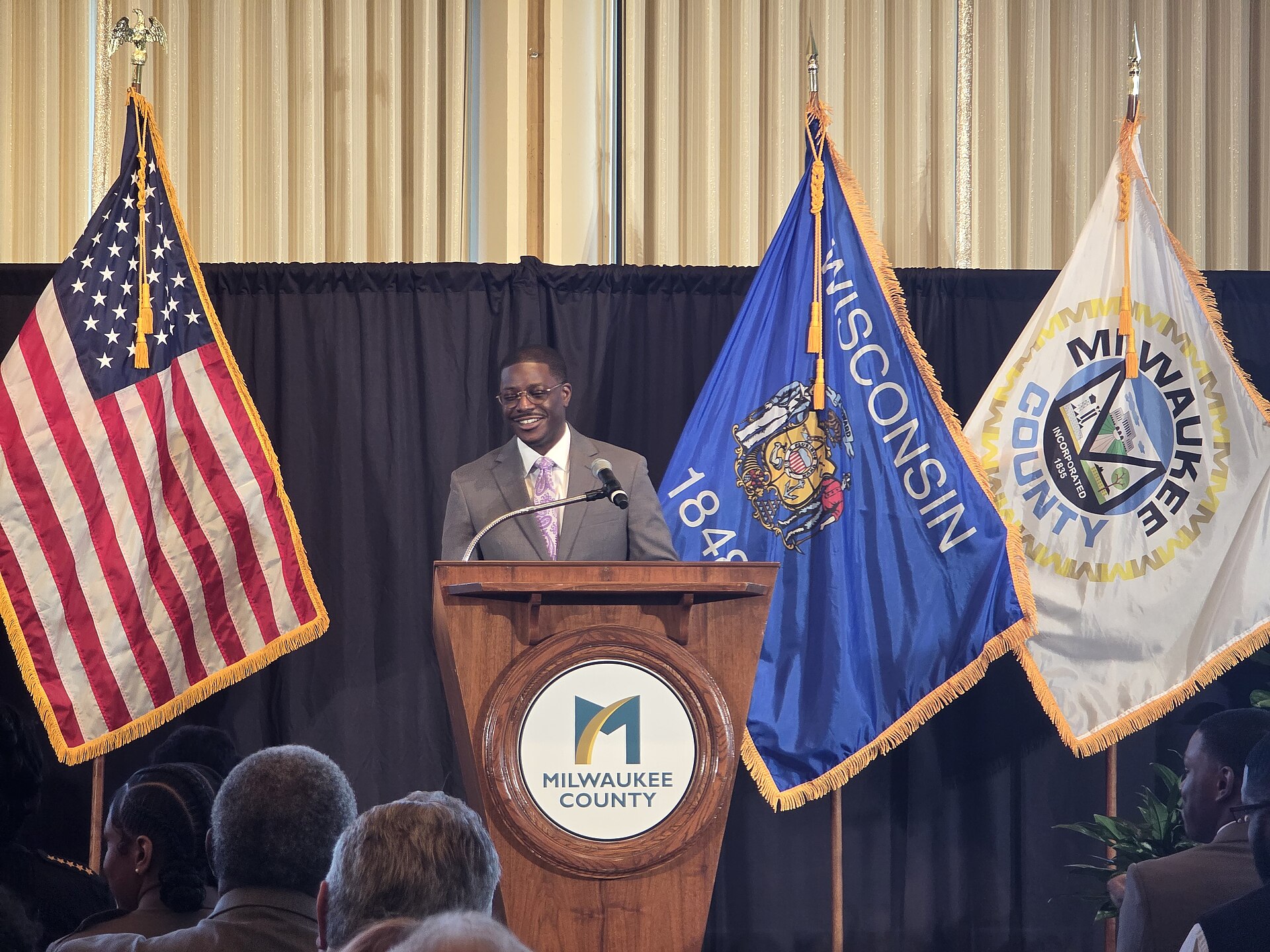
The Democratic instability built over several weeks. Milwaukee County Executive David Crowley suspended his campaign on July 8 and endorsed Lt. Gov. Sara Rodriguez, who had been considered a leading contender.
Rodriguez’s campaign then disclosed serious finance problems. Those included donations counted twice, expenses that were underreported and unpaid advertising invoices that kept planned television commercials from airing.
Rodriguez fired her campaign manager, reported the discrepancies to the Wisconsin Ethics Commission and withdrew on July 17, saying the financial problems had become too much of a distraction. Crowley reversed course the next day and restarted his campaign, this time with the backing of outgoing Democratic Gov. Tony Evers.
Barnes’ campaign criticized Crowley’s return, arguing it risked splitting Democrats and improving Republican chances in November. Then Barnes himself exited less than two weeks before the primary, after Newsweek reported that his departure followed reports that the state Democratic Party had reviewed anonymous allegations of inappropriate behavior from 2024 and 2025. Barnes denied wrongdoing, and a legal review found nothing actionable, according to the Associated Press account cited in the report.
Hong and Crowley inherit the race
With Rodriguez and Barnes out, the Democratic contest has narrowed around state Rep. Francesca Hong and Crowley. But even that clearer matchup arrives with caveats because the latest available polling described a field that no longer exists.
A Marquette University Law School poll released before Barnes’ withdrawal showed Hong leading the Democratic field with 38% support, while Barnes was second at 16%. The poll is partly outdated now, but it still suggests Hong entered the final stretch with a real base.
Crowley, meanwhile, is trying to consolidate Democrats who had been aligned with Barnes or other candidates. He has directly appealed to Barnes’ supporters, a move that may depend on how many voters remain undecided and how many already returned ballots.
Republicans have an obvious opening if Democrats appear divided. GOP candidate Tom Tiffany has already framed the race as a choice between a “socialist agenda” and “common sense,” language designed to put the eventual Democratic nominee on defensive terrain.
Tiffany benefits from steadier ground
On the Republican side, Tiffany is expected to win the GOP nomination and advance to the November 3 general election. He has been endorsed by President Donald Trump, giving him a national Republican stamp in a state where statewide elections are often extremely close.
That relative calm helps explain why the Kalshi market moved even without evidence of a broad voter surge toward Republicans. In a swing state, one party can gain simply because the other looks consumed by internal fights.
The stakes are high because Wisconsin’s governorship has functioned as a major statewide check in a closely divided state. The Republican-led Legislature has often clashed with Democratic Gov. Tony Evers.
If Democrats keep the governor’s office, they preserve a statewide veto point. If Republicans win it while maintaining legislative power, they would have a larger opening to reshape state policy.
What remains unsettled
The safest reading of Kalshi’s 53% Republican figure is that traders are pricing disorder. It is not a direct measure of Wisconsin voter preference, and prediction markets can overreact to withdrawals, court rulings and fundraising reports.
Democrats can still nominate a candidate, unite after August 11 and compete in November. Wisconsin’s statewide margins are commonly narrow, and a late primary mess does not automatically decide a general election.
But the market flip points to a vulnerability Democrats now have to repair quickly. Their closing stretch has included a finance controversy, a suspended-and-restarted campaign, an allegations review that Barnes disputes, and a failed court fight over already-returned absentee ballots.
The August 11 primary will determine whether the party gets clarity or another round of uncertainty. A decisive Hong win could let Democrats pivot quickly toward November. A close result, or a visible bloc of votes for withdrawn candidates, would give Republicans more material to argue that the chaos was not temporary.
Leave a Reply