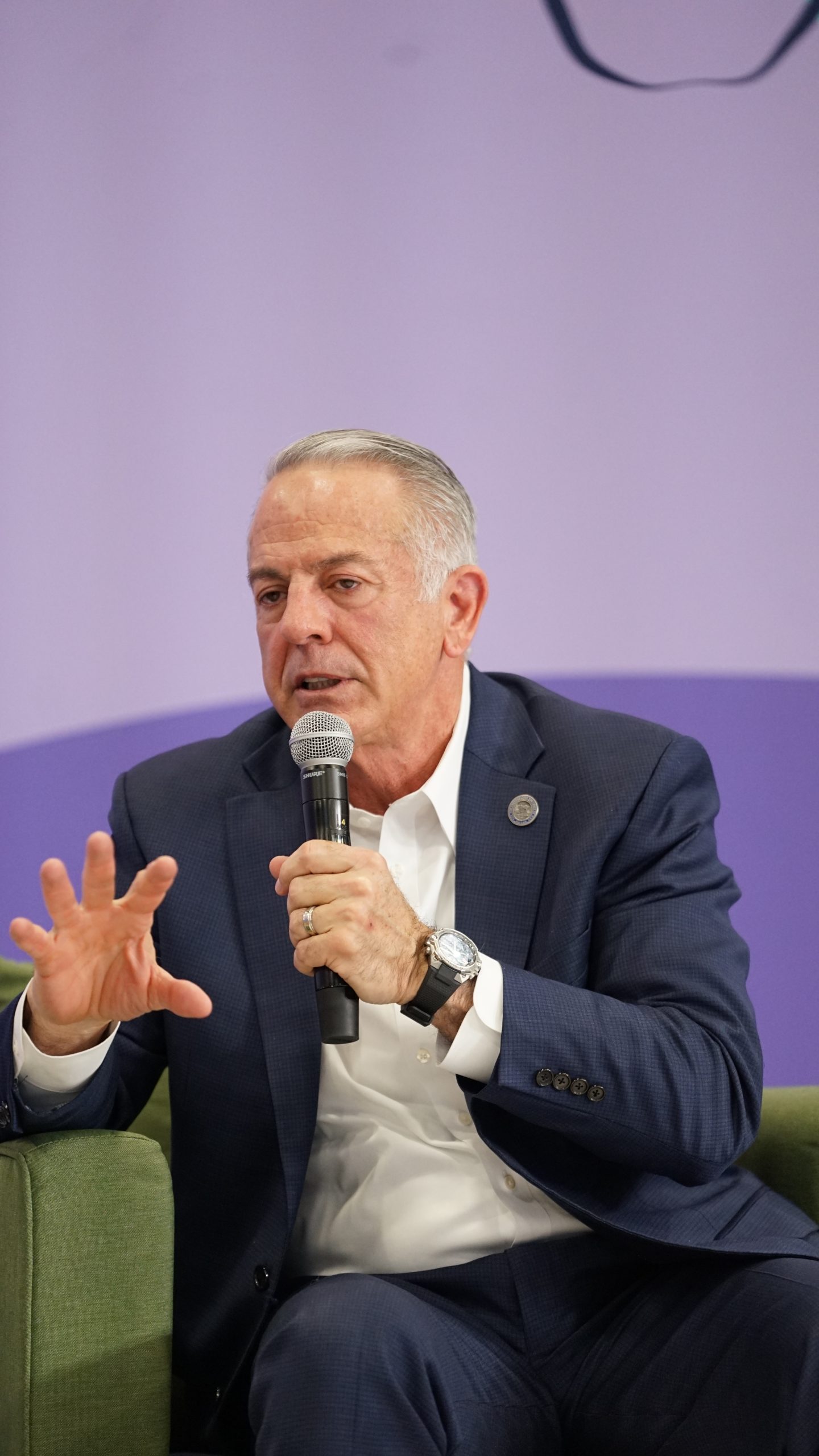
The May 15 stop was over an alleged red-light violation after a right turn. The short exchange is raising familiar questions about discretion, power and public accountability.
Newly released police body camera footage shows Nevada Gov. Joe Lombardo being pulled over in Las Vegas on May 15, and the short traffic stop is drawing scrutiny because of how it unfolded and how it ended. The video, obtained by The Associated Press, shows a Las Vegas Metropolitan Police Department officer approaching Lombardo’s vehicle, with his wife, Donna Lombardo, in the passenger seat, after an alleged red-light violation tied to a right turn. Lombardo identifies himself to the officer, saying, “I’m Joe Lombardo,” and is not ticketed.
The footage has renewed attention on a familiar question about discretion and accountability, especially because Lombardo is not only Nevada’s governor but also the former Clark County sheriff who once led the department involved in the stop.
A stop measured in seconds
The bodycam clip is short, but it contains the kind of details that make a routine traffic stop politically sensitive.
An officer approaches the passenger side of the vehicle and begins speaking with Lombardo. Before the officer finishes explaining the reason for the stop, Lombardo identifies himself by name.
According to accounts of the footage, the officer says he is already aware. The officer then explains that the stop involved an alleged red-light violation after Lombardo made a right turn.
Lombardo’s response, according to the video, was: “Oh, come on, man.” The officer then tells him he is good to go, thanks him and walks away.
Why the governor was stopped
The central issue was not speeding or reckless driving. The stop was reportedly over whether Lombardo came to a complete stop before turning right at a red light.
In a statement to 8 News Now, the Lombardo campaign described it as “a question about whether Governor Lombardo had come to a complete stop while turning.” The campaign said Lombardo and his wife were on their way to the airport when the Las Vegas Metropolitan Police Department pulled them over.
The campaign also said Lombardo complied with the officer’s instructions and was “promptly on his way.” It added that he remains grateful for the officer’s professionalism and for law enforcement officers across Nevada.
That framing presents the stop as brief, cooperative and ordinary. The bodycam clip, however, has put renewed focus on how quickly the encounter ended once the officer recognized the driver.
The line that changed the clip
The moment drawing the most attention is not the alleged violation. It is Lombardo’s decision to say, “I’m Joe Lombardo,” almost immediately after the officer begins the conversation.
There are competing ways to read that line. Supporters may see it as a simple identification by a public official who was already known to the officer. Critics may see it as a reminder of status at the exact moment when a citation could have been issued.
The officer’s reply, “I’m aware,” adds to the tension. It suggests the officer knew who was in the vehicle before or during the approach, though the public record does not fully explain what the officer knew or when.
That uncertainty matters because traffic stops are moments of discretion. Officers routinely decide whether to warn, cite or let a driver leave. When the driver is a governor and former sheriff, the public naturally looks harder at that decision.
No ticket, no full explanation
Lombardo did not receive a citation. According to the Associated Press, the Las Vegas Metropolitan Police Department declined to comment on why no ticket was issued.
That does not prove special treatment. Many drivers are let off with warnings for minor traffic violations, especially when an officer decides the situation does not require a citation.
Still, the lack of an explanation leaves room for doubt. A routine stop can become a public accountability issue when the person stopped has political authority, past command authority over the department and a long law enforcement résumé.
The question is less whether every alleged red-light violation requires a ticket. It is whether the same standard would apply to a driver without Lombardo’s name, title or history with the department.
His policing past matters
Lombardo is not a governor with only a distant connection to law enforcement. Before taking office in January 2023, the Republican served as Clark County sheriff and led the Las Vegas Metropolitan Police Department for eight years.
That history shapes how the video is being received. The officer was not just stopping a statewide elected official. He was stopping a former top law enforcement official in the same region, with deep ties to policing in Las Vegas.
For some viewers, that makes the interaction look collegial rather than suspicious: a short, calm stop involving a driver familiar to local police. For others, it underscores why transparency is important when public officials encounter agencies they once led.
Both readings can exist at once. The bodycam footage shows a courteous exchange with no visible escalation. It also shows a powerful person receiving a quick release from a stop that ordinary drivers might experience very differently.
What remains unclear
The video answers the basic questions: Lombardo was pulled over, the stated reason involved an alleged red-light violation during a right turn, he identified himself, and he was not ticketed.
It does not answer everything. The public still does not know why the officer chose not to issue a citation, whether any warning was formally recorded, or whether department policy offers guidance for stops involving high-ranking officials.
There is also no indication from the available reports that Lombardo was accused of any crime beyond the alleged traffic infraction. The campaign’s position is that he complied and the matter ended quickly.
The bigger story is the reaction to the clip. A 15-second traffic stop can disappear without notice when the driver is unknown. When the driver is Nevada’s governor, a former sheriff and a past leader of the same department, even a warning-free stop becomes a test of public trust.
Leave a Reply