
The reported meeting brought together a top Trump adviser and the Democrat who could become House speaker if his party wins the chamber. Its significance lies less in a disclosed deal than in what it suggests about preparations for a potentially divided Washington.
Jared Kushner and Hakeem Jeffries met privately in New York City, in Manhattan, as the U.S. midterm elections loom, according to people familiar with the session. The reported conversation centered on possible areas of cooperation between Democrats and the Trump administration—an unusual outreach between President Trump’s son-in-law and outside adviser and the House Democratic leader.
Neither Kushner nor Jeffries commented through aides, and no agreement was announced. But the meeting matters because Jeffries could become speaker if Democrats win the House, making the private discussion a window into how both sides may be thinking beyond the campaign trail.
A private meeting with public implications
The New York Times reported that Jeffries, a New York Democrat and the House minority leader, met with Kushner in recent weeks in a private space in New York City made available by a mutual friend. The report cited five people with knowledge of the meeting for the fact that it occurred.
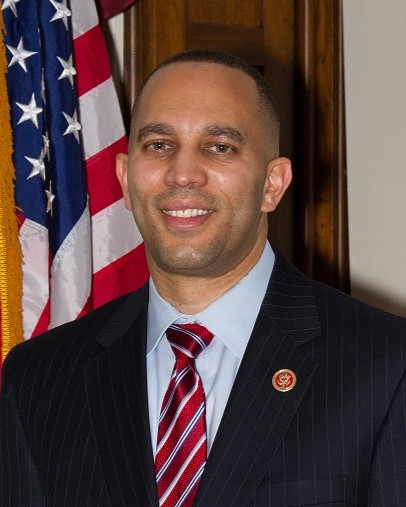
People familiar with the session characterized it as a broad discussion covering a range of topics. That leaves major limits on what can be concluded: there is no public account of an agenda, no announced policy proposal and no indication that either man made commitments on behalf of his side.
Still, the participants give the encounter its weight. Kushner was a senior adviser during Trump’s first term and remains described as a top outside adviser to the president. Jeffries leads House Democrats and would be in line for the speakership if his party captures the chamber.
Why the timing stands out
The meeting came while Democrats and Republicans are competing for narrow House and Senate majorities. A change in House control would reshape the daily relationship between the White House and Capitol Hill, from the legislative agenda to the pace and scope of congressional oversight.
That prospect makes informal relationship-building strategically valuable. An administration facing a Democratic House would need to decide where compromise is possible, where conflict is inevitable and how to keep routine government business moving when major policy goals stall.
For Democrats, preparing for a possible majority means balancing two roles at once: making a forceful electoral case against Trump while considering what governing—or confronting—the administration could look like after the vote.
Campaign rhetoric points the other way
The reported outreach contrasts sharply with the public language from both camps. The Times noted that Trump has repeatedly attacked Jeffries at campaign events, while Jeffries has portrayed Trump as extreme and corrupt and has promised accountability if Democrats gain control of the House.
That disconnect is not unusual in Washington. Political leaders may keep channels open even during harsh public battles, especially when election outcomes could quickly change the leverage of each side.
But it does complicate the optics. Some voters and party activists see private cross-party contact as a practical necessity in a polarized system. Others may view it skeptically, particularly when the public message is one of fundamental conflict rather than accommodation.
Their earlier policy connection
The two men were not starting from zero. According to the report, Kushner and Jeffries stayed in touch after working on criminal justice legislation during Trump’s first term.
That history helps explain how a meeting could take place despite the broader partisan environment. Criminal justice reform was one of the relatively rare areas in which lawmakers from both parties and the Trump White House found room to work together during that period.
Past collaboration does not establish that the current conversation focused on criminal justice or that a new bipartisan project is underway. It does show that the two men have an existing relationship separate from the current campaign cycle.
What cooperation could actually mean
The phrase “possible areas of cooperation” can cover a wide range of possibilities, from keeping communication lines open to exploring specific legislation. The available reporting does not identify which issues, if any, received serious attention.
If Democrats take the House, areas with at least some theoretical space for negotiations could include narrowly tailored legislation, administrative priorities or matters where neither side benefits from prolonged stalemate. The obstacles would be considerable: party incentives, presidential priorities, congressional procedure and disputes over oversight could all overwhelm any early goodwill.
A Democratic House would also have tools to investigate the administration. That means cooperation and confrontation would not be mutually exclusive; they could unfold at the same time, depending on the issue.
No deal has been disclosed
The clearest takeaway is also the most limited one: Kushner and Jeffries reportedly met, talked broadly and discussed possible common ground. Neither office has publicly confirmed the details, and neither has described a concrete next step.
It would be premature to treat the session as evidence of a policy bargain or a shift in either party’s campaign strategy. The better reading is that people close to both sides may be recognizing the possibility of a changed House after the midterms—and the need to understand the governing landscape before it arrives.
For now, the public contest remains intense. The private meeting suggests that behind it, at least some of the people with influence in Washington are leaving room for a different conversation.
Leave a Reply