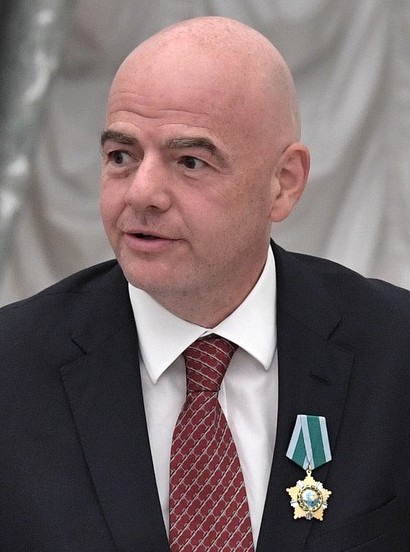
The reversal came less than 72 hours after Gianni Infantino backed a new commercial venture tied to FIFA tournaments. The fight exposed a deeper question: who should profit from the World Cup?
FIFA abandoned a controversial plan to sell commercial rights to private investors on Friday, scrapping a World Cup investment plan less than 72 hours after Gianni Infantino unveiled it Tuesday. The reversal matters because the idea had triggered backlash from football officials and others, including European federations and critics inside FIFA, over whether a minority stake in tournament revenue amounted to selling off part of the sport’s crown jewel.
FIFA dropped a plan involving the World Cup after the pushback made the proposal politically untenable. According to NPR, the plan would have created a new commercial venture around FIFA tournaments, including the World Cup and Club World Cup, then sold a minority stake to private investors.
A rapid retreat by FIFA
The speed of the climbdown is the story. FIFA’s leadership floated a major change to how its biggest tournaments could be monetized, then reversed course within days after opposition came from both outside and inside the organization.
Infantino, FIFA’s president, said in a statement reported by NPR that the project had created divisions that were no longer compatible with its original objective. “Having listened carefully to all the views, it has become clear that the project has created divisions of a nature that, regardless of the level of support, are no longer in the interest of the objective set out in the first place,” he said.
He added that FIFA’s purpose was to “unite and improve” and said the proposal would not proceed. That language matters because it frames the retreat not as a defeat on money, but as a correction in the name of unity.
Still, the reversal lands as a clear setback for Infantino. NPR described him as the plan’s champion, and the opposition did not look like ordinary grumbling over sports-business strategy. It became a governance crisis almost immediately.
What the investment plan involved
The proposal centered on creating a commercial venture to capitalize on FIFA’s tournaments. The World Cup was the central prize, but the plan also involved the Club World Cup, another competition FIFA has been trying to build into a bigger global property.
The most disputed piece was the sale of a minority stake to private investors. NPR reported that the group of potential investors included a firm run by Joshua Kushner, the brother of Jared Kushner, President Trump’s son-in-law.
In practical terms, selling a minority stake would not necessarily mean investors controlled the World Cup. But for critics, that distinction did not solve the core problem. The World Cup is not just a media asset or sponsorship vehicle; it is the most visible event in the sport, funded by fans’ attention and national-team loyalty across the globe.
That is why the word “sale” became so charged. Even a partial investment in a tournament-linked commercial vehicle raised fears that outside investors would be placed closer to decisions about how football’s most valuable events are packaged, priced and expanded.
Europe drew the hardest line
The backlash was strongest in Europe. NPR reported that European nations threatened to boycott the World Cup unless FIFA abandoned the plan entirely, an extraordinary step given the sporting and financial stakes of the tournament.
UEFA, European football’s governing body, reportedly argued that such a deal would amount to the “sale” of football. That phrase was designed to shift the argument away from accounting and toward identity: who owns the game, and who has the right to profit from its biggest stage?
Other regions also pushed back. CONCACAF, which governs North and Central America and the Caribbean, and the Asian Football Confederation opposed the plan as well, according to NPR, though they did not go as far as threatening a World Cup boycott.
That mix of objections gave FIFA little room to maneuver. If Europe was ready to threaten participation and other confederations were also uneasy, the plan risked turning a commercial experiment into a global legitimacy problem.
Internal dissent raised the stakes
The pressure did not stop with outside federations. NPR reported that Carlos Cordeiro, a top adviser to Infantino, resigned from his post earlier Friday over his opposition to the plan.
Even more striking was the reported response from FIFA chief operating officer Kevin Lamour. In a statement to the Associated Press cited by NPR, Lamour said FIFA staff had been blindsided and called it the “project of one person,” a pointed reference to Infantino.
Lamour also said he was willing to be fired over his stance, adding, “At least I’ll sleep well tonight.” For an organization accustomed to tightly managed messaging, that kind of public rupture is unusual.
Internal dissent changed the optics. The controversy was no longer only about whether federations disliked a deal. It suggested a deeper concern over how the proposal had been developed, who had been consulted and whether FIFA’s own senior officials believed the organization was being pushed too far, too quickly.
Why the money fight matters
FIFA’s incentive is not mysterious. The World Cup is a financial engine, and NPR reported that FIFA was set to raise $15 billion over the past four years, with much of that tied to the men’s tournament held across North America.
Infantino has pointed to that money as part of FIFA’s development mission. The organization has 211 member associations, and World Cup revenue helps fund football programs far beyond the wealthiest countries and leagues.
That is the strongest argument for aggressive commercialization: more revenue can mean more money distributed across the global game. Supporters of finding new investment could argue that football is already a massive entertainment business and that FIFA has a responsibility to maximize the value of its tournaments.
The opposing view is that there is a line between selling sponsorships and letting private investors buy into the upside of the World Cup itself. Fans already face complaints about high ticket prices and expanded tournaments. A private-investor stake could deepen suspicion that commercial growth is being prioritized over access, sporting fairness and tradition.
Infantino still faces questions
The abandoned proposal also lands in a broader moment of scrutiny for Infantino. NPR noted recent controversies including backlash over high ticket prices, FIFA’s decision to award a “Peace Prize” to President Trump, and the suspension of a red card given to U.S. men’s national team player Folarin Balogun after Trump and his administration asked FIFA to re-examine the decision.
None of those episodes is the same as the investor plan. Together, though, they feed a perception problem: FIFA’s president is trying to grow the business of global football while critics worry about concentration of power and political proximity.
Infantino said he now wants to bring interested parties back together in the coming days and weeks to continue growing football, especially in countries that need support. That leaves open the possibility that FIFA will return with a different commercial structure later.
The unanswered question is whether this was a one-off miscalculation or a sign that FIFA’s members are ready to place harder limits on how the World Cup can be monetized. For now, the message from the backlash is blunt: the tournament may be FIFA’s most valuable asset, but attempts to sell a slice of its commercial future can still meet a wall.
Leave a Reply