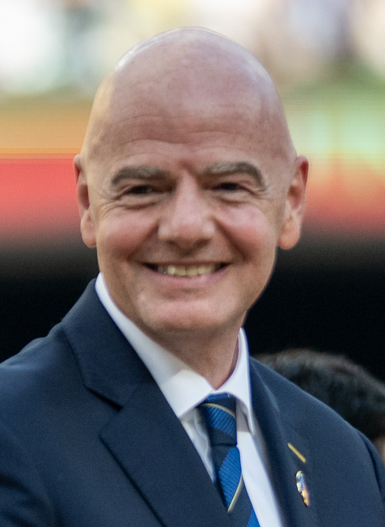
The fight is about more than one abandoned deal. It has opened a rare public test of Infantino’s authority inside world football before FIFA’s next election cycle.
Gianni Infantino is holding emergency talks in Morocco on Wednesday with top FIFA officials and senior football officials as the embattled FIFA chief tries to contain fallout from a controversial FIFA stake-sale and commercial rights proposal. The plan would have sold 20% of a new commercial entity to private investors for $4.2 billion, raising alarms across parts of FIFA’s 211-member football world.
The meeting matters because the proposal has already been withdrawn, but the pressure around FIFA chief Infantino has not. Reports from Reuters and Arise News describe a leadership crisis shaped by questions over money, control and trust inside the sport’s global governing body.
A withdrawn deal still burns
The immediate trigger is a commercial plan that, according to Arise News citing Reuters reporting, would have created a new entity tied to FIFA’s commercial rights and sold a 20% stake to private investors. The aim was reportedly to raise $4.2 billion.
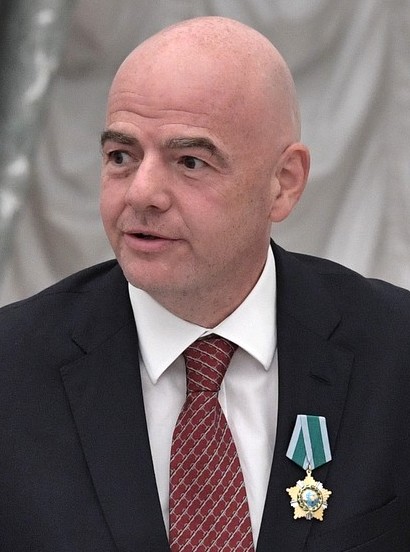
That kind of money would be significant even for FIFA, whose power rests not only on staging global tournaments but also on distributing development funds to national associations. A large outside investment in a rights-related vehicle would inevitably raise questions about who gains influence over football’s commercial future.
The proposal was abandoned last Friday, according to the same reporting. But walking away from the plan has not ended the dispute. For critics, the issue is not only that the idea existed; it is how it was developed, who backed it and what member associations were told before the backlash became public.
Why Morocco is the stage
Infantino’s talks in Morocco are not just a convenient gathering point. Morocco is also set to host FIFA’s Congress next March, where Infantino’s future as president is expected to be a central question if opposition continues to build.
Arise News reported that Morocco’s football federation has reaffirmed support for Infantino. That support matters because FIFA elections are decided by national associations, not by public opinion, European club power or media pressure alone.
FIFA has 211 member associations, and each vote carries weight in the presidential system. That structure has long given smaller federations an outsized role in leadership contests, especially those that rely heavily on FIFA development funding.
Morocco also sits at a strategic crossroads in global football politics. It is influential in Africa, connected to European football through geography and competition ties, and increasingly important to FIFA’s tournament planning. Holding crisis talks there sends a message about where Infantino still expects to find support.
Pressure is coming from multiple fronts
The sharpest criticism described in the reporting has come from European football circles. UEFA and several European associations have reportedly raised concerns that the proposal risked compromising the integrity of the sport and centralizing too much power around FIFA’s leadership.
The controversy also reportedly included concern about the involvement of a company linked to the family of U.S. President Donald Trump. That detail has fueled sensitivity around the deal, though the broader governance issue would remain even without the political association: should private investors be allowed to buy into a structure tied to FIFA’s commercial rights?
There are signs of internal strain as well. Arise News reported that FIFA Secretary General Mattias Grafstrom circulated an internal message calling the failed project a regrettable episode that had been permanently abandoned. The report also said FIFA Chief Operating Officer Kevin Lamour told staff they had been misled over what he characterized as an initiative driven by one individual.
Those accounts, if accurate, point to a deeper problem for Infantino than outside criticism. A president can usually ride out media scrutiny if the internal machine stays disciplined. Public signs of division inside FIFA are harder to manage.
Infantino still has a path
For all the pressure, Infantino remains a formidable political operator inside FIFA. He has built support across Africa, Asia, the Middle East and parts of the Americas through expanded funding, tournament growth and a promise to spread football’s wealth beyond its traditional European power centers.
That is the strongest defense his allies can make: FIFA under Infantino has pushed more money and more attention toward federations that historically felt marginalized. Many associations may view the rights proposal as a misstep, not a reason to remove the president.
The competing view is that development money should not insulate FIFA leadership from scrutiny. Critics argue that the commercial rights proposal raises basic questions about transparency, process and whether major decisions are being driven through without enough consultation.
That divide is familiar in FIFA politics. Infantino’s supporters tend to emphasize delivery and distribution. His critics tend to emphasize governance and concentration of power. The Morocco talks are where those arguments move from public statements into private vote-counting.
The numbers behind the threat
Under FIFA statutes, an Extraordinary Congress can be requested if at least 43 member associations formally call for one, according to the reporting. That is a reachable number in theory, but a difficult one in practice.
Why? Because complaining privately is easier than signing onto a formal challenge against a sitting FIFA president. Associations must weigh principle, politics, funding relationships and regional alliances. Some may want leverage, not regime change.
The opposition’s biggest challenge is organization. Reports have suggested that UEFA, CONCACAF and the Asian Football Confederation have explored ways to increase pressure, but the confederations have not publicly confirmed a coordinated plan. Without a named challenger or a formal bloc, frustration may remain loud but limited.
Prince Ali bin Hussein of Jordan, a past FIFA presidential candidate and longtime critic of FIFA leadership practices, has reportedly said Jordan would not support Infantino. That is notable, but one country’s opposition does not by itself create a campaign.
What remains unresolved
The central unanswered question is whether the abandoned proposal was an isolated political error or evidence of a broader decision-making problem inside FIFA. That distinction will shape how much danger Infantino faces.
FIFA has not, based on the available reports, fully detailed who authorized the commercial rights plan, how private investors were selected, what safeguards were proposed or why the idea advanced far enough to trigger such a backlash. Those details will matter to associations deciding whether the issue is closed.
The next question is whether anyone credible is willing to challenge Infantino before the Congress in Morocco next March. Leadership pressure can damage a president, but FIFA elections require organization, regional bargaining and a candidate who can convince smaller federations that change will not mean losing support.
For now, the Morocco talks are best read as a containment effort. Infantino needs to reassure allies, limit defections and show that the $4.2 billion rights proposal is dead. His critics need to prove the fallout is not.
Leave a Reply