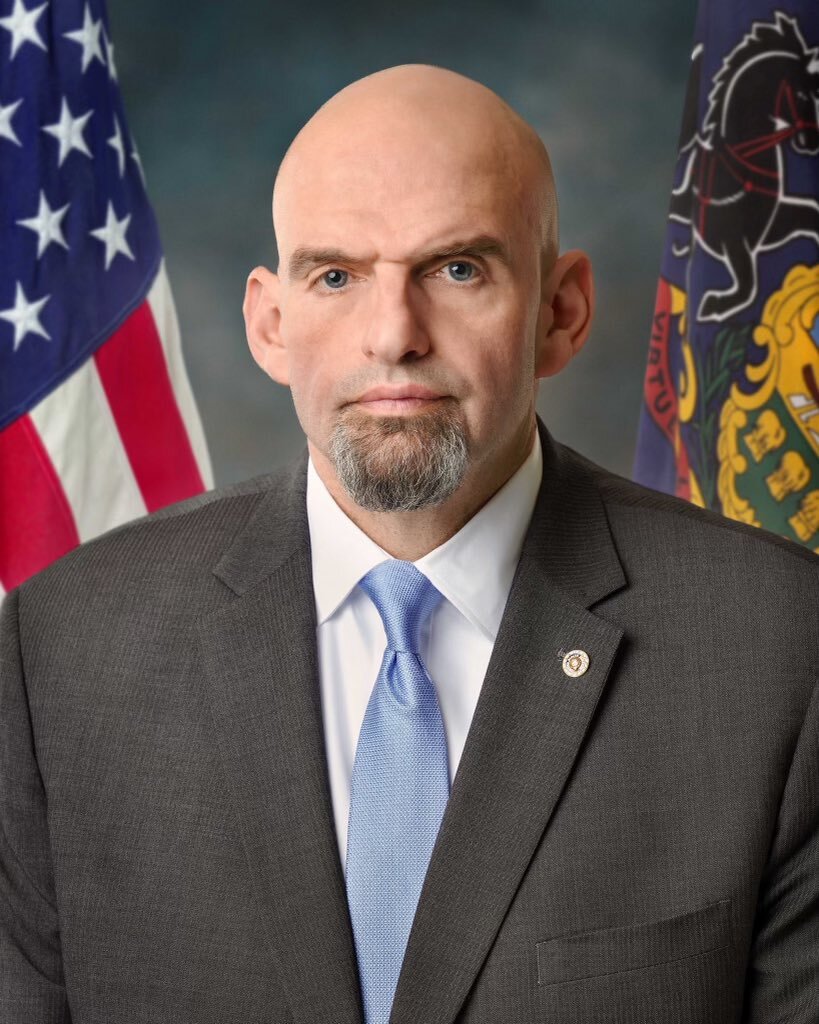
The Pennsylvania Democrat once argued the Senate rule blocked action. He now says it protects whichever party is out of power, reviving a fight Democrats have not settled.
John Fetterman has reversed his position on the Senate filibuster: the Pennsylvania Democrat now supports keeping it after he previously campaigned to eliminate it in 2022, and he says Democrats were horribly wrong to push the other way.
The shift matters because Fetterman is not only revising an old campaign pledge. He is also stepping into one of the Senate’s most stubborn fights: whether the filibuster is an anti-majoritarian roadblock or a necessary brake on whichever party controls Washington.
A Democrat changes his calculation
Fetterman laid out his new position in a July 28 Washington Post column, according to the originating report. In it, he said his earlier support for ending the filibuster was tied to the short-term goal of advancing Democratic priorities.

He wrote that he and other Democrats were “horribly wrong” to treat the rule as only an obstacle. His current argument is that the Senate needs a mechanism that protects the minority party’s voice, regardless of which party happens to be in the minority.
That is a sharp break from the posture he took as a 2022 Senate candidate in Pennsylvania. Then, Fetterman campaigned on abolishing the filibuster and cast it as a barrier to getting things done for Pennsylvanians.
Now, the same rule he once wanted removed is being presented by him as a guardrail against rapid swings in power.
What the filibuster actually does
The filibuster allows senators to delay or block many bills unless supporters can gather 60 votes to move forward. In practice, that means major legislation often needs at least some bipartisan support, even when one party controls the Senate.
That 60-vote threshold is the core of the fight. Supporters argue it forces negotiation and prevents narrow majorities from remaking federal policy too quickly. Critics argue it gives a minority the power to stall legislation backed by voters and by elected majorities.
For years, many Democrats described the filibuster as a Republican veto over priorities they saw as urgent. That pressure intensified during Joe Biden’s presidency, when Democrats controlled Washington but lacked enough votes to get around Republican opposition on major items.
Fetterman now describes the same procedural barrier differently. In his telling, a rule that frustrates a party in power can become protection when that party loses power.
Why the timing matters
Fetterman’s new defense of the filibuster comes with a pointed warning about what simple-majority rule could make possible. In his column, he pointed to President Donald Trump’s return to power and Republican control of Congress as evidence that eliminating the filibuster could allow fast changes in law, deregulation and federal procedures.
That argument turns a long-running Democratic complaint on its head. The filibuster was often portrayed by progressives as the thing standing between Democrats and popular policy wins. Fetterman is now emphasizing what might happen if the next majority faced fewer procedural limits.
The political significance is bigger than one senator’s change of mind. It shows how the filibuster debate changes depending on who holds power, who is blocked by it and who might need it later.
That does not erase the criticism. Democrats who still want the rule weakened or scrapped can argue that fear of future Republican action should not justify making the Senate less responsive now.
The 2022 promise he abandoned
During his 2022 campaign, Fetterman was not vague about the filibuster. His campaign website described abolishing it as necessary because it stood in the way of action for Pennsylvanians, according to the originating report.
At the time, Democrats were openly divided over Senate rules. Sens. Kyrsten Sinema of Arizona and Joe Manchin of West Virginia, then aligned with Democrats, joined Republicans in preserving the filibuster and drew fierce criticism from many progressives.
Fetterman was among those who opposed their stance. He now says history has vindicated them, calling their support for the filibuster politically damaging but courageous.
That reversal carries obvious risks. Some voters who backed Fetterman because he promised to remove procedural barriers may see the shift as a retreat. Others may view it as a pragmatic acknowledgment that Senate rules should not be rewritten only when they benefit one party’s current agenda.
Democrats still face the same split
The Democratic divide over the filibuster has never been only technical. It reflects two competing theories of democratic power.
Progressives have argued that the rule enables minority rule, especially when senators representing a smaller share of the population can block legislation supported by a national majority. Supporters of that view say the filibuster has made the Senate less responsive on issues including voting rights, gun legislation and labor protections.
Fetterman is now making the counterargument: restraint matters because power changes hands. He says Democrats should abandon their “worst impulses” and work with Republicans if they regain control, with the filibuster forcing negotiation if lawmakers do not choose it voluntarily.
That position will not persuade Democrats who believe bipartisan compromise is often unrealistic or unevenly demanded. But it captures the fear at the center of Fetterman’s turn: ending the rule for one party’s goals could give the next majority a much larger weapon.
What remains unclear
Fetterman’s reversal gives filibuster defenders a notable Democratic voice, especially because he won a high-profile Pennsylvania Senate race in 2022 and has repeatedly broken with expected partisan positioning since arriving in Washington.
Still, the practical impact is uncertain. One senator’s position matters most when Senate margins are tight and rule changes are actually on the table. It is not yet clear whether his stance reflects a broader Democratic cooling on filibuster abolition or mainly his own political evolution.
The party’s future position may depend less on abstract principle than on the next Senate map, the next presidential agenda and the next major priority blocked by the rule.
For now, Fetterman has moved from seeing the filibuster as a problem Democrats needed to eliminate to seeing it as a limit on whoever controls the Senate. That puts him at the center of a fight Democrats keep returning to: whether the Senate should let majorities move quickly, or preserve the minority’s power to say no.
Leave a Reply