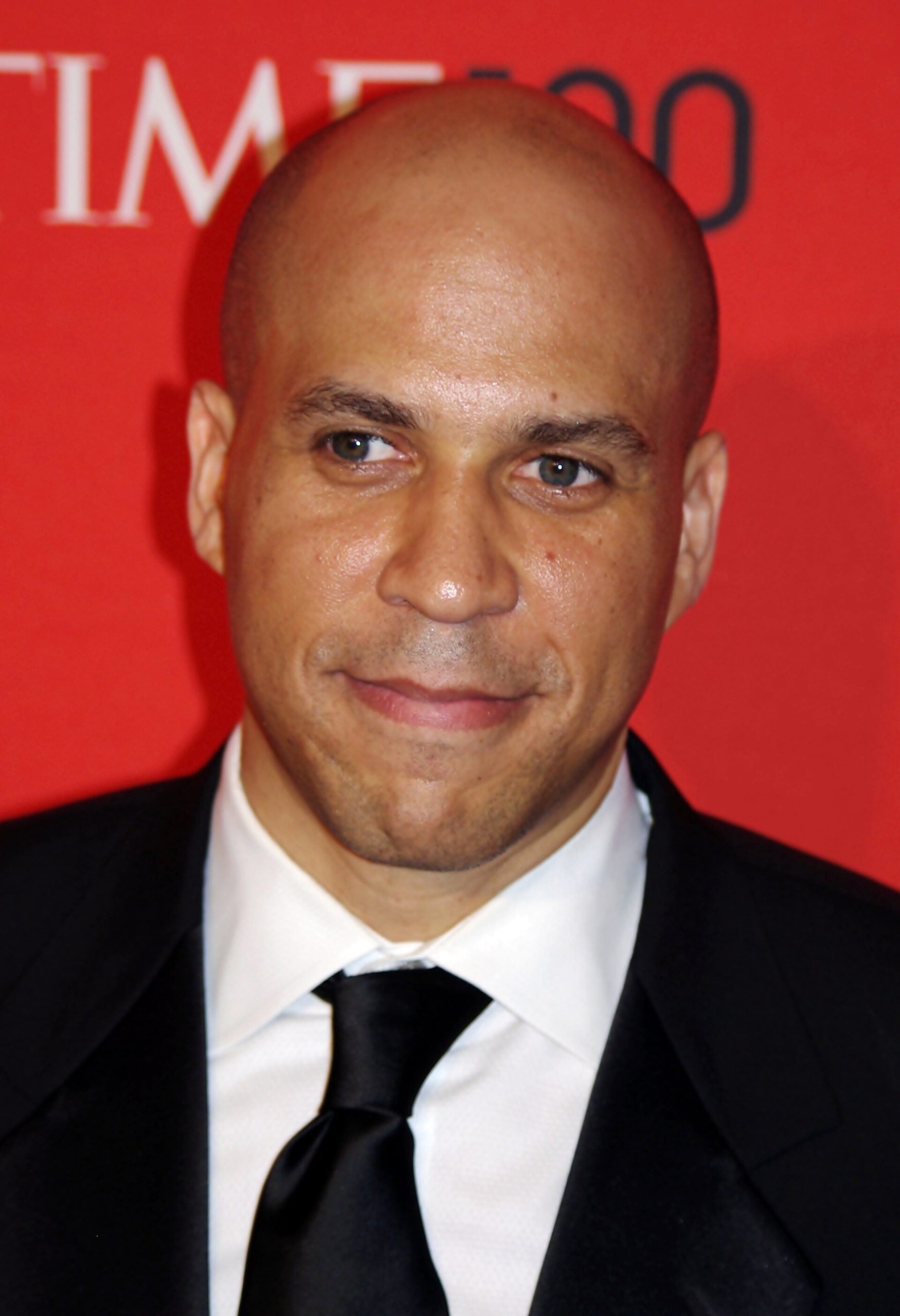
The New Jersey case has become a national flashpoint over election security and voting access. Booker says the mistake was serious, but opponents and supporters of the SAVE Act see very different lessons in it.
Cory Booker continues to reject the SAVE Act after the New Jersey voter roll scandal involving roughly 6,600 noncitizens mistakenly registered to vote. Booker says the scandal does not justify the bill, arguing the error came from state systems, not from a missing federal voter-ID rule.
The fight matters because New Jersey’s mistake is now being used in Washington as evidence in a larger argument over election security, citizenship checks and whether new federal voting rules would prevent problems or block eligible Americans from voting.
Booker draws a bright line
Booker, a Democratic senator from New Jersey, told Fox News Digital that the state’s failure should be taken seriously. But he rejected the idea that it proves Congress should pass the SAVE Act, a Republican-backed proposal that would require documentary proof of citizenship for federal voter registration.
His core argument is narrow: the New Jersey case, as described by state officials, was a software and administrative failure. Booker said, according to Fox News, that “nothing in the SAVE Act would have prevented a clerical error like we’ve seen in Texas and Oregon and New Jersey.”
That distinction is the heart of the dispute. Supporters of the SAVE Act see the New Jersey removals as a warning sign that current systems are too loose. Booker sees the same facts as evidence that election systems need better state-level oversight, not a federal documentation rule he says could keep eligible voters from casting ballots.
What New Jersey says happened
New Jersey Gov. Mikie Sherrill announced that the state removed roughly 6,600 noncitizens from its voter rolls after discovering they had been made eligible to vote for the 2024 presidential election, according to the Fox News report.
Sherrill attributed the problem to what she called a “serious software error” in New Jersey’s Motor Vehicle System. She said the state ordered an investigation and moved to remove the affected noncitizens from the rolls after the issue was discovered.
The available reporting cited here does not establish how many, if any, of the affected people cast ballots. That unanswered question is important, because “mistakenly on the rolls” and “illegally voted” are related but not identical claims.
Booker has tried to keep the focus on the state’s responsibility to find out what went wrong. “We take this very seriously in New Jersey,” he said, according to Fox News, adding that officials should get to the bottom of the problem and hold people accountable.
What the SAVE Act would do
The SAVE Act has become shorthand for a bigger Republican push to tighten citizenship verification in elections. Supporters argue that requiring documentary proof of citizenship would create a stronger national safeguard and expose weaknesses that states may miss.
Democrats, including Booker, argue that the requirement could create a new barrier for eligible citizens who do not have easy access to documents such as a passport, birth certificate or naturalization papers. Booker’s Senate office has described the measure as a “massive voter suppression bill.”
Booker’s position has a careful caveat. He told Fox News Digital that voting requirements “should always have proof of citizenship for voting,” but said states should handle those rules, even in federal elections. In his view, violations should be prosecuted, but Congress should not use one state’s software failure to impose a broad new voting burden.
That leaves Booker defending two points at once: citizenship matters for voting, and the SAVE Act is the wrong vehicle to enforce it.
Why Republicans see an opening
For Republicans, the New Jersey case is politically powerful because it puts a large number on a problem that is often debated in the abstract. Roughly 6,600 noncitizens being made eligible to vote is not a small paperwork glitch, even if the root cause was software.
President Donald Trump has been pressing Senate Republicans to pass the SAVE Act, according to the Fox News report. The New Jersey case gives backers a fresh example to cite as they argue that states should not be left to catch these problems after the fact.
Supporters also point to a broader problem: there is no single national standard for identifying and reporting these kinds of voter-system errors. Without one, it is difficult to compare states, measure frequency or know whether similar failures are being found consistently.
That uncertainty cuts both ways. It can strengthen the case for national rules, but it also makes it harder to prove that one state’s software error reflects a widespread failure that only the SAVE Act can solve.
Why Democrats fear overreach
Democrats are not defending the New Jersey error. The sharper disagreement is over the remedy. Booker and other opponents argue that a federal documentation requirement could turn a preventable administrative failure into a nationwide access problem.
The concern is practical. Many eligible voters may be citizens but lack immediate access to qualifying papers, especially if their documents were lost, names changed after marriage or divorce, records were issued decades ago, or they were born in rural areas with inconsistent recordkeeping.
Republicans counter that election integrity depends on clear proof, not trust in fragmented systems. Democrats counter that existing penalties, state checks and targeted fixes can address unlawful registrations without making registration harder for citizens who are already eligible.
The New Jersey case exposes the weakness in both easy arguments. It shows that state systems can fail in serious ways. It also does not, at least from the facts publicly described in the cited reporting, prove that the specific federal fix Republicans want would have stopped this particular error.
What remains unresolved
The next phase is less about slogans and more about evidence. New Jersey’s investigation needs to explain how the Motor Vehicle System error occurred, how long it lasted, why it was not caught sooner and whether any ballots were cast by people who were not eligible.
Congress, meanwhile, faces a policy question that cannot be answered by one scandal alone: whether a national documentary proof-of-citizenship rule would meaningfully reduce improper registrations without creating unacceptable obstacles for eligible voters.
Booker is betting that voters will separate outrage over the New Jersey mistake from support for the SAVE Act. Republicans are betting the opposite: that a concrete failure involving 6,600 names will make warnings about voting restrictions sound less urgent than demands for tighter controls.
The clean takeaway is that the New Jersey scandal has not settled the SAVE Act debate. It has made the central tradeoff harder to avoid: how to build voting systems that catch ineligible registrations without making lawful voters pay the price for government errors.
Leave a Reply