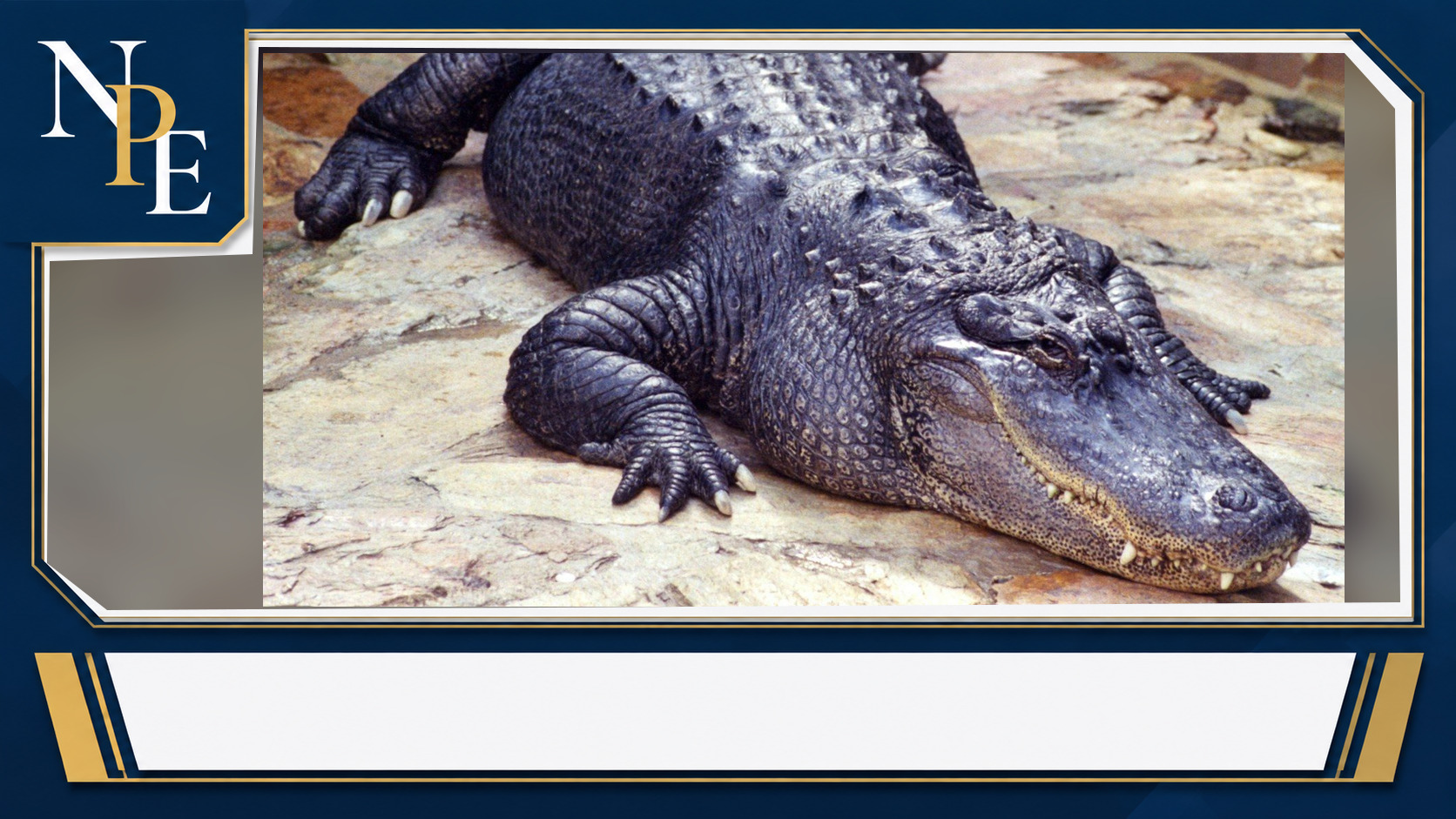
Brittany Clark’s death during a hike has put focus on the emergency her boyfriend described and on the questions investigators have yet to answer. Officials say the alligator responsible has not been identified.
Chance Allison recounts Brittany Clark’s final moments after Clark, 31, died following an alligator attack in Florida’s Econlockhatchee River near Orlando. The attack happened around 1:30 p.m. Sunday as Clark, Allison and a friend were hiking and wading in Little Big Econ State Forest; Florida wildlife authorities released details Monday.
According to the Florida Fish and Wildlife Conservation Commission, Allison called 911 while trying to pull Clark’s arms from the alligator’s mouth. Investigators are still working to identify the animal involved and determine what may have contributed to the fatal encounter.
A stop in the river
Clark, an Orlando resident, had been hiking with Allison and her best friend when the group entered the river to cool off, Florida Fish and Wildlife Conservation Commission Lt. Grant Eller said.
They were in roughly three feet of water near the Barr Street Trailhead in Little Big Econ State Forest, northeast of Orlando, when the alligator attacked, according to Eller. Authorities said Clark sustained severe injuries to her arms.
Clark died before rescuers could take her to a hospital, officials said. What began as an ordinary break during a hike became a sudden emergency in a waterway that is also alligator habitat.
Allison’s account of Clark
Wildlife officials said Allison was attempting to free Clark as he made the 911 call. A recording obtained by NBC News captured a frantic request for help from the scene as those with Clark sought assistance.
In a message to NBC News after her death, Allison called Clark an “amazing and caring person” and said she was the strongest and most outgoing person he had known. He said she loved being on the water whenever she could.
Allison also said the couple never expected “this nightmare” to happen. His account adds the human reality behind the official timeline, but it does not answer why the alligator attacked, and authorities have not assigned a cause.
Two alligators are being tested
After the attack, Seminole County sheriff’s deputies and a professional alligator trapper removed two alligators seen near the location, Eller said. One measured 13 feet and the other measured 12 feet.
Authorities sent DNA from both animals to a state laboratory. The testing is meant to establish which alligator, if either, was involved in Clark’s death.
That distinction matters. An alligator’s size or its presence near the scene does not by itself prove it was responsible for the attack. Until testing is complete, officials cannot say with certainty whether either captured animal was involved.
Possible factors are not findings
Investigators have not said what specifically triggered the encounter. Eller cited the end of mating season, when alligators can be territorial, and drought conditions that had left water levels low as conditions that could be relevant.
Those details are context, not a conclusion about this attack. Alligator behavior can be affected by territory, nesting, food availability, water conditions and how close people are to the animal, making a definitive explanation difficult without evidence tied to the incident.
The case also came amid several reported alligator incidents in Central Florida. WESH reported this was the third reported attack in seven days and the second within 24 hours in the region, while the state agency was reviewing a report involving a boy fishing in Marion County.
Those reports do not establish a broader increase in attacks or a shared cause. Each incident requires its own investigation and may involve different local conditions.
Shallow water is not risk-free
Alligators live in all 67 Florida counties, according to the Florida Fish and Wildlife Conservation Commission. The agency says serious injuries are rare, but alligator habitat is not confined to remote marshes or highly visible wetlands.
A frequent visitor to the trail told NBC affiliate WESH that people in the area knew about alligator warning signs and that a female alligator had been seen nearby. The wider safety message is not that a victim is responsible for a sudden attack; authorities have not said Clark or her companions did anything that caused it.
It is that water which appears inviting during a hot hike may still be occupied by large wildlife. Florida guidance advises people to keep a safe distance from alligators, keep pets away from the water’s edge and avoid swimming where alligators may be present, particularly at dawn, dusk or night.
- Never feed alligators, which can cause them to associate people with food.
- Report an aggressive or threatening alligator through the Florida Fish and Wildlife Conservation Commission’s nuisance alligator program.
- Call 911 in an immediate emergency.
The central loss remains
The investigation may eventually identify the alligator involved, but it may not fully explain why the attack happened at that particular moment. Officials’ comments about territorial behavior and low water levels remain possible factors rather than final findings.
For Clark’s family and friends, the case is first a personal loss: a 31-year-old woman Allison remembered for her care for others, energy and love of being on the water. For visitors to Florida’s rivers and trails, it is also a stark reminder that popular recreation areas and wild habitat can overlap, even in shallow water.
Leave a Reply