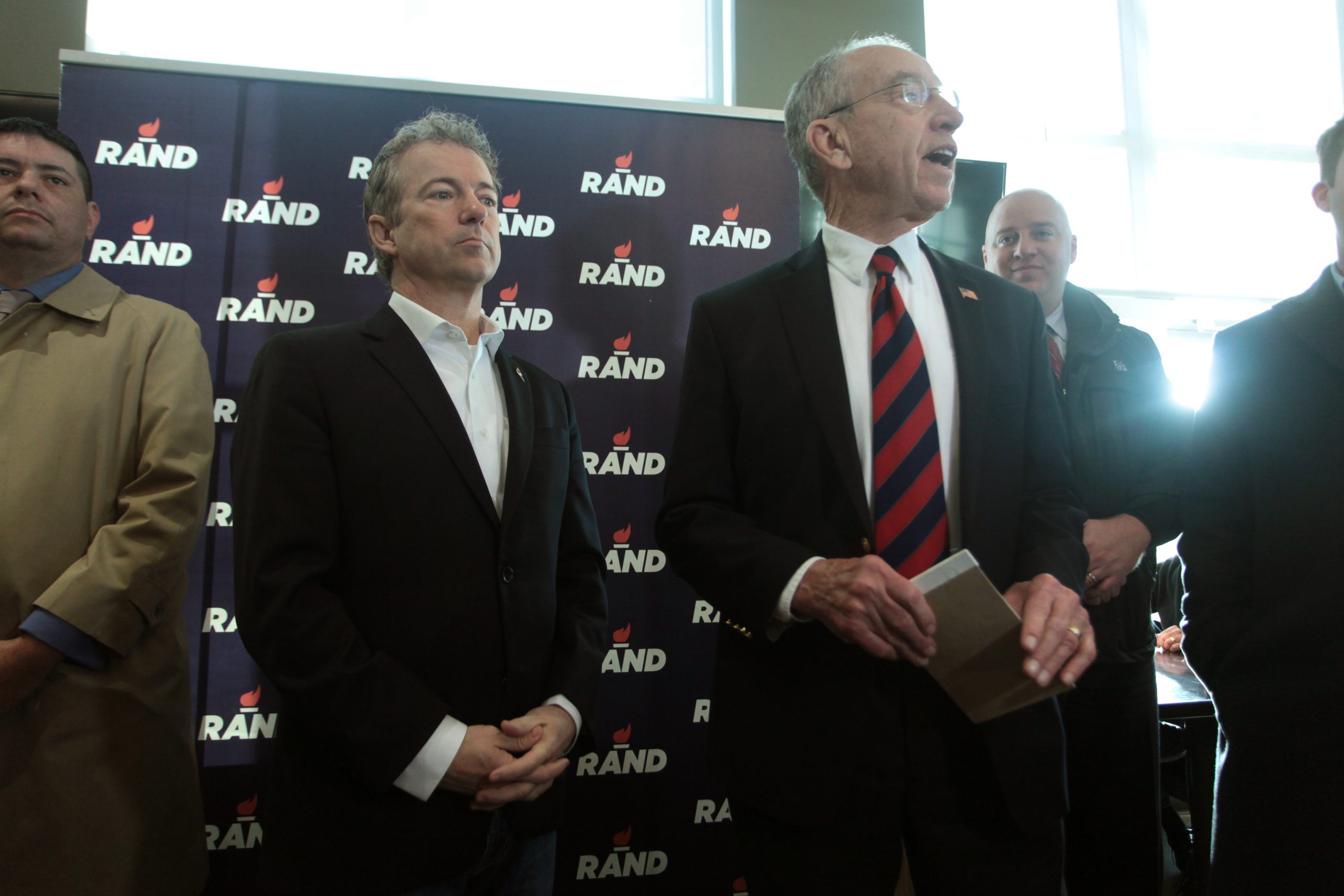
The allegation came during questioning of Deputy Attorney General nominee Todd Blanche, who previously represented Trump. The key issue is whether FBI records Grassley released should have been turned over to the defense in Jack Smith’s election case.
Chuck Grassley says Jack Smith withheld impeachment records from Trump’s defense team in Washington, accusing the former special counsel of keeping relevant materials out of lawyers’ hands in Trump’s federal elector case. The article explains what was allegedly withheld in Trump’s case: FBI emails and records tied to Arctic Frost and agent Timothy Thibault, according to a Senate Judiciary Committee Republican release.
Deputy Attorney General nominee Todd Blanche, who represented Trump, answered “No, Senator” when Grassley asked whether the Justice Department produced those materials. Grassley says the records mattered because defense lawyers use impeachment evidence to challenge witnesses and government conduct.
The records at issue
The dispute centers on FBI emails and other records that Grassley and Sen. Ron Johnson previously made public, according to the Senate Judiciary Committee release. Grassley described the documents as related to “Arctic Frost,” which he called the FBI’s case against Trump.
In Grassley’s account, those records show that former FBI agent Timothy Thibault drafted, opened and advanced information that later became the basis for Smith’s elector case. Grassley also said the work violated FBI rules.
That framing is Grassley’s. The release does not include a court finding that Smith’s team committed a discovery violation over those records, and it does not present a response from Smith or the Justice Department disputing or accepting the allegation.
The practical claim is narrower than the political language around it: Grassley says certain FBI communications were relevant impeachment material and should have been produced to Trump’s defense counsel.
Why “impeachment” is confusing
In this context, “impeachment records” does not mean documents from Trump’s presidential impeachments in Congress. It refers to impeachment evidence in a criminal case — information that can be used to challenge the credibility, bias, reliability or conduct of a witness or investigator.
That distinction matters. Criminal defendants are generally entitled to certain evidence that could help the defense, including material that may undercut government witnesses. Lawyers often refer to credibility-related material as impeachment evidence.
Grassley’s argument is that the defense could have used the FBI records to question how the elector case began, whether investigators followed protocol, and whether bias affected the investigation. His release says withholding such evidence can prevent a defendant from mounting a complete defense and fully questioning witnesses.
The unresolved question is whether the records were legally required to be turned over in the form Grassley describes. That would typically depend on relevance, timing, protective orders, discovery rules and how prosecutors understood the material at the time.
Blanche’s role complicates the moment
Blanche was not a detached witness in the exchange. He represented Trump in Smith’s federal cases and was appearing as a nominee for deputy attorney general, a position that would put him near the top of the Justice Department.
Grassley asked Blanche whether the government produced emails and records between Thibault and his team of agents, including documents Grassley had recently released. Blanche replied: “No, Senator.”
That answer is the backbone of Grassley’s new accusation. But it is also important to read it with the context that Blanche was Trump’s former defense lawyer and a Trump administration nominee, not a neutral court-appointed reviewer.
Blanche also used the hearing to criticize Smith’s handling of both federal Trump prosecutions. He pointed to the Florida classified-documents case and the Washington election case as examples of what he described as overly aggressive or unfair tactics.
The broader complaints against Smith
Blanche told Grassley that prosecutors in the Florida case initially asked the court to restrict Trump’s access to documents he was charged over. He framed that as an extraordinary position, saying even some terrorism defendants are allowed to see evidence against them to some extent.
He also criticized Smith’s proposed schedule in the Washington case, saying prosecutors sought a December 2023 trial date while producing more than 11 terabytes of discovery and while Trump had other litigation and trial commitments.
Blanche further attacked Smith’s conduct after the Supreme Court’s July 2024 presidential immunity decision. He said Smith returned to the grand jury, removed “almost nothing” from the indictment and filed another charge. He also criticized a lengthy September filing he said had no basis in the federal rules.
Those points reflect the defense-side view that Smith’s team pushed too hard and too fast. Prosecutors, by contrast, often argue that public-interest cases involving national elections and classified records require efficient schedules and court-managed discovery. The Senate release does not include Smith’s rebuttal.
What is known and disputed
Smith brought two federal criminal cases against Trump: one in Florida involving classified documents and one in Washington involving alleged efforts to overturn the 2020 election. Trump denied wrongdoing in both.
The Washington case is the one Grassley referred to as the elector case. It focused in part on actions tied to the 2020 election and efforts to affect the certification of the result. Smith’s office later moved to dismiss the federal cases after Trump won the 2024 election, citing Justice Department policy against prosecuting a sitting president.
What is known from the Senate release is that Grassley asked Blanche whether specific FBI records were produced to the defense, and Blanche said they were not. What remains disputed is whether those materials were required discovery, whether prosecutors had a legal obligation to disclose them, and whether their absence changed any defense strategy or court ruling.
There is also a political layer. Grassley’s statement accused Smith and Justice Department officials of weaponizing the justice system against Trump. That is a serious charge, but the release is a partisan committee statement, not a judicial opinion.
Why the allegation still matters
The claim lands at a sensitive time because it connects three fights at once: Trump’s past criminal prosecutions, the future leadership of the Justice Department, and congressional scrutiny of the FBI’s role in politically charged investigations.
If the records were relevant impeachment evidence, defense lawyers would argue they should have had them while the case was active. If the records were not legally material or were outside disclosure obligations, then Grassley’s accusation may remain more political than legal.
The next meaningful test would be whether the Justice Department, Congress or a court develops a fuller record showing what prosecutors had, when they had it, and why the materials were or were not produced. Without that, the public is left with a sharply worded allegation, Blanche’s confirmation on one narrow question, and no response from Smith in the cited release.
The takeaway is not that a court has found Smith hid evidence. It is that Grassley has put a specific discovery accusation into the political record — and tied it directly to Trump’s defense, the FBI’s early work on the elector case and the leadership debate now surrounding the Justice Department.
Leave a Reply