Former ICE leaders say traffic stops were once a limited tactic, not a centerpiece of immigration enforcement. Recent deaths in Maine and Texas have turned that shift into a fight over safety, training and deportation policy.
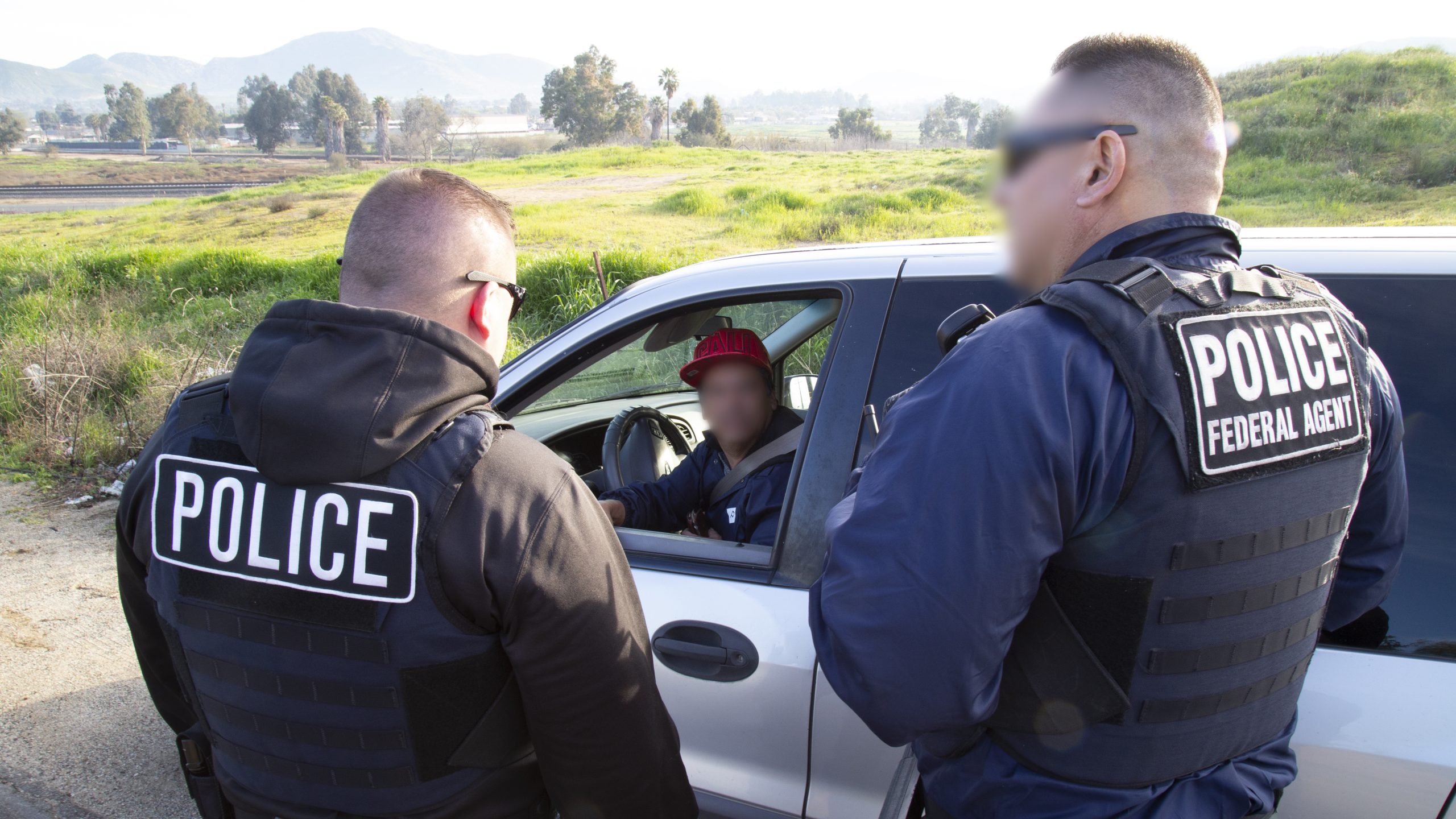
ICE is relying more on vehicle stops as part of immigration enforcement, and former officials say this is dangerous after recent fatal shootings during vehicle-stop encounters in Maine and Texas. On July 17, 2026, USA TODAY reported that federal officers shot and killed two people in less than a week — six days apart — prompting ICE and Homeland Security leaders to temporarily suspend most stops nationwide.
By July 14, 2026, the policy response was already becoming a political fight: President Donald Trump reversed the pause, calling traffic stops one of ICE’s most important crime-fighting tools. The reversal has put a basic question at the center of the immigration debate: whether speed and volume are pushing agents into encounters they are not built to handle safely.
Two stops changed the debate
The immediate flashpoint is a pair of deadly encounters involving U.S. Immigration and Customs Enforcement officers during vehicle stops.
According to the USA TODAY report, an ICE officer shot and killed a Colombian man in a residential area of Biddeford, Maine, on July 13. The Department of Homeland Security said the man tried to flee and that the officer opened fire while fearing for public safety.
Six days earlier, in Houston, Texas, an ICE officer fatally shot a Mexican national during another stop. Federal officials said the man tried to ram agents with his car. Witnesses disputed that account, according to the report.
Those two deaths landed in the middle of a broader shift in enforcement. ICE, Border Patrol and other Department of Homeland Security personnel have been doing more street operations as the Trump administration pushes what it describes as the largest deportation campaign in U.S. history.
Why vehicle stops worry veterans
Former ICE officials quoted by USA TODAY said traffic stops were never supposed to be the backbone of immigration enforcement. They happened, but they were not the preferred approach.
John Sandweg, who served as acting ICE director during the Obama administration, said agents usually relied on surveillance and planned arrests at homes, workplaces or other known locations. The idea was to choose the moment with the least risk for officers, bystanders and the person being arrested.
Deborah Fleischaker, a former ICE official who served under the Biden and first Trump administrations, described a slower model: agents would know where someone lived, why they were being picked up and what daily patterns could make an arrest safer.
That is the key difference. A planned arrest gives agents some control. A vehicle stop can collapse that control in seconds, especially if the driver panics, misunderstands who is stopping them or tries to leave.
A risky tactic even for police
Traffic stops are a routine part of local policing, but they are also among the most unpredictable encounters officers face. The officer does not know who is inside the car, whether there are weapons, whether passengers are present or whether the driver will comply.
David Harris, a University of Pittsburgh law professor who studies police procedure, told USA TODAY that traffic stops require deep, scenario-based training to perform safely. His concern is that ICE agents may not be getting enough of that training for the volume and style of stops now being used.
That distinction matters because ICE agents are not simply replicating a local police traffic stop. They may be trying to identify, detain and transport someone for civil immigration enforcement, often in charged conditions where people may fear deportation or separation from family.
USA TODAY reported that immigration agents have shot more than 20 people since the start of last year, with most of those people inside vehicles at the time, based on its analysis of official statements, lawsuits and court records. That figure is now central to the argument that the tactic deserves a closer review.
The administration’s competing message
The administration has defended aggressive enforcement as necessary to remove people it says should not be in the country. Homeland Security Secretary Markwayne Mullin told USA TODAY that the department’s top goal is keeping officers safe and getting criminals off the streets, adding that undocumented immigrants will be arrested and deported wherever they are.
Trump’s response was more direct. After agency leaders moved to suspend most traffic stops nationwide, he rejected the pause and said ICE could not give up what he called one of its most important and effective crime-fighting tools.
White House border czar Tom Homan had described the pause as a short-term review meant to ensure agents were safe and acting properly. He also argued that ICE still had other ways to arrest people, including at homes or before they entered vehicles.
That brief internal split is telling. Even within a hard-line enforcement framework, there was apparently enough concern after the shootings for senior officials to consider pulling back, at least temporarily. The president’s reversal turned an operational safety question into a test of political resolve.
Old ICE model, new pressure
For much of ICE’s history, the agency leaned heavily on local jails. People booked by local or state law enforcement could be identified through federal immigration systems and transferred into ICE custody.
Community arrests still happened, but former officials said they were typically focused on people considered public-safety threats or those with serious criminal convictions. That older model did not eliminate controversy, but it usually gave agents more time and information before making contact.
The current push appears broader. USA TODAY reported that agents have increasingly used street operations, including vehicle stops, to find and arrest undocumented immigrants, many of whom have no criminal record.
Supporters of the administration’s approach see that as fulfilling a campaign promise and restoring consequences for unlawful presence. Critics see a widening dragnet that puts agents, immigrants and neighborhoods into volatile encounters that might be avoidable.
What remains unanswered
The biggest unknown is whether ICE will change anything after the two fatal shootings. A temporary pause can signal a safety review, but a reversal within hours leaves little room for the kind of training audit or tactical reassessment experts say may be needed.
Several facts also remain contested. In the Houston shooting, federal officials and witnesses offered sharply different accounts of whether the vehicle was used as a threat. In Maine, DHS has framed the shooting around public safety concerns after an attempted flight. Those details are likely to shape public trust in the investigations.
There is also a broader policy question: if the administration wants more arrests, does that inevitably mean more street encounters and more vehicle stops? Or can ICE meet enforcement goals through planned operations that former officials argue are safer?
For now, the scrutiny is unlikely to fade. Two people were killed in six days, a nationwide pause was ordered and then reversed, and former ICE officials are warning that the agency is leaning harder on a tactic they once used sparingly. The fight over vehicle stops is becoming a fight over what immigration enforcement should look like on ordinary American streets.
Leave a Reply