The case puts a fringe congressional campaign, a viral political video and federal threat rules on the same collision course. It also shows how quickly law enforcement moves when speech is treated as a threat against a president.
William Upham, a Florida write-in congressional candidate, was arrested after threatening Donald Trump in a video in which he called Trump “the Antichrist” and said Trump “must be killed.” Upham, 35, a former Marine and Republican write-in candidate for Florida’s 5th Congressional District, was booked Wednesday in Jacksonville on a U.S. Marshal hold; jail records cited by Fox News list “Threats Against the President,” and he was released Thursday.
The case matters beyond one long-shot campaign because threats against a president pull Washington institutions, including the U.S. Secret Service and the U.S. Department of Justice, into the line between political speech and alleged criminal threat.
The video crossed a line
According to Fox News Digital, Upham posted a nearly seven-minute video that began like a campaign argument. He described entering the race to restore bipartisanship, return power to working-class voters and fix what he called a broken political system.
Then the message shifted sharply. Upham said the country was “broken,” framed the moment as a spiritual battle and invoked the oath he took as a Marine officer to defend the Constitution against enemies foreign and domestic.
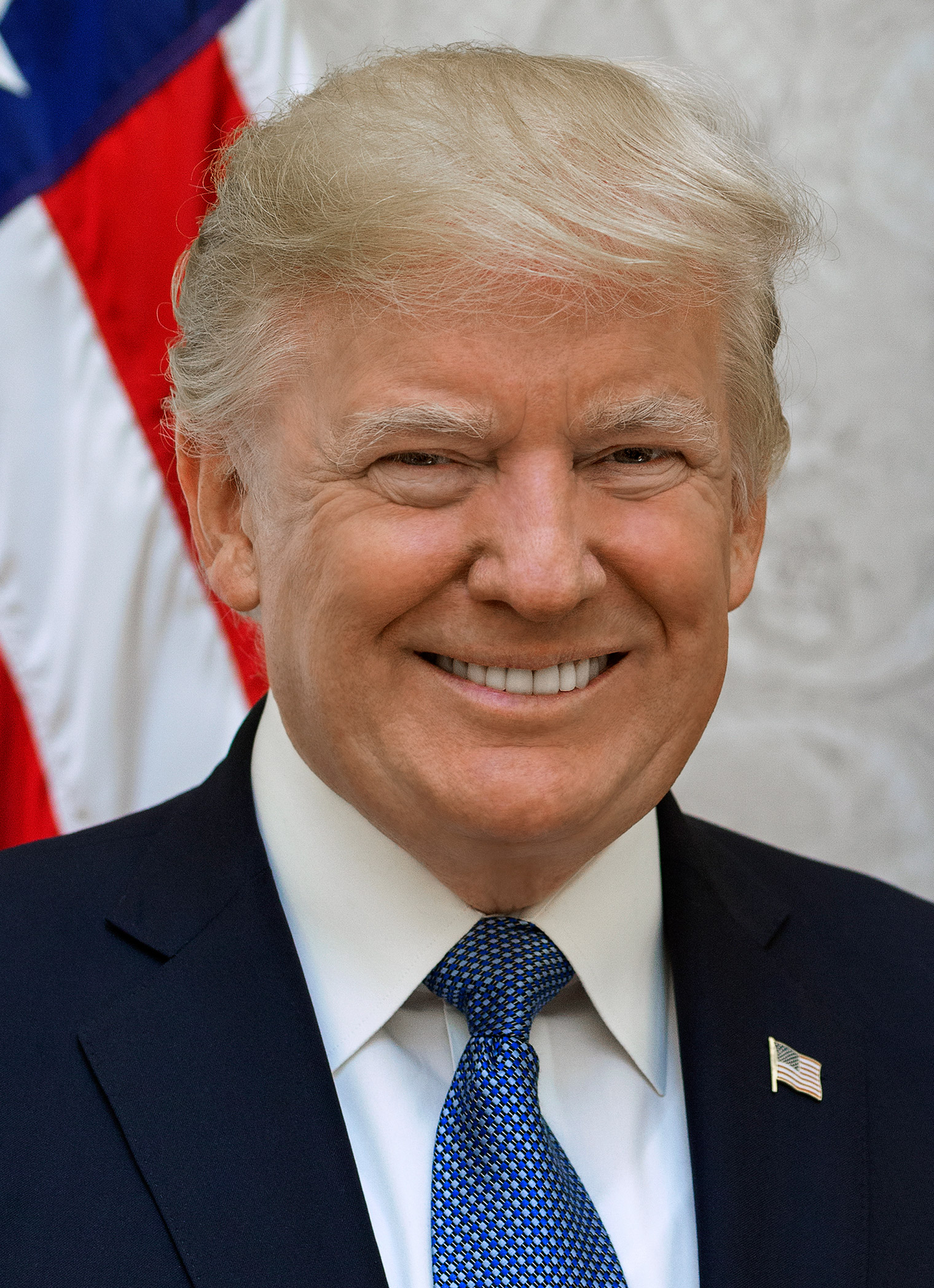
He then called President Donald Trump “the Antichrist,” described him as a “false messiah” and said he “must be killed,” according to the report. Later in the video, Upham reportedly repeated the claim that Trump was the Antichrist and said he would be “killed and sent to hell.”
Those words are the center of the case. Political speech can be harsh, offensive and religiously charged. A direct statement that a president “must be killed” is different terrain, especially when it is aimed at a Secret Service protectee.
A campaign with little margin
Upham is not a household-name candidate. He is described as a Republican write-in candidate for Florida’s 5th Congressional District, a status that already places him far outside the machinery of a typical congressional campaign.
His X profile, according to Fox News Digital, described him as a prosecutor “running to fix a broken political system.” That framing matters because the video did not come from a random anonymous account. It came from someone presenting himself as a candidate for federal office.
Write-in campaigns rarely have the money, staffing or institutional oversight of major-party nominees. That can make them freer, but also more volatile. Candidates can publish directly to voters without consultants, party officials or donors acting as guardrails.
In this case, the platform that let Upham introduce himself also gave federal authorities a public record of the language now under scrutiny.
Federal authorities moved quickly
Upham was booked into the Jacksonville Sheriff’s Office jail on a U.S. Marshal hold, according to jail records cited in the report. The inmate log listed the charge comments as “Threats Against the President.”
He was released Thursday, but release from jail does not necessarily answer the bigger legal questions. The public record cited so far does not explain the conditions of release, whether a federal complaint has been unsealed or what prosecutors may do next.
The U.S. Secret Service acknowledged the comments in a statement to Fox News Digital, saying it was aware of remarks made by a congressional candidate in Florida and investigates anything that can be perceived as a threat toward one of its protectees.
The agency also said it does not discuss protective intelligence matters for operational security reasons. That is standard in threat cases, but it leaves the public with only a partial picture: the video, the arrest, the jail notation and the fact that federal protection officials were aware of it.
The Marine Corps rebuke was blunt
Upham’s military background became part of the story because he referenced his oath as a Marine officer in the video. The Marine Corps responded publicly, saying it was aware of the “disturbing statements” and that Upham’s comments violated the oath he swore to uphold.
The service also said the remarks were not in keeping with Marine Corps values and noted that Upham had been medically discharged on May 30, 2025.
Acting Navy Secretary Hung Cao also condemned the remarks, writing on X that Upham was no longer a Marine and did not represent the service’s values or ethos.
That institutional distancing is significant. Military service is often used by candidates as a credential of discipline and public duty. Here, the same credential became a reason for the military to clarify that Upham was speaking only for himself.
Speech, threats and politics
The hard legal question in cases like this is not whether the speech is ugly. It is whether the government can prove a true threat under the law. Courts have long protected broad political advocacy, even when it is angry or extreme. But threats against the president are treated with unusual seriousness because they can trigger real-world security risks.
That is why wording, context, intent and audience all matter. A rant, a campaign statement, a religious claim and a call for violence can overlap in messy ways, but law enforcement tends to act first when a president’s safety is implicated.
There is also a public-interest question. Candidates for office occupy a different role than private citizens arguing online. Even a write-in candidate is asking voters for authority, visibility and trust. When such a person posts language that appears to endorse killing a president, the response is not just legal. It becomes political and civic.
At the same time, the case should not be treated as a verdict before the courts act. The available reporting says Upham was arrested and that jail records listed threats against the president. It does not yet show how prosecutors will frame the evidence or what defense Upham may offer.
What remains unanswered
Fox News Digital reported that it sought comment from the FBI, the White House and Upham’s campaign. The extracted reporting did not include responses from those parties.
That leaves several open questions: whether the video remains online, whether Upham has retained counsel, whether he intends to continue his write-in campaign and whether federal prosecutors will pursue a formal case beyond the arrest record already reported.
The immediate takeaway is clearer. A fringe congressional candidacy in Florida has become a federal threat matter because of a video targeting Donald Trump. The legal system will decide what the words amount to. The political lesson arrived faster: in a climate already saturated with threats, the distance between viral rhetoric and federal intervention can be very short.
Leave a Reply