Trump Media says its Truth API resembles subscription tools already used across the internet. Critics say charging for a speed advantage on presidential announcements crosses into a different category of public information.
Truth Social is charging users for faster access to Donald Trump’s posts through a service that can cost clients as much as $100,000 a month. The paid Truth API promises priority access to Trump’s official announcements and other market-moving government news, raising the immediate question of whether the arrangement is legal and whether it gives wealthy subscribers an unfair edge.
Trump Media says the service is comparable to subscription APIs offered by other platforms and news outlets. But a federal lawsuit, legal scholars and congressional Democrats argue that presidential communications are different: they can move financial markets, shape public policy and carry information the public may have a right to receive on equal terms.
A premium lane for presidential posts
Trump Media announced Truth API on July 16, describing it as a way to provide “real-time access” to posts from leading Truth Social accounts. Those accounts include President Trump, members of his family and figures in his administration.
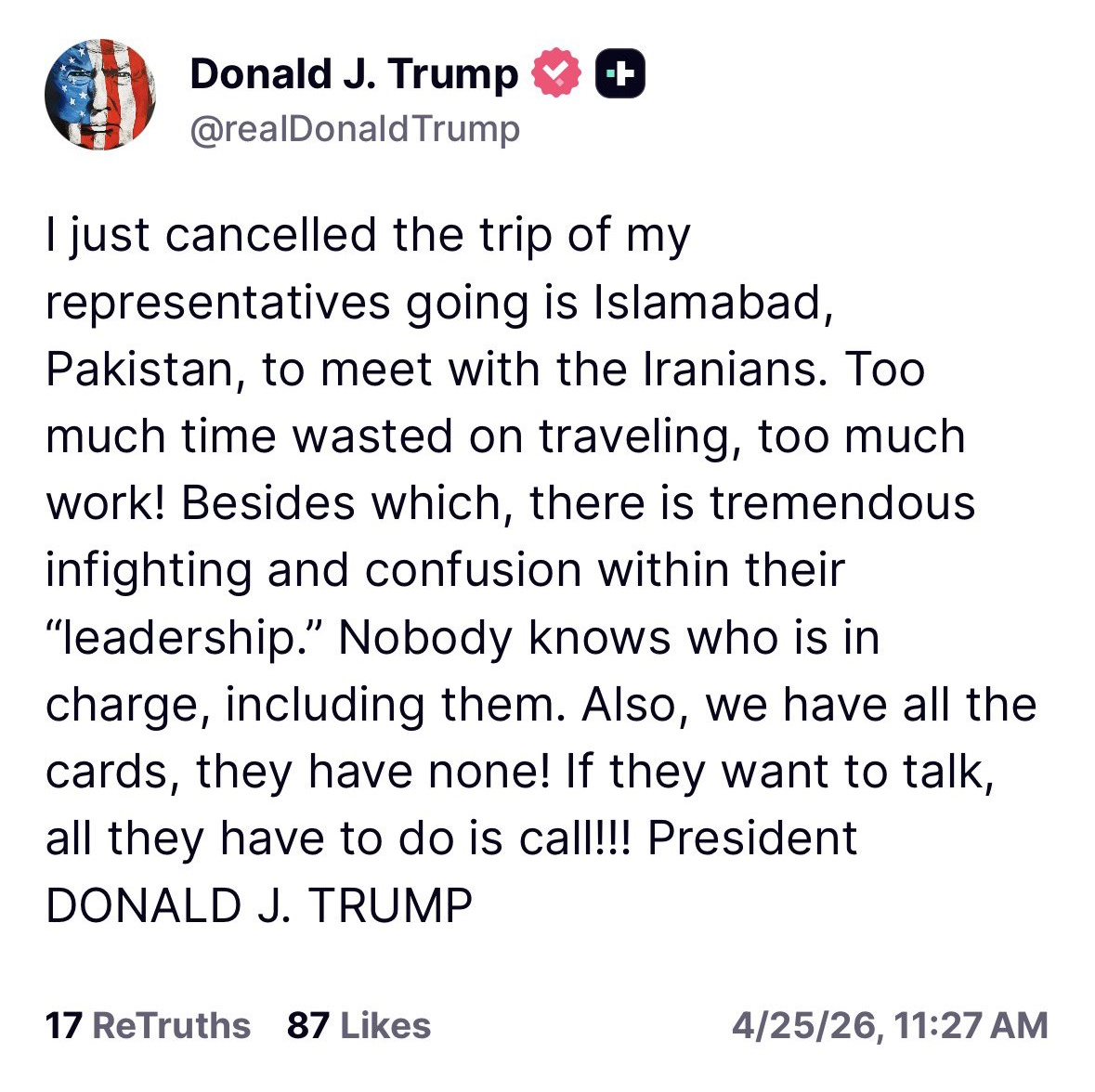
An application programming interface, or API, is a technical connection that lets one software system receive data directly from another. In this case, the business value is speed: clients can automatically receive posts rather than wait for a website, app notification or secondary news report.
Trump Media interim CEO Kevin McGurn said in a company release that markets already respond to Truth Social posts and that the product is intended to reduce “the cost of a delay in information.” That language points to the central tension. A few seconds or minutes may matter greatly to traders when the information concerns tariffs, military actions, energy policy or other government decisions.
The service does not appear to bar the public from eventually seeing Trump’s posts. The dispute is over whether selling a faster channel for official presidential communications creates a privileged class of recipients before everyone else can react.
Why speed can move markets
Presidential statements have long had economic consequences. What has changed is the speed and directness of modern communication. Social posts can reach investors, companies, foreign governments and journalists instantly, often without the formal timing and distribution practices associated with traditional press releases.
Trump’s posts on tariffs and military matters have been cited as examples of announcements capable of moving markets. USA Today reported that a burst of trading occurred shortly before Trump posted on March 23 that he was postponing attacks against Iran, prompting allegations of insider trading.
That episode is not proof that Truth API users received or used nonpublic information. It does illustrate why critics are focused on early access itself. If a high-paying customer receives a market-sensitive message first, that customer may have an opportunity to trade or advise clients before ordinary users, reporters and the broader public see it.
Nejat Seyhun, a University of Michigan finance professor, described the arrangement as new territory that has not been litigated. The absence of an exact precedent does not settle the question either way; it means courts would have to decide which existing constitutional, securities and public-access principles apply.
The lawsuit challenges unequal access
A federal lawsuit filed Aug. 12 in U.S. District Court in New York argues that Truth API violates constitutional protections by creating paid preferential access to presidential announcements. The suit names Trump, aides Natalie Harp and Daniel Scavino, and other parties. Trump Media is not a defendant.
The plaintiffs contend that the arrangement infringes the First Amendment by limiting equal access to the president’s public announcements. They also argue it conflicts with the Fifth Amendment by allowing preferential access to important government information without adequate justification.
Seth Stern of the Freedom of the Press Foundation, a plaintiff in the case, told USA Today that Trump’s Truth Social posts are presidential records and should not be available first to people who can afford a private company’s price.
Those claims remain allegations, not court findings. A judge could conclude that posts remain publicly available, that the paid product is a technological delivery service rather than restricted government information, or that other legal doctrines govern. The litigation will test whether speed alone can amount to unequal access when the speaker is the president.
Trump Media sees a familiar product
Trump Media rejects the idea that Truth API is uniquely improper. In a statement to USA Today, the company said information from Trump is distributed through many platforms and news outlets, some of which offer subscription APIs.
That comparison has force in one respect. Financial-news services, data companies and publishers routinely sell premium access to fast alerts, research, data feeds and specialized tools. Businesses pay for technology that reduces lag, and users of those services are not automatically breaking the law.
Critics say the comparison breaks down because the underlying material is not conventional private-sector news. It is official communication from a sitting president, delivered through a commercial company in which Trump is the largest stakeholder through a revocable trust of which he is sole beneficiary.
That dual role is what makes the ethics debate especially sharp. A media company can try to monetize exclusive reporting. A president’s public statements, critics say, should not become a premium product whose greatest value comes from a government office.
Congress is targeting the practice
On Aug. 20, a group of congressional Democrats introduced legislation aimed at stopping social media companies from selling faster access to government employees’ accounts when those accounts communicate “material information.” The proposal reflects concern that legal remedies after the fact may not prevent a speed-based advantage from affecting trades or public understanding.
Rep. Sam Liccardo, a California Democrat and sponsor of the measure, said politicians should not turn public office into a pay-for-view business. The legislation faces the usual uncertainty of any proposal in Congress, and its introduction does not itself alter Truth API’s legal status.
Still, the bill identifies a policy question that reaches beyond Trump and Truth Social: Should government officials be permitted to communicate through systems that sell premium, faster feeds to selected customers? The answer could affect future presidents, agencies and governors who use privately owned platforms as routine channels for official announcements.
What remains unsettled
The available facts do not establish that Truth API customers are receiving secret information, nor do they establish that anyone has traded unlawfully based on the service. Faster delivery of publicly released information is not automatically the same as access to confidential information.
Yet the legal and ethical concern is not limited to secrecy. It is whether official information becomes meaningfully less public when the first and potentially most valuable moments of access are sold to a small group of customers.
Courts will need to assess the constitutional claims in the New York lawsuit, while lawmakers may decide whether a more explicit rule is needed. For now, Truth API sits at the intersection of presidential communication, private ownership, financial markets and the basic expectation that government announcements should reach the public on equal terms.
Leave a Reply