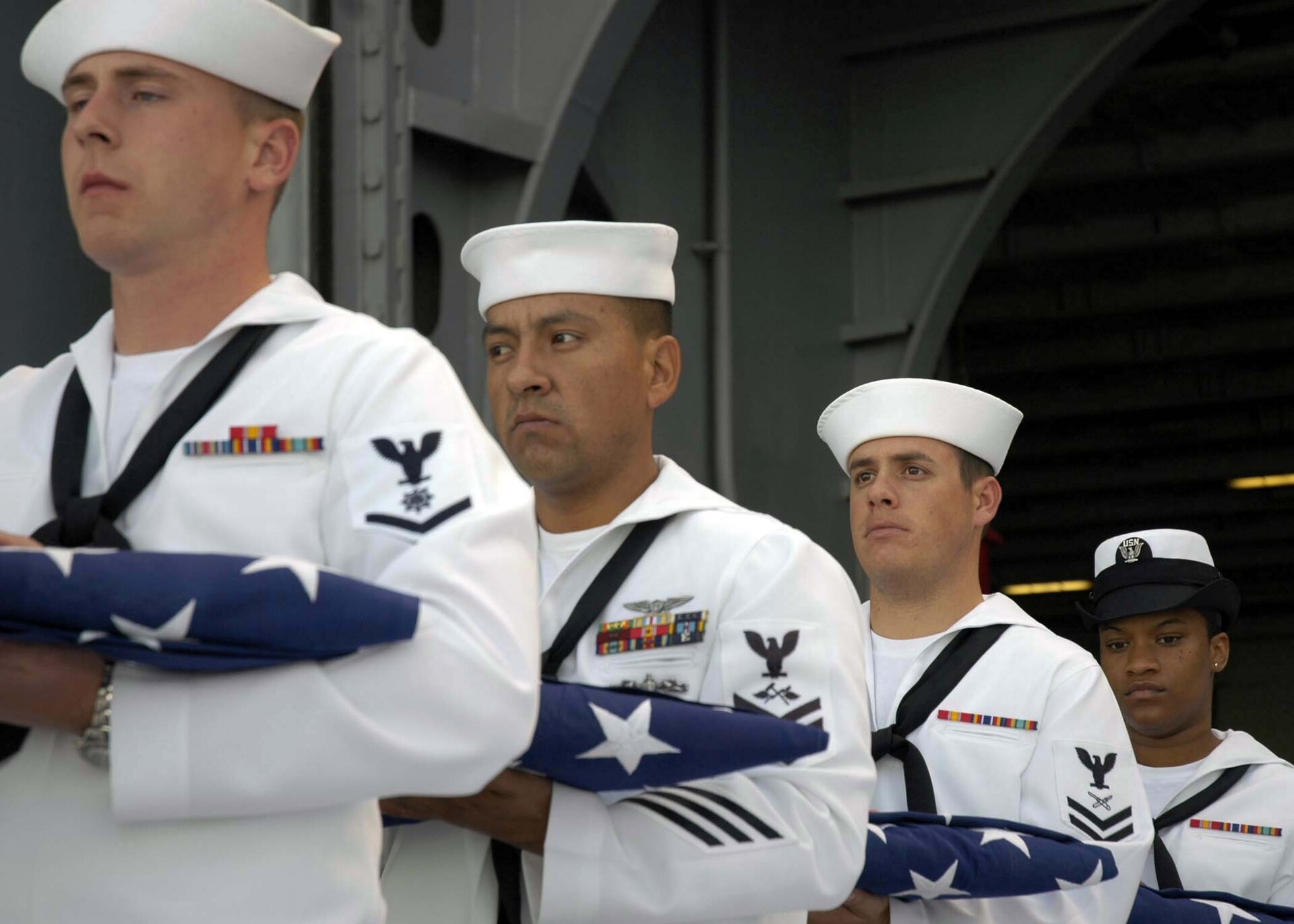
Families of USS Abraham Lincoln personnel say conditions and the length of the carrier’s deployment have raised urgent welfare concerns. The Navy says support professionals are available aboard the ship and disputes claims of a broader increase in suicide attempts.
The U.S. Navy responded to reports that sailors aboard the USS Abraham Lincoln tried to jump overboard, with families describing at least two such incidents during a deployment that has lasted more than 260 days. The Navy denied claims of an increase in attempted suicides aboard the carrier, saying it has not identified a rise in reported suicidal ideation or attempts.
The reports have sharpened concern about the welfare of USS Lincoln sailors after an extended deployment that began in November 2025 and shifted from the Indo-Pacific toward the Middle East. What is clear is that relatives are raising serious questions; what remains unclear is the full scope of the incidents and the conditions aboard the ship.
What families say happened
Accounts cited by Navy Times and reported by Newsweek describe at least two separate incidents in which sailors allegedly attempted to go overboard from the aircraft carrier. The claims came from relatives of personnel aboard the Lincoln, rather than from a public Navy incident report.
One spouse said her husband was exhausted and had attempted to go overboard during the current deployment. Another family member said her husband helped pull a shipmate back onto the deck as that sailor was preparing to go overboard.
Those accounts are serious, but they are not a complete public accounting of events aboard the carrier. The Navy does not publicly provide detailed information about individual personnel medical matters, and it has not released specifics that would independently establish the circumstances of the reported incidents.
The Navy’s carefully limited response
A Navy spokesperson told Newsweek that the health and well-being of every sailor aboard the Abraham Lincoln is a priority. The spokesperson said that, based on information available to the command, the Navy had not identified an increase in reported suicidal ideation or suicide attempts on the ship.
That statement does not directly confirm or deny each account from family members. Instead, it addresses whether the command has detected an overall rise in officially reported mental-health concerns or attempts.
The Navy said religious, medical and mental-health professionals are available to assess concerns as they arise. Its privacy policy means the public is unlikely to get a detailed explanation of any individual sailor’s care, status or disciplinary situation.
A deployment beyond the usual span
The timing is a major part of the concern. The Lincoln has been at sea for more than 260 days, or nearly nine months, after leaving San Diego on November 21, 2025.
Carrier deployments commonly run about six to seven months, though missions can be extended by military requirements. The Lincoln was initially headed to the Indo-Pacific, conducted exercises in the South China Sea, and was later rerouted toward the Middle East amid the U.S. military buildup connected to the war with Iran.
Retired Navy Vice Adm. Robert Murrett told Newsweek that deployments of this length put pressure on the ship, its crew, maintenance needs and future deployment cycles. He said the Navy generally tries to avoid such prolonged periods underway.
Long deployments do not by themselves prove unsafe conditions or explain any individual crisis. They do, however, add context to why families are focusing on exhaustion, access to support and the basic routines that help sustain a crew of roughly 5,000 sailors and Marines.
Complaints extend beyond mental health
Relatives have also raised concerns about supply shortages, long working hours and the quality of living conditions, according to reports from Stars and Stripes, MS Now and Navy Times. More than 200 family members reportedly met with acting Navy Secretary Hung Cao last week.
In a separate virtual meeting with senior Navy officials, loved ones discussed safety and mental-health concerns, according to recordings reviewed by MS Now. Cao reportedly said the USS Theodore Roosevelt carrier group would relieve the Lincoln, without publicly providing a date.
Rep. Mike Levin, a California Democrat, said sailors had reported inadequate hygiene supplies, moldy showers, broken toilets, limited hot water and insufficient food. Those allegations have not been independently substantiated in public, and Newsweek reported that it sought comment from Levin’s office.
Complaints about conditions aboard the carrier had surfaced as early as April. The Navy disputed them at the time, while Defense Secretary Pete Hegseth dismissed the claims as “fake news.” The competing accounts leave an important factual divide: families describe a deteriorating environment, while the military disputes broad claims of systemic failure.
Why time at sea matters
Research on sailors serving at sea has repeatedly linked long periods underway with elevated stress and challenges in accessing care. A study published in Military Medicine early last year found that sailors on prolonged deployments could face high stress and inadequate access to health-care support, and it called for urgently available assistance to help prevent military suicides.
That research cannot determine what occurred on the Lincoln, nor can it establish a causal link between deployment length and the allegations from family members. Still, it underscores why mental-health access and command responsiveness become especially consequential when a ship remains deployed beyond its expected schedule.
There is also a practical distinction between a concern raised by a family and a case recorded through military channels. Families may see signs of distress before they are formally reported, while commands may have information that cannot be disclosed publicly. Both realities can coexist, making transparent communication particularly important.
Relief plans remain unclear
The Lincoln was reportedly scheduled to finish its deployment in May, but it remained in the U.S. Fifth Fleet area as of the end of July, according to military images cited by Newsweek. Its precise location is not publicly available, as warship movements are often restricted for operational security.
The prospect of relief by the Theodore Roosevelt carrier group may offer families a path toward an eventual end to the extended deployment. But no public timeline has clarified when the handoff will happen or when the Lincoln’s crew will return to the United States.
For now, the Navy’s position is that it has not found an increase in reported suicidal ideation or suicide attempts, while families continue to press for answers about individual incidents, living conditions and the strain of more than 260 days at sea. The unresolved question is not simply whether a deployment is long; it is whether support and communication are meeting the demands created by that length.
Leave a Reply