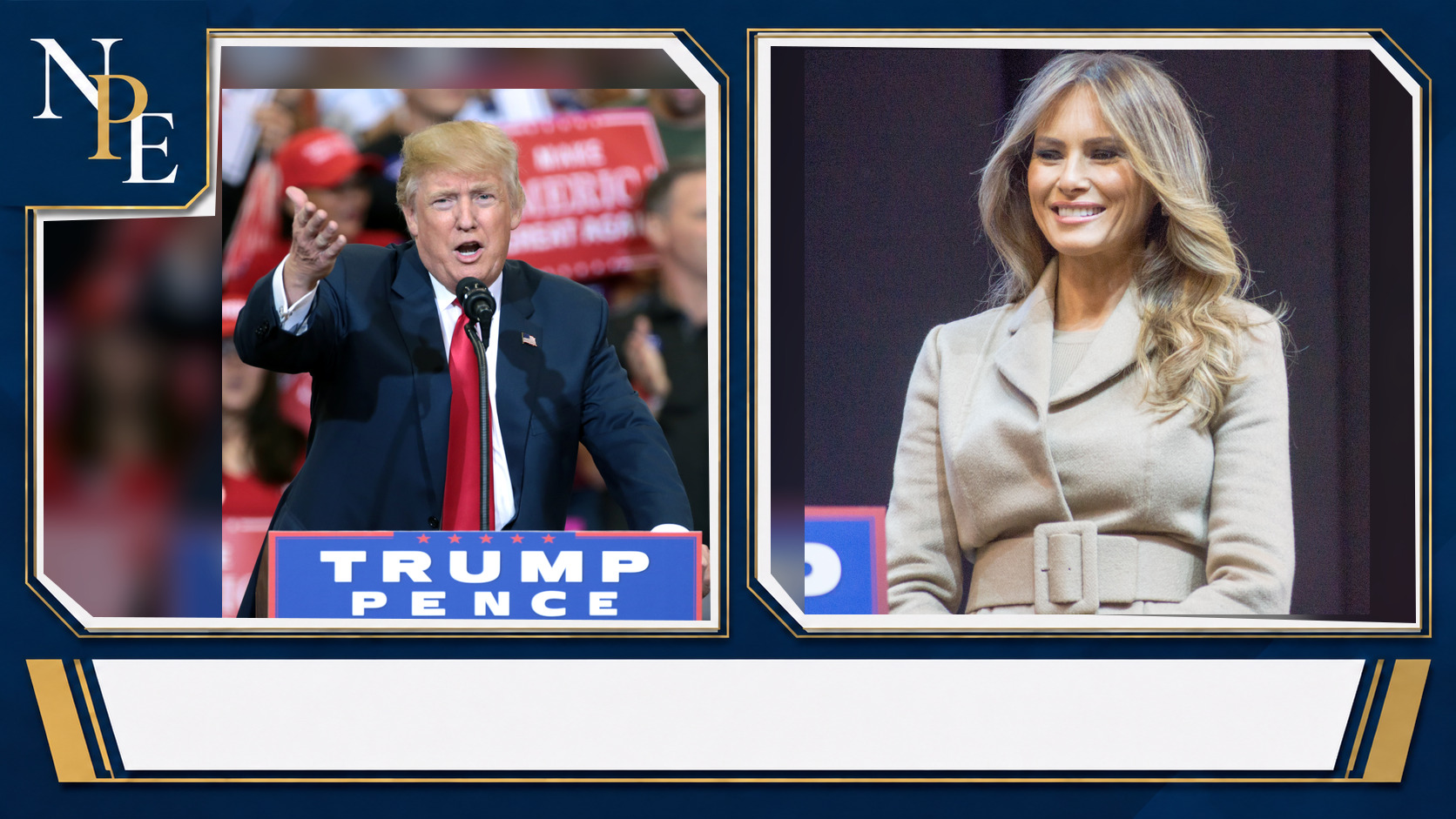
A headline suggesting backlash against both Donald Trump and his wife goes further than the polling supplied to support it. The clearest available evidence concerns Trump’s job approval, especially among younger voters.
Donald Trump and his wife, Melania Trump, are being framed as facing public dissatisfaction and backlash over the Trump family’s public and political image. But the available polling makes a narrower case: the Yale Youth Poll says 57% of voters disapprove of Donald Trump’s job performance as president, while it provides no comparable measure showing that people are also dissatisfied with Donald Trump’s wife.
That gap matters now because a headline about voters turning against both Trump and Melania Trump can make a broad political mood sound settled. The evidence supplied supports scrutiny of Trump’s standing with voters—particularly young adults—not a verified, family-wide judgment.
What the Yale poll actually found
The Yale Youth Poll’s Spring 2026 results say 57% of all voters surveyed disapprove of Trump’s job performance. That is a meaningful warning sign for an incumbent president, particularly in an environment where views of the White House can shape congressional races, party enthusiasm and public debate.

The strongest negative figures in the poll are among younger respondents. The survey reports that 68% of voters ages 18 to 22 disapprove of Trump’s performance, along with 72% of voters ages 23 to 29.
Those results support the conclusion that Trump faces substantial dissatisfaction. They do not, on their own, explain every reason for it. A job-approval number records a judgment about the president’s performance, not a single, uniform objection to his personality, family or administration.
Younger voters are the sharpest signal
The poll’s age divide is central to the story. Its summary says Trump lost the most ground since the fall 2025 survey among women under 35 and men under 30.
It also finds young voters prioritizing cost of living and affordability when deciding how to vote. Corruption, democracy, health care and housing follow as major concerns. That issue list offers useful context: dissatisfaction may be connected to policy pressures and governing concerns, rather than simply a generalized rejection of the Trump brand.
Among all voters, Democrats held a two-point advantage on the generic congressional ballot in the poll. The advantage was much wider among voters ages 18 to 22, at 23 points, and among those 23 to 29, at 30 points.
Poll results are snapshots, not election results. Still, the figures show why younger voters have become a focus for both parties ahead of future contests: their views of Trump are markedly more negative than the topline result.
The Melania claim lacks polling support
Melania Trump is a public figure and the president’s wife, but the Yale results provided here do not report her favorability rating, job approval, public-image rating or any direct question about whether voters are dissatisfied with her.
That does not prove that she is popular, unpopular or unaffected by her husband’s political standing. It means the available evidence cannot establish any of those claims. A finding about Donald Trump’s job performance should not be converted into a finding about Melania Trump without a poll or other documented evidence that asks about her specifically.
The same caution applies to broader claims about the Trump family. Political families often become symbols in campaign coverage, and supporters and critics alike may connect relatives to a president’s image. But symbolism is not measurement.
There is also a difference between online reaction and representative public opinion. A highly shared headline, comment thread or social-media post can reveal intensity among people who choose to engage. It cannot reliably show how the wider electorate views a person unless the method and sample support that conclusion.
Why the wording changes the story
Calling the moment a backlash against both Trumps shifts attention from presidential performance to family reputation. That framing can be emotionally potent, but it also risks blurring separate questions: Are voters unhappy with the president’s policies? Do they disapprove of his leadership? Or do they hold a distinct view of the first lady?
Those questions can produce different answers. Voters who oppose Trump’s administration may have little opinion of Melania Trump. Others may separate a spouse’s public role from the president’s decisions. Some may see the family as politically inseparable. Reliable reporting needs evidence before deciding which group is driving the larger picture.
Trump’s supporters can also reasonably argue that one poll should not be treated as a final verdict on his presidency or his electoral prospects. Polling can vary by methodology, wording, timing and turnout assumptions. Critics, meanwhile, can point to the 57% disapproval figure and the sharper youth numbers as evidence of a real vulnerability.
Both readings can coexist: the poll signals trouble for Trump, while still leaving major questions about its durability, causes and reach.
What remains unanswered
The supplied Yale summary gives a clear topline on Trump’s job approval and detailed age breakdowns, but it does not provide a corresponding assessment of Melania Trump. It also cannot tell readers whether dissatisfaction will persist, deepen or translate into votes.
More complete evidence would require separately worded questions about Melania Trump, information about the survey’s methodology and repeated results over time. It would also help to compare findings across independent pollsters rather than treating a single survey as the entire national picture.
The defensible takeaway is more limited than the headline’s broadest suggestion. There is polling evidence that many voters, especially younger adults in this survey, disapprove of Donald Trump’s performance. There is not, in the research provided, evidence sufficient to say the public is similarly turning against Melania Trump.
Leave a Reply