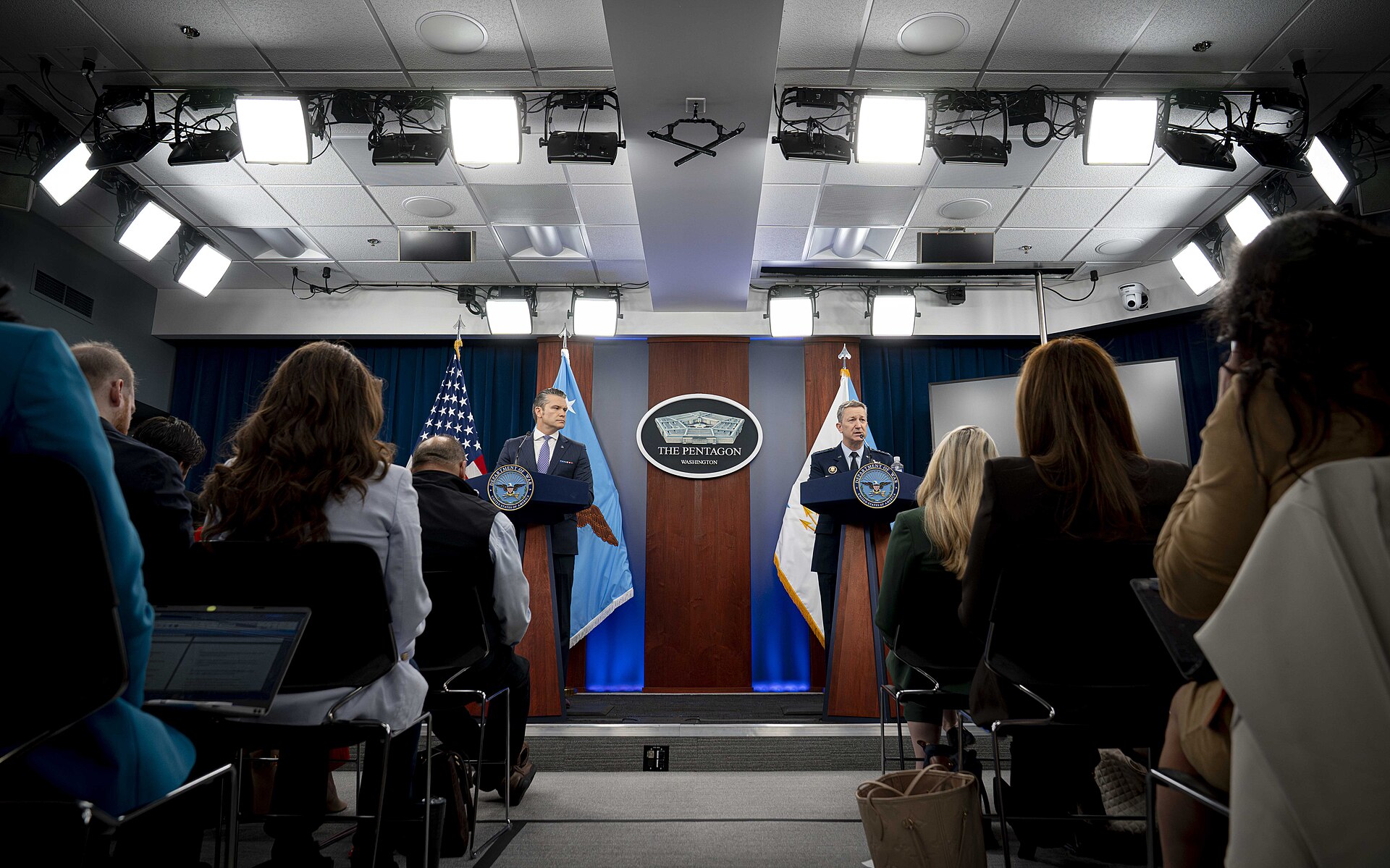
The fight is about more than who keeps a title. A rollback would signal that resistance inside the Pentagon can still shape high-level staffing decisions.
Pete Hegseth’s purge at the Pentagon may be reversed after internal backlash at the Pentagon, according to a report, raising immediate questions about whether the department can undo disputed staffing decisions without deepening turmoil. The Hegseth purge may have targeted senior military personnel; this article explains the purge and the possible reversal, and why a Pentagon backlash report matters for who remains in key defense jobs.
The stakes are larger than one personnel fight. If reversed staffing decisions restore some ousted or sidelined officials, it would suggest that internal critics and Pentagon officials still have leverage over Hegseth’s effort to reshape the department’s leadership culture.
A rollback would be a signal
The reported possibility of undoing parts of the purge is important because staffing moves at the Pentagon are rarely just administrative housekeeping. Senior officers and civilian defense officials sit inside a chain of command where continuity, trust and institutional memory matter.

A reversal would not necessarily mean Hegseth has lost control of the department. It could mean the original changes created enough operational, legal, political or morale concerns that officials judged a course correction necessary.
That distinction matters. A personnel purge can project power quickly, but undoing one can expose the limits of that power. It can also leave everyone involved — removed officials, their replacements and their staffs — uncertain about who has authority and for how long.
What the purge reportedly involved
Available reporting points to a broader campaign of removals, retirements and blocked advancement for senior military figures. The Guardian reported in May 2026 that Hegseth had fired or forced out 24 generals and senior commanders, saying no performance-related reason had been given. The New York Times separately reported in June 2026 that Hegseth had fired or sidelined nearly three dozen senior military officers as part of a broader effort described as purging the Pentagon.
The Guardian also reported that about 60% of the officers removed in that wave were Black or female, in the context of the administration’s stated opposition to diversity, equity and inclusion programs. That framing has made the staffing battle more combustible, because critics see a risk that merit and experience are being overshadowed by ideological tests.
Supporters of Hegseth’s approach would likely describe the moves differently: as an attempt to remove officers viewed as too aligned with prior policy priorities and to install leaders who share the current administration’s defense agenda. In that view, civilian leaders have both the right and the responsibility to choose senior personnel they trust.
The problem for the Pentagon is that both things can be true at once: civilian leadership has broad authority, and abrupt purges can damage confidence inside a military organization that depends on stable command relationships.
Hegseth’s role gives him reach
Hegseth is not an outside critic of the institution. According to an official Defense Department biography, he was sworn in on Jan. 25, 2025, as the 29th secretary of defense, before the department’s name was changed on Sept. 5, 2025. The official secretary page says the secretary oversees the department and acts as the principal war policy maker and adviser.
That role gives Hegseth enormous influence over the direction of the Pentagon, including which priorities receive attention and which leaders are elevated. It also means his personnel decisions carry weight far beyond Washington gossip.
At the senior ranks, promotions and assignments can affect combatant commands, service branches, readiness planning and civil-military relations. Removing a commander is not like replacing a campaign aide. It can ripple through staffs, succession plans and relationships with allies.
That is why internal backlash matters. Pentagon officials do not need to win a public argument to slow or complicate a staffing campaign. They can raise practical concerns about process, continuity, qualifications and the effects on readiness.
Why the backlash has bite
Internal resistance at the Pentagon can take many forms. It may include formal objections, warnings from senior officials, concerns from uniformed leaders, pressure from lawmakers, or unease among career staff who have to implement the decisions.
The current reporting does not establish exactly which mechanism is driving the possible reversal. That uncertainty is important. A rollback prompted by legal concerns would mean something different from one driven by morale problems, political pressure or doubts about replacement candidates.
Still, the reported backlash fits a familiar tension in defense governance. Elected leaders and their appointees set policy. The uniformed military executes it while trying to preserve nonpartisan professional standards. When personnel decisions appear to punish identity, perceived ideology or dissent rather than performance, that balance becomes harder to defend.
For internal critics, the fear is that the officer corps could become more politically screened and less willing to give candid advice. For Hegseth’s allies, the counterargument is that entrenched institutions often resist legitimate change and then label disruption as instability.
Names, promotions and uncertainty
Some of the prior reporting around Hegseth’s staffing moves has focused on prominent senior officers. The Guardian cited the termination of Gen. CQ Brown as chairman of the Joint Chiefs of Staff and the removal of Adm. Lisa Franchetti, the first woman to serve as chief of naval operations and the first woman to sit on the Joint Chiefs. The outlet also reported that Gen. Randy George was ousted after refusing an instruction involving officers on a prospective promotion list.
The New York Times reported that Hegseth struck female and Black Navy officers from a promotion list. That kind of reported intervention is especially sensitive because promotion systems are supposed to signal competence, experience and readiness for higher responsibility.
What remains unclear is whether the possible reversal would restore specific people, reopen promotion lists, cancel pending removals or simply slow future changes. The difference matters. Reinstating senior officials would be a sharper rebuke than quietly revising upcoming personnel decisions.
It is also unclear how the Pentagon would publicly explain a reversal if one happens. A department can describe a change as routine review, updated guidance or a response to new information. But inside the building, staff will likely read the outcome as a measure of how durable Hegseth’s purge really is.
The real test is control
The reported possible rollback puts Hegseth at the center of a larger question: how much can a defense secretary remake the Pentagon’s senior ranks before the institution pushes back hard enough to force adjustment?
There is no neat answer. Civilian control of the military is a core principle, and presidents and defense secretaries are entitled to pursue policy changes. But the credibility of that control depends partly on whether decisions appear disciplined, lawful and tied to military effectiveness.
If the purge is partially undone, Hegseth could still argue that he is refining his approach rather than retreating. Critics would see something else: evidence that the original personnel campaign went too far, too fast, or targeted the wrong people.
For now, the clean takeaway is that the Pentagon staffing fight is not settled. The reported backlash has turned what looked like a one-way purge into a test of institutional resistance, and the outcome could shape who leads the U.S. military bureaucracy next.
Leave a Reply