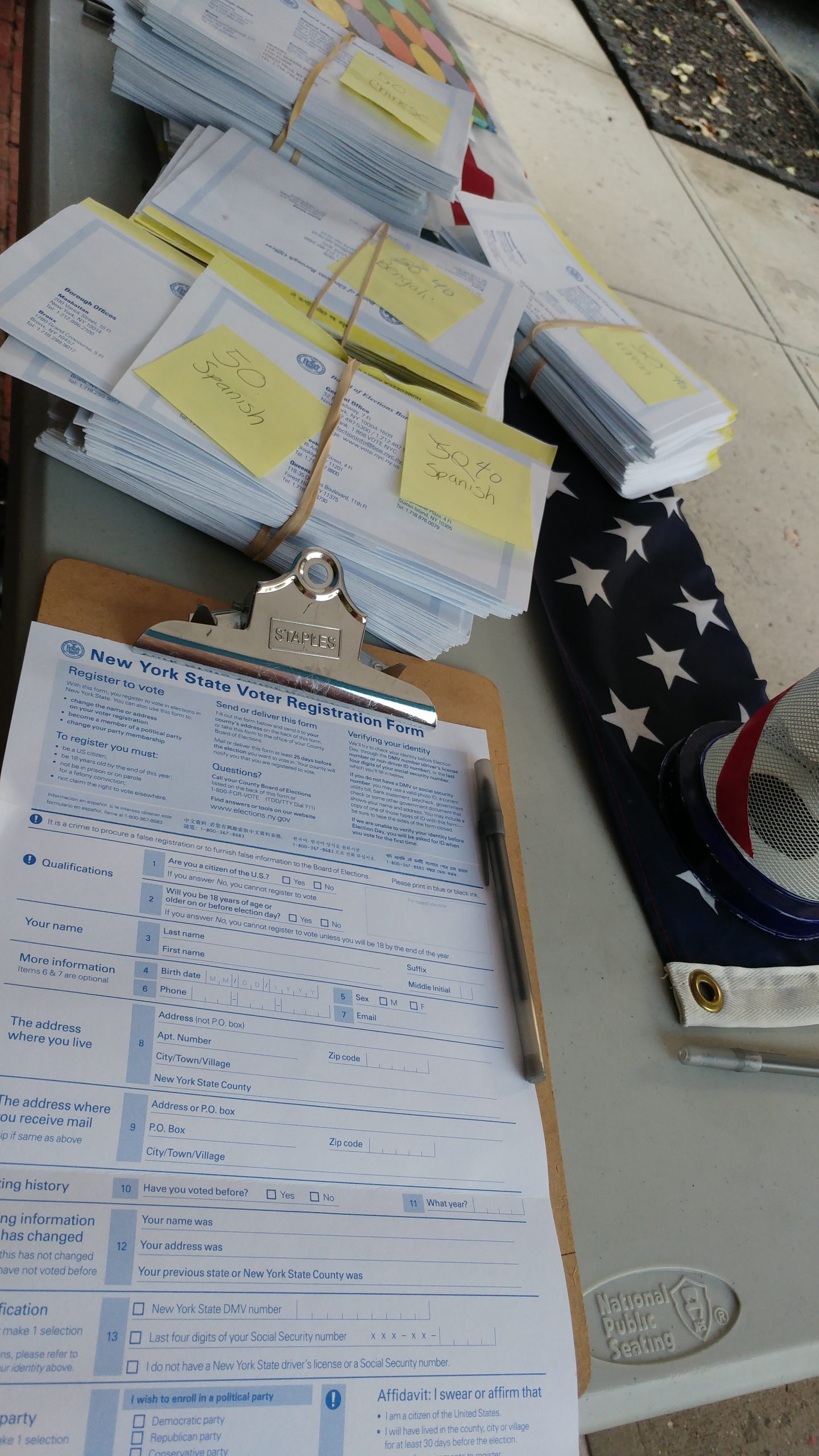
The legal fight is testing how far Washington can go in demanding voter registration data from states. Courts have so far drawn a hard line around privacy, state authority and executive power.
The Trump Justice Department has lost 16 court rulings in its push for state voter rolls. The story centers on the legal fight over state voter registration data, with state governments resisting demands in federal courts, and the court defeats are significant for Donald Trump’s election agenda before the midterms.
According to a USA Today report published July 18, 2026, and updated July 19, judges have repeatedly rejected the Department of Justice’s push for broad, often unredacted voter information. The fight now sits at the intersection of election security, privacy and state control of voting systems.
Sixteen losses send one signal
The number is what makes the dispute politically hard to dismiss. USA Today reported that the Justice Department has lost all 16 federal court decisions issued so far over its demands for state voter lists.
Those losses include rulings from 15 district judges and the 6th U.S. Circuit Court of Appeals, according to the report. Seven of the district judges who ruled against the administration were appointed by Trump.
That does not end the broader legal fight. Appeals, revised demands or narrower subpoenas could still follow. But the early pattern is unusually consistent: courts have not accepted the department’s claim that it can compel sweeping voter-roll data from states on the terms it has sought.
For Trump, the losses complicate a central political argument heading into the midterms. His administration has framed voter-roll scrutiny as necessary to prevent ineligible voting, including noncitizen voting. Courts are saying that goal does not automatically give the executive branch the power to collect sensitive state election records.
Why states are resisting
The records at issue are not merely public-facing voter lists. States have said the federal requests seek personal identifying information, including addresses, dates of birth, driver’s license details and Social Security numbers, according to the USA Today account.
That is why state officials have framed the fight as a privacy and authority dispute, not simply a clash over whether voter rolls should be accurate. Election officials across the country already maintain registration lists, remove voters who move or die, and follow federal and state list-maintenance rules.
The Justice Department’s demands raise a different question: whether Washington can require states to turn over large amounts of raw voter data for federal matching and review. States argue that their own privacy laws and election procedures limit what they can provide, especially when requests cover broad populations rather than specific cases.
The concern is practical as well as constitutional. A national pull of voter data could expose millions of people’s personal information to new federal databases, matching systems and potential errors. Even officials who support tougher list maintenance may object to a process they view as legally unsupported or insufficiently guarded.
The DOJ’s election-integrity case
The Trump administration’s argument begins with election integrity. Harmeet Dhillon, who leads the Justice Department’s Civil Rights Division, told USA Today that the department is committed to elections that are “accurate, fair, and secure” and that this starts with “clean, up-to-date voter rolls.”
The administration has pointed to federal laws that require states to maintain accurate registration lists, including the National Voter Registration Act and the Help America Vote Act. It has also cited the Civil Rights Act of 1960 in seeking state records.
Trump set the effort in motion with a March 2025 executive order directing federal agencies to prioritize preventing noncitizens from voting. The Justice Department then sought to compare state voter rolls against federal data, including the Department of Homeland Security’s Systematic Alien Verification for Entitlements database, known as SAVE.
That theory has some political force with Republican voters who view voter fraud as a major threat. But in court, the administration has faced a more technical test: whether existing statutes actually authorize the specific demands being made, and whether the executive branch can press states beyond what Congress has clearly allowed.
Judges focus on power and privacy
The court losses have not generally turned on whether clean voter rolls are a valid goal. They have turned on who has the authority to demand data, how broad those demands can be, and whether privacy protections are being bypassed.
Judges have pointed to the Constitution’s Elections Clause, which gives states the power to set the “Times, Places and Manner” of federal elections, subject to Congress. That structure leaves room for federal law, but it does not give the executive branch a blank check to direct state election administration on its own.
U.S. District Judge David Carter in Los Angeles called one government request “unprecedented and illegal,” according to USA Today. His reasoning, as described in the report, framed the issue as one for Congress, not for executive officials attempting to stretch older civil-rights statutes into a new voter-data mandate.
Election-law experts cited by USA Today have also been skeptical. Justin Levitt, a Loyola Law School professor and former Justice Department official, said the department has “no power” to purge voter lists and that courts are not accepting the government’s legal theory.
Bipartisan resistance complicates the politics
The administration’s losses also cut against an easy red-state-versus-blue-state narrative. Some Republican officials have resisted the Justice Department’s requests, including in Idaho, Kentucky, Utah and West Virginia, according to USA Today.
Idaho is a revealing example. James Craig, a lawyer in Republican Attorney General Raul Labrador’s office, wrote to federal officials that Idaho supports Trump’s goal of ensuring only U.S. citizens vote, but urged the department to drop the litigation. USA Today reported that Craig also told federal officials to “stop threatening your friends in Idaho.”
That line captures the awkward politics of the dispute. Republican election officials may agree with Trump’s stated goal, but they also run state systems and answer to state laws. A federal demand for sensitive data can look very different when it lands on the desk of an official responsible for protecting voter records.
Democrats and voting-rights advocates see the push as part of a broader attempt to centralize election oversight and lay groundwork for aggressive voter challenges. The administration and its allies see resistance as evidence that states are not doing enough to verify eligibility. The courts, so far, have focused less on rhetoric and more on legal authority.
What changes before the midterms
The immediate effect is to slow the Trump administration’s voter-roll strategy before the midterms. Without court approval, the Justice Department cannot simply force states to hand over the broad data sets it has sought in these cases.
That does not mean voter-roll litigation is over. The department could narrow requests, pursue appeals, lean on other federal agencies, or ask Congress for clearer authority. States may also continue their own list-maintenance programs, including checks for voters who moved, died or are otherwise ineligible.
One unresolved issue is the role of the SAVE database. USA Today reported that one federal judge in Florida allowed four Republican-led states to use SAVE to check voter citizenship, while a judge in Washington, D.C., had previously halted use of the database for that purpose after finding it unreliable. That split underscores how messy the next phase could be.
The larger takeaway is that election administration remains deeply decentralized. Trump can make voter-roll enforcement a national political priority, and the Justice Department can test aggressive legal theories. But after 16 losses, federal courts have sent a clear message: election-integrity claims still have to fit within privacy law, statutory limits and the constitutional role of the states.
Leave a Reply