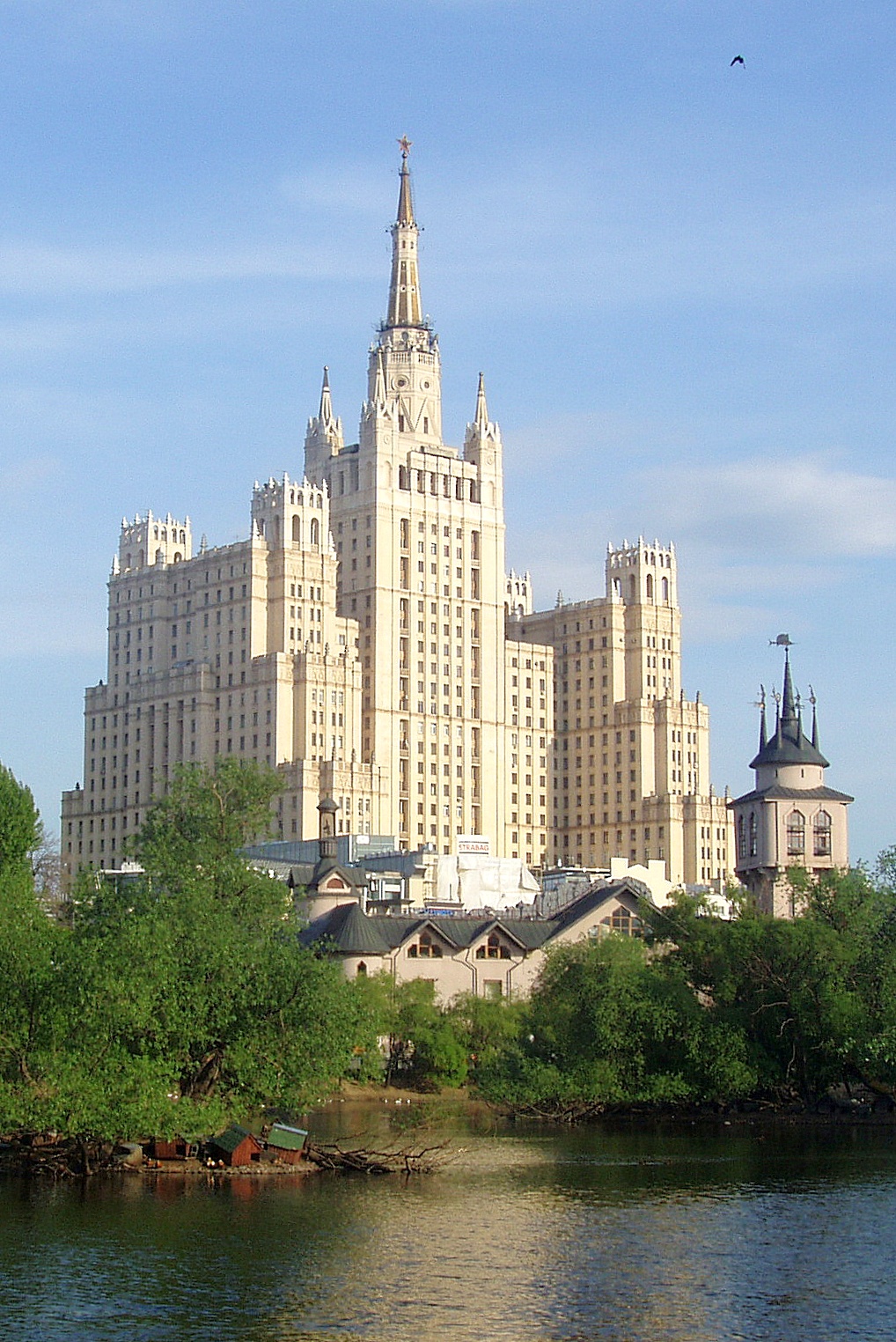
Russian authorities say a woman carrying a homemade explosive was stopped outside the restaurant before the device detonated. The attack leaves major questions about the intended target and any possible link to recent violence around Moscow.
A bombing at an upscale restaurant in Moscow killed three people and injured 21 others on Saturday, according to Russian state media cited by Reuters and the BBC. Moscow Mayor Sergei Sobyanin described the attack near Balzi Rossi on Kudrinskaya Square as a “brutal terrorist act,” while local authorities and Russia’s National Anti-Terrorist Committee identified the restaurant bombing as a terrorist incident.
The early account matters because the blast hit a high-profile central Moscow location, killed restaurant victims and immediately raised questions about security, motive and whether the restaurant itself was the intended target.
Blast hit a central landmark
The explosion happened at about 8 p.m. local time near Balzi Rossi, an Italian restaurant on Kudrinskaya Square close to Moscow’s city center, the BBC reported, citing Russian state media and security officials.
The restaurant sits in one of Moscow’s Stalin-era skyscrapers, a setting that made the attack especially visible. Roads around the square were briefly closed after the blast, and video released by Russia’s RIA news agency showed heavily armed law enforcement officers at the scene.
Reuters reported that a homemade bomb carried by a woman killed at least three people and injured 21. The BBC, citing the National Anti-Terrorist Committee, reported that the woman tried to enter the restaurant but was stopped by a security guard before the device detonated.
According to that account, the dead included the woman carrying the explosives, the security guard and a visitor to Balzi Rossi, where a private function was being held.
Mayor frames it as terrorism
Sobyanin’s condemnation set the tone for how authorities were presenting the attack in its first hours. The Moscow mayor called the blast a “brutal terrorist act,” and the BBC quoted him as saying it was “a cruel act of terror which took human lives.”
He did not provide a detailed public theory of who was behind it. He said law-enforcement agencies were working to establish what happened, leaving the key questions — motive, target and planning — unanswered.
That distinction matters. Calling an attack terrorism signals a political or intimidation motive, but officials had not publicly released evidence identifying a group, sponsor or intended victim. In fast-moving cases, the label can harden the public narrative before investigators have laid out the facts.
For now, the strongest official account is narrower: a homemade explosive device detonated near the restaurant after the carrier was stopped, killing three and injuring 21.
What authorities say happened
The National Anti-Terrorist Committee’s version, as reported by the BBC, places the attempted entry at the center of the timeline. A woman carrying explosives approached Balzi Rossi, encountered security and was stopped before getting inside.
The detonation followed outside or near the entrance area, according to the reporting. That account could explain why early descriptions of the blast shifted as the scene was secured and witnesses’ accounts were sorted out.
The restaurant initially became part of that confusion. Early reports suggested the blast may have happened in the kitchen, but Balzi Rossi later said there had been “a problem outside,” according to the BBC.
The restaurant also apologized for an initial social media post after the explosion, saying it had been inappropriate given the circumstances. State media reported the original post had suggested everything was safe on the premises. Balzi Rossi later said staff were focused on helping guests and emergency services.
Why the location raises stakes
An explosion at a private function in central Moscow carries a different public meaning than a blast in a remote or industrial area. It suggests either a target with access to an elite space, a failed attempt to reach one, or an attack designed to create fear in a prominent urban setting.
Authorities have not said who they believe was the target. That silence has left room for speculation, especially because Moscow has seen several high-profile killings and attempted killings tied by Russian officials to the war in Ukraine.
The BBC noted that in recent years several senior Russian military figures have been assassinated in and around the capital, and Moscow has blamed Kyiv for those attacks. But no connection between Saturday’s restaurant bombing and Ukraine has been publicly established in the available reporting.
That is a crucial caveat. The war gives the attack an obvious geopolitical backdrop, but backdrop is not proof. Until investigators identify a target, planner or chain of responsibility, the bombing remains an attack with a confirmed toll and an uncertain motive.
Public details remain limited
Several important pieces of information were still unclear in the initial accounts:
- Who, if anyone, was specifically being targeted at the private function.
- Whether the woman carrying the device acted alone or was directed by others.
- How she reached Kudrinskaya Square with a homemade explosive.
- Whether the device detonated intentionally, prematurely or during the confrontation with security.
- Whether any of the 21 injured were in critical condition.
Those gaps are common in the first day after an attack, but they are not minor. They determine whether the blast is treated as an isolated suicide bombing, a targeted assassination attempt, or part of a wider operation.
They also shape the security response. If a known target was expected at Balzi Rossi, investigators will look hard at guest lists, surveillance footage and communications. If the goal was simply to attack a crowded upscale venue, the implications for restaurants, event spaces and public gatherings in Moscow are broader.
What happens next
The immediate next step is forensic: investigators will try to identify the explosive, reconstruct the blast pattern and trace how the device was assembled. Surveillance video from the square and the restaurant entrance is likely to be central to that work.
Authorities will also need to identify the woman carrying the device and establish whether she had prior links to extremist networks, military targets, criminal groups or political actors. Without that, public claims about responsibility will remain incomplete.
For residents, the attack adds to the feeling that the war and related violence are no longer distant from the capital’s everyday routines. A restaurant, a private event, an evening gathering of cyclists nearby — all became part of the same security perimeter within minutes.
The confirmed facts are grim enough: three people dead, 21 injured, and a central Moscow restaurant turned into a crime scene. The larger story now depends on what investigators can prove about why the bomb was brought to Kudrinskaya Square in the first place.
Leave a Reply