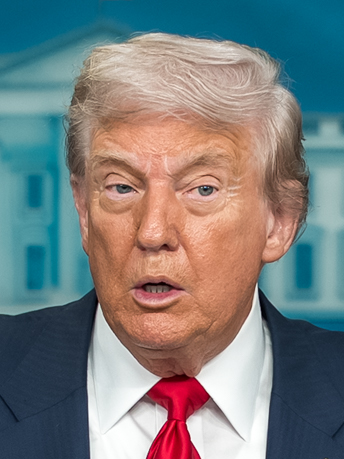
The fight is not just over showing ID at the polls. It is also a test of how far Republicans can push election law changes through a narrowly divided Congress.
Donald Trump is pressing Republicans to pass a voter ID bill in Washington, pushing Congress toward the SAVE Act, now expanded as the SAVE America Act, despite legislative hurdles in Congress and the Senate’s 60-vote filibuster threshold. The proposed voting restrictions would require proof of citizenship to register for federal elections and photo ID to vote; Republicans are exploring whether pieces can be moved through a party-line spending bill.
The “Trump makes desperate plea” framing captures the political pressure, but the hard part is procedural: Trump wants a sweeping elections package, while Senate support and budget rules may block much of it.
The bill Trump wants
At the center of the fight is the SAVE America Act, an expanded Republican voting bill that NBC News reported Trump has been urging congressional Republicans to pass. Its core promise is simple to supporters: make voters prove citizenship when registering and show identification when casting ballots in federal elections.
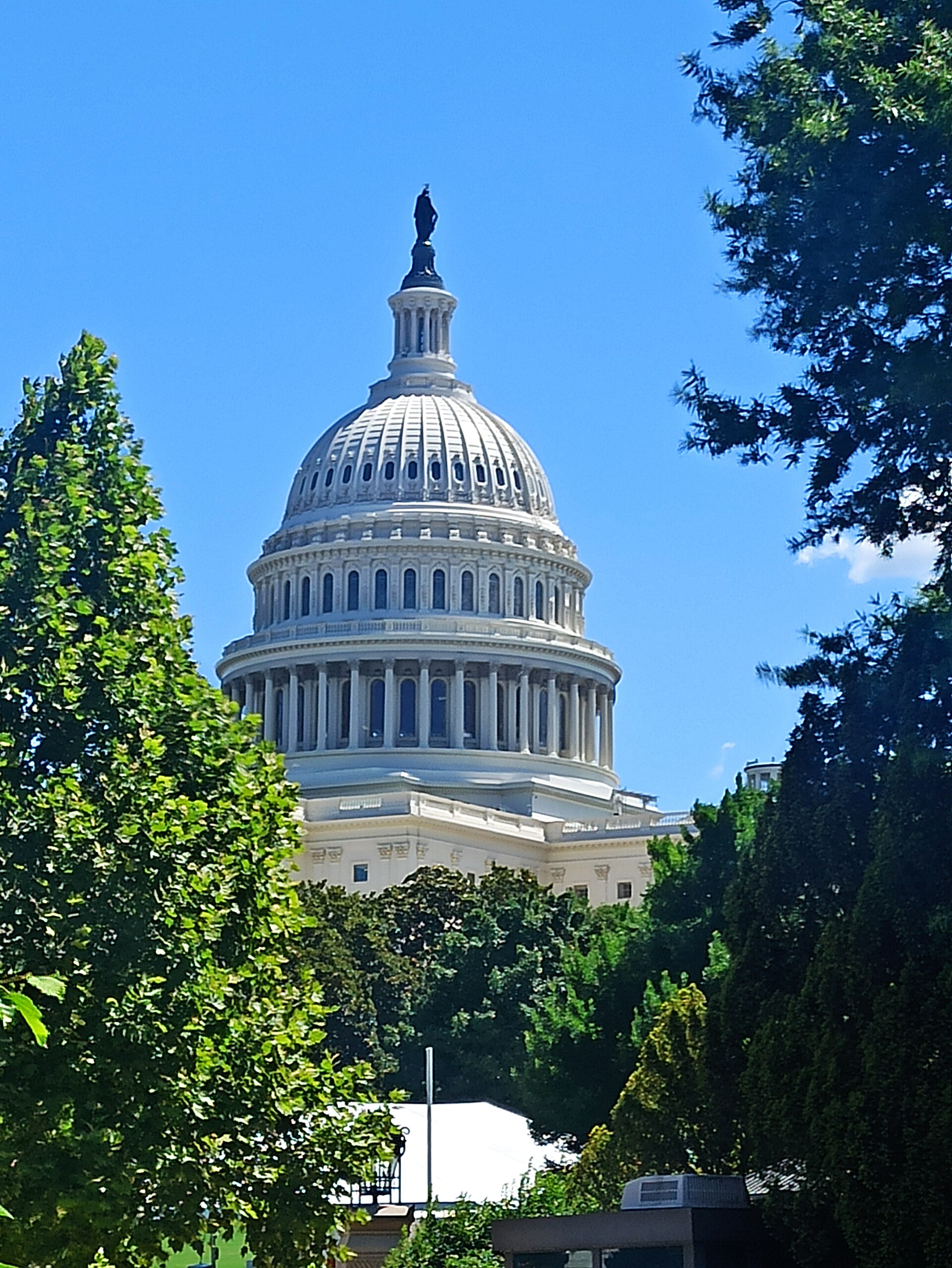
The earlier SAVE Act, short for the Safeguard American Voter Eligibility Act, focused on documentary proof of citizenship for federal voter registration and new systems for states to identify and remove noncitizens from voter rolls. The newer SAVE America Act keeps those elements and adds a national photo ID requirement at the polls, according to NBC’s summary of the legislation.
Supporters call the bill an election-integrity measure. They argue that even rare illegal voting can weaken public trust and that uniform national rules would make federal elections more secure.
Opponents see a different risk: eligible voters being blocked by paperwork requirements. Democrats and some Republicans have warned that millions of Americans lack ready access to passports, birth certificates or other documents that could be required to register under the proposal.
The Senate math is brutal
The immediate obstacle is not Republican enthusiasm in the House. It is the Senate’s filibuster, which generally requires 60 votes to advance most legislation. NBC reported that the bill lacks the support needed to clear that threshold.
Trump has called for eliminating the filibuster to pass the measure. Senate Majority Leader John Thune, R-S.D., has not embraced that path. NBC reported that Thune said Republicans are “not even close” to having the votes to scrap the rule.
That matters because election-law changes are not moving through a political vacuum. Republicans can pass some priorities with a simple majority if they fit special budget rules, but broad voting regulations usually face the Senate’s normal procedural barriers.
The result is a pressure campaign with a narrow runway. Trump can push, House conservatives can demand action, and GOP leaders can search for workarounds. None of that automatically produces 60 Senate votes.
The workaround Republicans are eyeing
House Republicans are looking at reconciliation, the budget process that allows certain tax-and-spending legislation to pass the Senate without Democratic votes. NBC reported that GOP leaders have discussed placing components of the SAVE America Act into a $95 billion party-line spending bill.
That route has a catch: reconciliation bills must be tied to federal spending, taxes or debt. A voter ID mandate or proof-of-citizenship registration rule may not qualify unless it can be structured as a budgetary provision.
The Senate parliamentarian, the chamber’s nonpartisan rules referee, would likely have a major say over what survives. If a provision is judged too policy-heavy and not budget-related enough, it can be stripped out.
House Speaker Mike Johnson, R-La., has publicly argued for using the reconciliation process to get as much of the measure enacted as possible. Thune has sounded more cautious, suggesting that some pieces, such as grants to states, might fit reconciliation but may not satisfy conservatives who want the full bill.
What the restrictions would change
The most concrete change would come at registration. Voters registering for federal elections would have to provide documentary proof of citizenship, not merely attest under penalty of perjury that they are citizens and eligible to vote.
Federal law already bars noncitizens from voting in federal elections. Reuters has reported that Trump and Republican allies have made baseless claims about widespread noncitizen voting, and that such voting is illegal and rare.
The SAVE America Act would also require photo identification for federal voting. Many states already have voter ID laws of varying strictness, but a federal requirement would create a national baseline and could force changes in states with looser rules or different accepted forms of identification.
The bill also points toward more aggressive voter-roll maintenance. Under the earlier SAVE Act framework described by NBC, states would establish programs to check existing voter rolls against federal data and remove noncitizens. Civil-rights groups have long warned that database matching can wrongly flag eligible voters, especially when names, birth dates or citizenship records are incomplete or inconsistent.
Claims beyond the bill
Trump has also described the legislation in ways that do not match the text NBC reviewed. He has claimed the measure would sharply restrict mail-in voting, saying there would be exceptions for illness, disability, military deployment or travel.
NBC reported that the bill does not ban mail-in ballots. It would add rules affecting mail voter registration forms, including requiring applicants who register by mail to present documentary proof of citizenship in person at an election office.
Trump has also tied the legislation to issues involving transgender athletes and gender-related medical care for minors. NBC reported that the current bill includes no provisions on women’s sports or gender transition surgeries.
That gap between rhetoric and text is politically important. For Trump’s base, the bill may function as part of a larger culture-war and election-integrity message. For lawmakers and courts, only the written provisions matter.
Timing may be the quiet obstacle
Even if Republicans found a procedural path, implementation could be difficult. Elections in the United States are administered through a sprawling network of state and local offices, each with its own systems, staffing limits and deadlines.
Sen. Mike Lee, R-Utah, a supporter of the effort, has argued that Congress would need to act by early August for the measure to affect November’s midterm elections, according to NBC. That timeline is part of the urgency behind the current push.
Sen. Thom Tillis, R-N.C., who is retiring and opposes the bill, has questioned whether implementation before November is realistic at all. NBC quoted him saying that more than 10,000 governmental entities would have to carry out the changes.
That is the under-discussed tension in the debate. A national rule can be written quickly in Washington. Building forms, training staff, changing databases, notifying voters and resolving disputes over documents can take much longer.
Why the fight matters now
The SAVE America Act gives Republicans a way to turn Trump’s long-running election fraud claims into legislative action. It also gives Democrats and voting-rights advocates a clear target: a bill they say would make registration harder for eligible Americans while addressing a problem that evidence shows is rare.
For voters, the stakes are practical rather than abstract. A proof-of-citizenship rule could mean producing a passport, birth certificate or other documentary record before registration is accepted. A photo ID mandate could change what must be shown at the polls in some states.
The path ahead remains uncertain. Republicans may try to attach limited pieces to a budget bill, continue pressing the Senate to take up the full measure, or use the fight as a campaign message if the legislation stalls.
The cleanest takeaway is this: Trump’s voter ID plan is not simply waiting on a Republican vote. It is running into the Senate filibuster, reconciliation limits, disagreement inside the GOP and the messy reality of changing election systems before voters go to the polls.
Leave a Reply