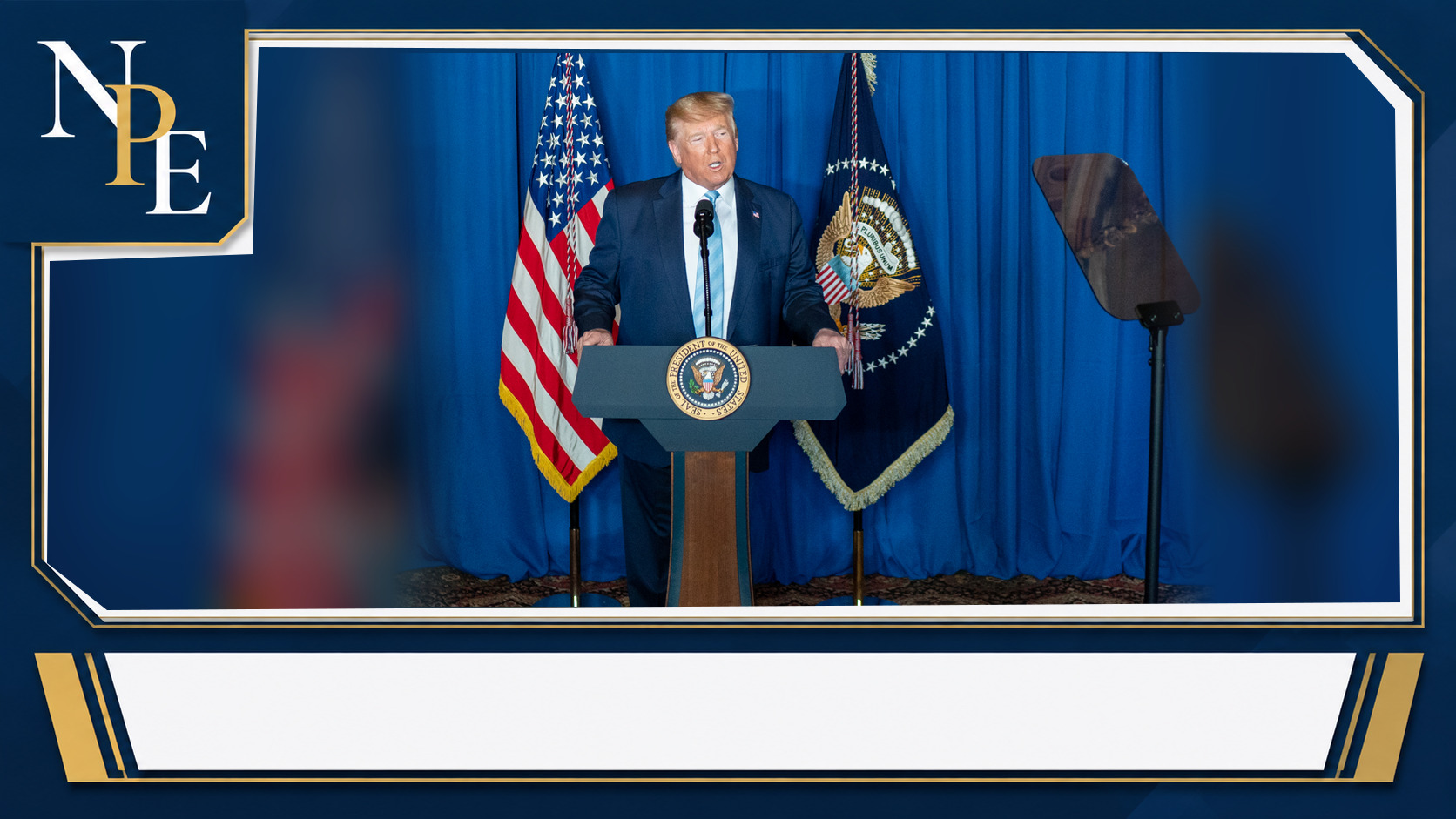
The discussion is less about a proven effort to conceal anything than about how public images of a president are interpreted. Medical context matters, but photographs alone cannot establish a diagnosis or intent.
White House staff have been accused online of hiding Donald Trump’s ankles from cameras after Trump’s ankles appeared unusually large or swollen in public images at the White House. The allegation is unverified, and no evidence in the available reporting establishes that staff deliberately concealed his ankles or directed camera coverage for that purpose.
Still, the images have revived scrutiny of Trump’s health and of how closely the White House manages a president’s public presentation. The key distinction is simple: visible swelling can prompt questions, but it cannot by itself prove either a medical conclusion or a coordinated effort to keep something from view.
What the allegation actually claims
The claim centers on camera angles, framing and the limited visibility of Trump’s lower legs in certain public appearances. Social-media users and commentators have argued that White House staff were trying to avoid images that showed his ankles.

That is an allegation about intent, not an established fact. Public events are routinely photographed from different positions for practical reasons, including crowd placement, staging, security, lighting, access for news crews and the visual needs of official video.
There is no identified directive, staff testimony or official acknowledgement in the available material showing that the White House ordered cameras away from Trump’s ankles. Describing the claim accurately means keeping it in that category: online speculation that has not been independently substantiated.
Why the images drew attention
Trump’s ankles and lower legs appeared swollen in images that circulated publicly, prompting discussion well beyond the usual focus on a politician’s wardrobe or staging. Physical changes visible in a president can quickly become a matter of public interest because the office carries obvious questions about fitness, disclosure and transparency.
But photographs offer only a narrow snapshot. Perspective, footwear, posture, lighting, image compression and the moment a picture was taken can all affect how a person’s legs or ankles look.
They also cannot reveal symptoms, medical history, examination findings or test results. Those details are what clinicians use to distinguish one cause of swelling from another.
The medical context behind swelling
University of Colorado Anschutz medical experts discussed chronic venous insufficiency, or CVI, in connection with the reported diagnosis given to Trump after visible leg swelling drew attention. CVI occurs when leg veins do not return blood to the heart as efficiently as they should, allowing blood and fluid to pool in the lower legs.
Swelling can be associated with CVI, along with sensations of heaviness or fatigue, varicose veins, itching, tenderness and skin changes. The university’s explainer also stresses that swelling may have other causes, including lymphedema and other medical conditions.
That broader point is crucial: ankle swelling is a symptom, not a diagnosis. It is not responsible to infer a person’s condition, severity or treatment needs from a viral image.
According to the Anschutz discussion, clinicians commonly evaluate suspected venous insufficiency with a venous reflux ultrasound, which assesses how effectively veins return blood to the heart. That is far more informative than visual assessment from a distance.
CVI is often manageable
Chronic venous insufficiency is commonly seen with increasing age and can progress over time. University of Colorado Anschutz notes that prolonged standing, reduced activity and weight gain can contribute to risk, while family history may also play a role.
For many patients, the condition is manageable rather than immediately dangerous. Approaches may include compression garments, elevating the legs, regular movement and, in some cases, treatment targeting malfunctioning superficial veins.
The university also notes that severe symptoms can make activity harder, creating a difficult cycle: legs may feel heavy or uncomfortable, movement becomes less appealing, and less movement can worsen symptoms. That is why clinical assessment matters for anyone with persistent or concerning swelling.
None of that confirms details about Trump beyond what has been publicly reported. It does explain why medical professionals caution against treating a striking appearance as proof of a crisis.
The politics of presidential visibility
Presidents are among the most photographed people in the world, and their staffs have always made choices about event backdrops, entrances, seating, camera access and visual messaging. Supporters may see those choices as ordinary communications work; critics may see them as efforts to control what the public notices.
Both perspectives can coexist without turning an assumption into evidence. A carefully staged event does not prove a health cover-up, just as a visible physical change does not make questions about disclosure unreasonable.
The better standard is whether officials provide clear, timely and medically grounded information when health questions arise. Vague visuals invite speculation; substantive information allows the public to assess what is relevant to a president’s ability to perform the job.
What remains unknown
The available reporting does not establish who first made the camera-concealment accusation, whether any White House staff member instructed photographers to avoid particular shots, or whether Trump’s public scheduling and staging changed because of his ankles.
It also does not provide enough medical detail to draw conclusions about his current symptoms, treatment plan or prognosis. The reported CVI context may be useful, but it should not be stretched beyond the information publicly available.
For now, the story is a lesson in the gap between what an image can show and what audiences may read into it. Trump’s visibly swollen ankles prompted real public attention; the claim that White House staff hid them from cameras remains unverified.
Leave a Reply