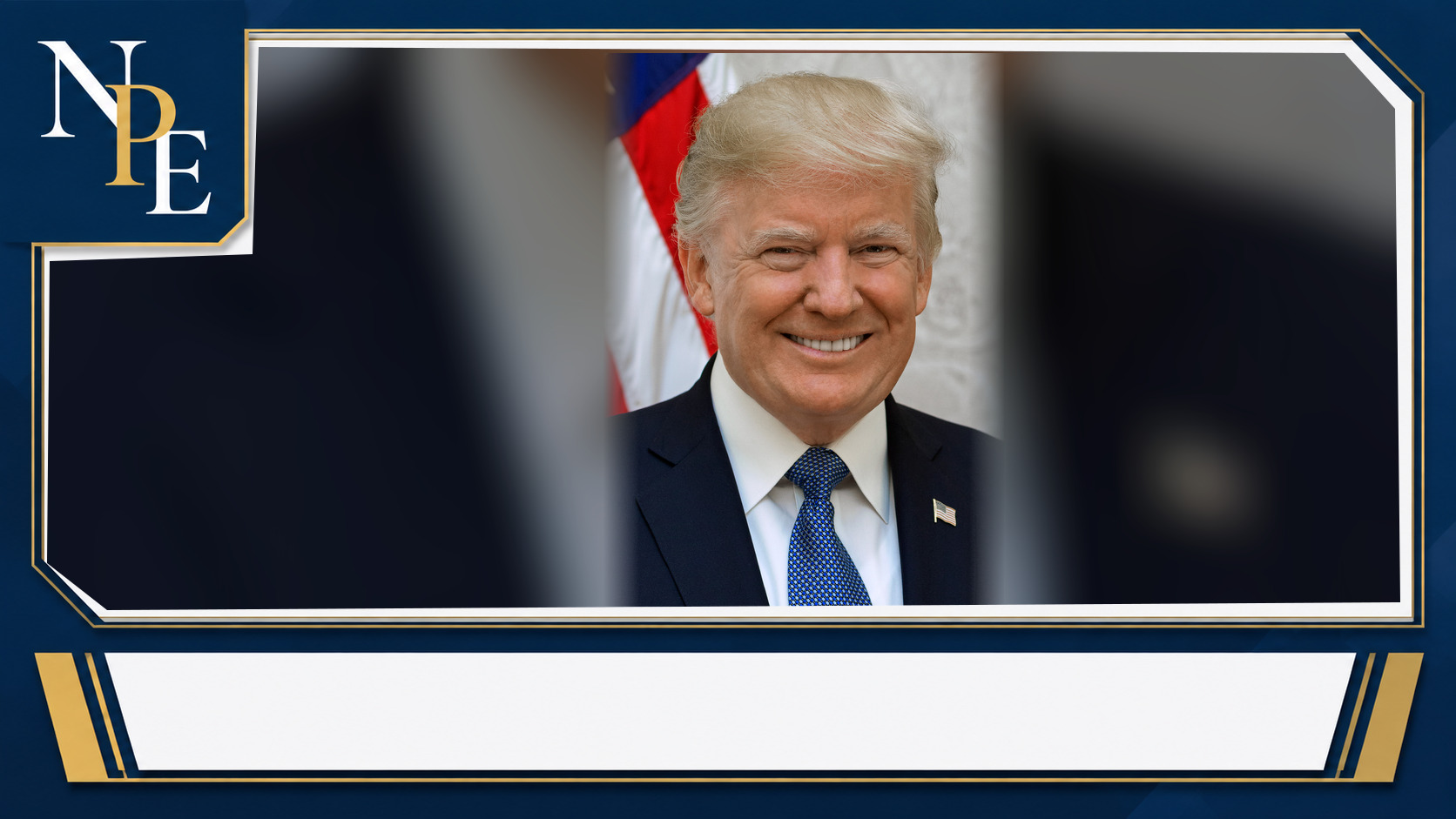
The debate over a president’s fitness is politically combustible because it blends public behavior, medical limits and constitutional power. Here is what an opinion-based claim can establish—and what it cannot.
Donald Trump is the subject of an opinion article arguing that he is severely mentally unstable, using Trump’s conduct and statements as the presented evidence. The available source material confirms that the article makes that argument, but it does not provide enough verified detail to establish a diagnosis, identify a particular incident, or show that any formal process has found Trump unable to serve.
That distinction matters now because claims about a president’s mental fitness can quickly move from political rhetoric into discussion of the Twenty-Fifth Amendment. Publicly unusual, false or inflammatory remarks may be fair subjects for scrutiny; they are not, on their own, proof of a medical condition or constitutional incapacity.
The claim is an opinion
The source is explicitly labeled opinion, and its language is a conclusion rather than a clinical finding. Saying a political figure is “mentally unstable” is a serious assertion, especially when it is framed as something that has been “proved.”
Opinion writing can make a case from speeches, interviews, posts, policy decisions or public appearances. It can also reflect a writer’s judgment about whether a pattern of behavior is reckless, erratic, deceptive or alarming. Those judgments are part of democratic debate, but they should be identified as judgments.
The research supplied with this article does not include the underlying examples from the opinion piece. That means readers can verify that the allegation was published, but cannot responsibly treat the headline alone as evidence that a specific statement or action demonstrates a mental-health disorder.
Behavior is not a diagnosis
There is a crucial line between observing public conduct and diagnosing a person. A public official can make a confusing remark, repeat a false claim, use extreme language or change positions for many reasons, including political strategy, poor preparation, stress, age, temperament or simple error.
None of those possibilities settles a medical question. A diagnosis requires qualified clinical assessment, not a headline, a viral clip or a partisan reading of a speech.
That does not mean public conduct is off-limits. Voters are entitled to judge a president’s clarity, honesty, restraint, decision-making and ability to communicate. The more precise question is often not whether a commentator can attach a psychiatric label, but whether specific conduct affects the job’s demands.
- Was a statement accurate and coherent?
- Was a decision explained with reliable evidence?
- Did aides, agencies or official records clarify what occurred?
- Is there a sustained, documented pattern rather than an isolated moment?
Fitness debates carry real stakes
Presidential fitness is not merely a matter of style. The office involves national-security decisions, emergency powers, diplomacy, appointments and command responsibilities. A president’s public words can move markets, shape alliances and influence public confidence.
Critics of Trump have long argued that his rhetoric and conduct show disqualifying instability. Supporters often counter that his combative style is deliberate, familiar and politically effective—and that opponents use mental-fitness language to turn disagreement into pathology.
Both positions point to a broader problem: political discourse often uses medicalized language as a shortcut. It can make a criticism sound more definitive than the underlying evidence warrants, while also obscuring concrete questions about competence, judgment and accountability.
The Twenty-Fifth Amendment is narrower
The Constitution does provide a process for presidential inability, but it is not a general tool for resolving disputes over rhetoric, ideology or unpopular conduct. Sections 3 and 4 of the Twenty-Fifth Amendment address whether a president is unable to discharge the powers and duties of the office.
Under Section 3, a president can voluntarily declare an inability, transferring powers temporarily to the vice president as acting president. Section 4 provides a separate route: the vice president and a majority of the principal officers of executive departments, or another body Congress may establish by law, can declare that the president is unable to serve.
If the president contests that declaration, Congress ultimately decides the dispute. The Congressional Research Service notes that the amendment was designed to address inability or disability, following historical uncertainty over what should happen when a president could not perform the job.
The amendment does not set out a psychiatric test, and it does not say that controversial remarks or a commentator’s assessment automatically meet its standard. Any serious constitutional discussion would require evidence, institutional action and a high threshold beyond public speculation.
Evidence should stay specific
When a headline makes an expansive claim about Trump’s mental state, the most useful next step is to look for the actual material behind it: full transcripts, video in context, official records, corroborated reporting and direct responses from the people involved.
Context can change the meaning of a short clip or a provocative quote. It can also reveal a genuine pattern that a single incident might conceal. Either way, specificity is stronger than labels.
There is also a fairness issue. Mental-health terms should not be used casually as insults, even in hard-edged political commentary. Criticism of a president can be forceful without claiming medical certainty that the available evidence does not support.
What remains unresolved
The available brief establishes that an opinion writer believes Trump’s behavior and statements demonstrate severe mental instability. It does not establish which conduct was cited, whether those examples were accurately represented, or whether any qualified professional evaluated Trump.
It also provides no indication of a formal Twenty-Fifth Amendment effort or a finding that Trump is unable to carry out presidential duties. Those are separate, far more consequential questions.
The durable takeaway is straightforward: evaluate the conduct, demand the record and distinguish political alarm from medical or constitutional conclusions. Presidential fitness deserves rigorous scrutiny precisely because the stakes are too high for a headline to do all the evidentiary work.
Leave a Reply