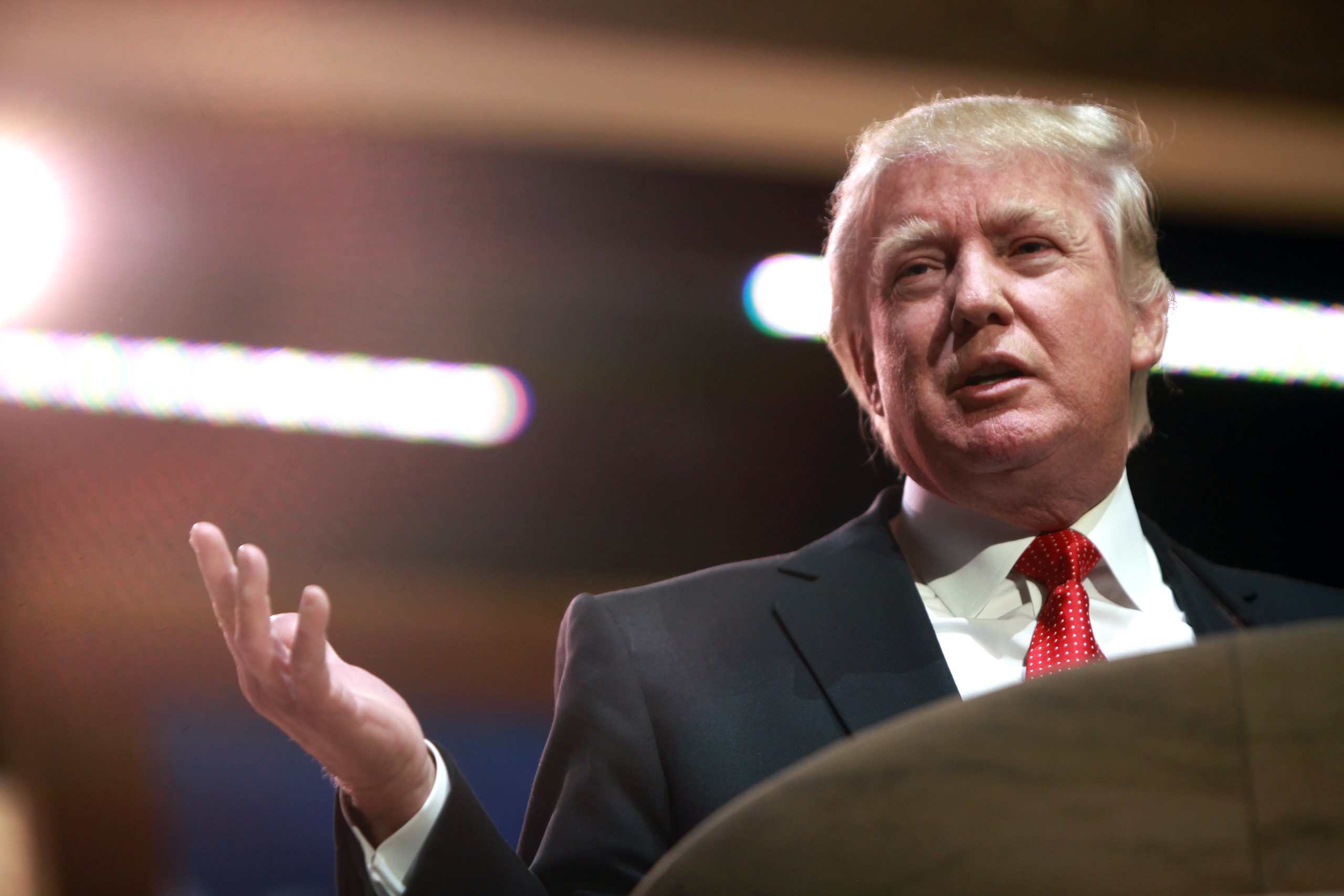
The feud is more than a Washington personality clash. It is testing whether Republican leaders can keep their agenda moving while Trump pushes the party toward a harder, more confrontational path.
Donald Trump is fueling a major Republican Party civil war on Capitol Hill, where his widening showdown with Senate GOP leader John Thune has splintered party unity and put House Republican leaders in the middle. The shorthand — “Trump throws GOP into full-blown civil war” — is dramatic, but the substance is real: Republican factions are fighting over who sets the agenda and how far loyalty to Trump should go.
The conflict is splitting GOP leaders and weakening party unity. This article explains why the GOP fight matters for the party’s future: it is shaping Senate votes, midterm strategy and the balance between Trump’s demands and the Republican Party’s institutional leaders.
A leader Trump does not call
The most revealing detail in the latest reporting is not a single insult or social media post. It is the silence between Trump and Thune.

CNN reported that House Speaker Mike Johnson sometimes hears from Trump constantly, including calls during the day, late at night and even after long White House meetings. Thune’s relationship with Trump looks very different. According to CNN, the Senate GOP leader can go days, and sometimes weeks, without hearing directly from the president.
Thune told CNN their conversations are now “more on an as-needed basis.” That matters because Thune is not just another Republican senator. He is the person responsible for moving Trump’s agenda through a Senate where floor time, rules and narrow vote counts can make or break the party’s plans.
The rift has reportedly widened since Trump moved against fellow Republican Sen. John Cornyn in a primary in May and kept pressing Thune to eliminate the filibuster, a step Thune has resisted. For Trump, pressure is a tool. For Thune, pressure can become a math problem he cannot solve.
The agenda became the battlefield
The Trump-Thune dispute is not only about style. It is about the daily mechanics of governing, and that is where the feud becomes dangerous for Republicans.
CNN reported that Trump has pushed the Senate to pass his SAVE America Act, even though the chamber has already rejected the voting restrictions bill. He has also demanded that Senate Republicans use the budget process to move a larger package tied to Iran funding and election restrictions on party-line votes.
Thune’s answer, according to the reporting, is that the proposal does not currently have the 50 votes needed to pass. That is the central tension: Trump is treating the Senate as an obstacle to be forced into line, while Thune is treating it as an institution governed by limits.
The list of flashpoints is long. CNN reported that Trump pulled back from a housing bill signing ceremony Republicans wanted to promote, disrupted efforts to renew surveillance powers, temporarily sidelined his own nominee for director of national intelligence and complicated immigration enforcement funding by announcing a separate $1.8 billion anti-weaponization fund.
Why Republicans are nervous
Republicans are not just worried about bruised egos. They are worried that the fight is arriving as both chambers face fragile majorities and a difficult midterm environment.
One Republican senator summed up the mood to CNN with a line that has quickly defined the moment: “We need to be talking up the wins, talking about how crazy Democrats are, and instead we are knifing each other.”
CNN described the situation as a circular firing squad, with roughly a dozen MAGA-aligned Republicans siding squarely with Trump, most other Senate Republicans leaning toward Thune and many lawmakers confused about why their party is making its own political life harder.
Sen. John Curtis of Utah put it more diplomatically, telling CNN that Republicans are “longing for a relationship with the White House where we work more in harmony.” Sen. Jim Justice of West Virginia, while supporting Trump’s agenda, warned that endless infighting could cost the party seats and make things worse for the president.
Two theories of party power
At the center of the fight are two competing theories of how the Republican Party should function under Trump.
Trump’s allies see urgency. They argue that the party’s voters gave Trump a mandate and that congressional Republicans should use every available procedural tool to carry out his agenda. From that view, resistance inside the Senate looks like weakness, delay or betrayal.
Thune’s camp sees a different reality. The Senate cannot move as fast as Trump’s social media feed, and it cannot pass bills that lack votes. A doomed vote can burn time that leaders need for other priorities, including keeping the government open beyond September 30.
That divide explains why White House officials, including chief of staff Susie Wiles and budget director Russ Vought, have reportedly pressed senators to move a budget resolution, while several GOP senators pushed back in a closed-door lunch. The fight is not whether Republicans want to win. It is whether winning means forcing a confrontation or preserving enough unity to govern.
A missing bridge between camps
The personal dynamics are now harder to manage because, according to CNN, GOP senators viewed the late Sen. Lindsey Graham as a key bridge between Trump and Thune.
Graham was close to both men: a Trump golf partner and a close friend of Thune. One senator described him to CNN as a “linchpin.” Without that intermediary, the distance between the White House and the Senate leader may become harder to close.
The timing adds pressure. The Senate is approaching a five-week recess, and Trump wants action before lawmakers leave town. Thune’s priority is preventing a government shutdown and managing floor time for several large items, including Russia sanctions and a stopgap funding measure.
That leaves Republicans with an unresolved question they cannot avoid: does the party rally around Trump’s immediate demands, or does it let Thune slow the process to protect the Senate majority’s broader interests?
The GOP’s real risk
The phrase “civil war” can sound overheated in politics, but this fight has concrete consequences. It affects nominations, spending bills, election legislation, foreign policy funding and the public image of a party trying to persuade voters it can govern.
Trump remains the dominant force in the Republican Party. Thune holds institutional power that Trump still needs. Johnson, meanwhile, appears to have a closer working line to Trump, which only sharpens the contrast with the Senate side of the Capitol.
The GOP can survive factional conflict; parties often do. The harder question is whether Republicans can contain this one before it consumes the agenda they are trying to run on.
For now, the party’s problem is simple and serious: Trump wants movement, Thune needs votes, and the rest of the GOP is being forced to choose between loyalty politics and legislative reality.
Leave a Reply