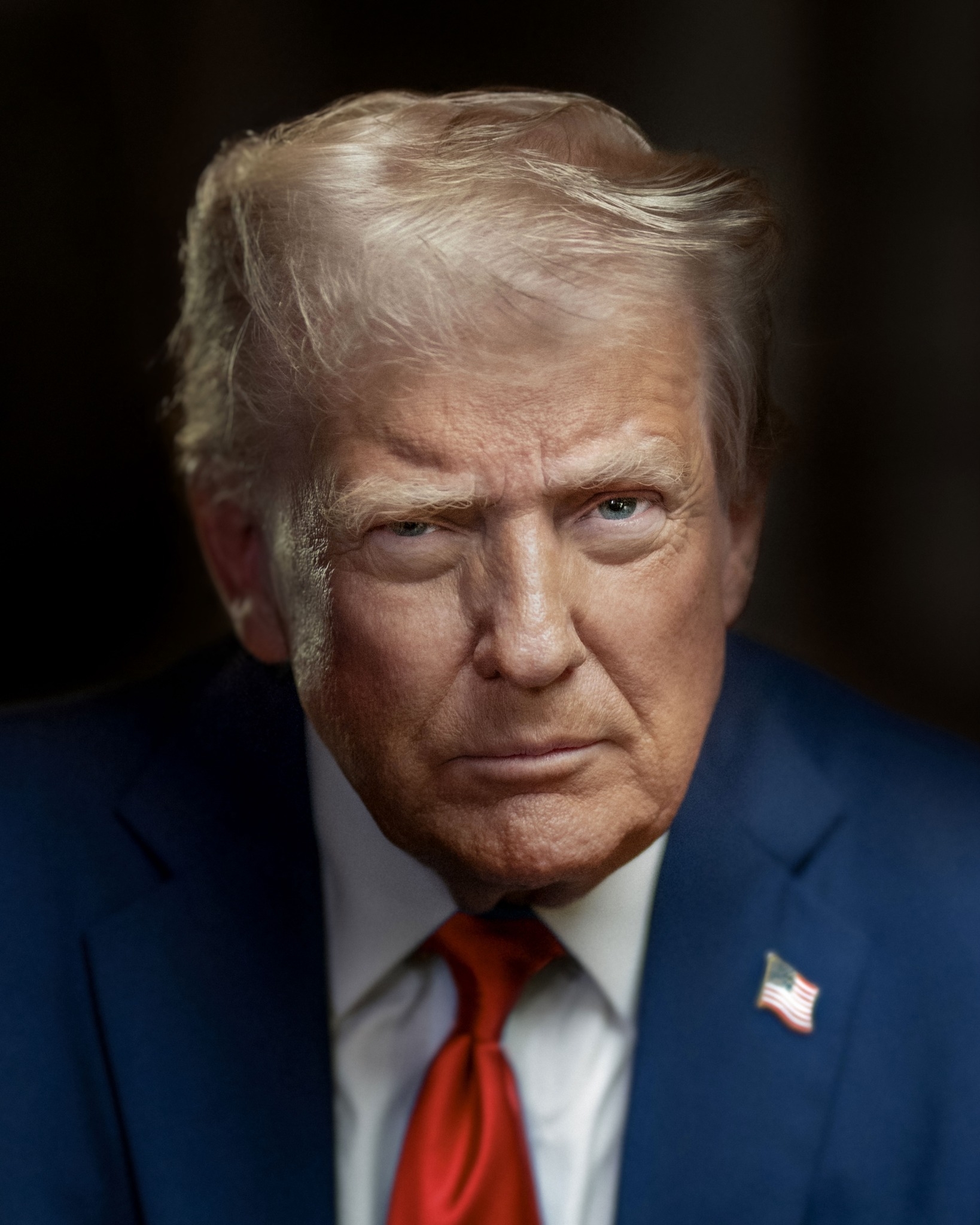
The deleted post became more than a typical social-media flare-up because some of the sharpest objections came from voices aligned with Trump and conservative Christian politics. Its timing, amid Trump’s dispute with Pope Leo XIV, added to the controversy.
Donald Trump deleted an AI-generated Truth Social post depicting him in a Jesus-like role after the image showed him appearing to heal a sick man and drew backlash from Trump supporters and critics. Trump said the picture was meant to show him “as a doctor,” but the white robe, glowing hand and hospital-bed setting led many viewers to see religious symbolism instead.
The dispute matters because some of the most pointed criticism came from conservative Christian voices generally aligned with Trump. The now-removed post also appeared less than an hour after Trump criticized Pope Leo XIV, putting a fight over foreign policy and religious respect into the same political moment.
Why the image drew scrutiny
The AI-generated scene was packed with visual cues. Trump stood beside a hospital bed in white clothing, his glowing hand resting on the forehead of a sick man.
According to the BBC, the image also featured the Statue of Liberty, a large American flag, fighter jets, an eagle, a praying woman, a nurse and what appeared to be a uniformed soldier. The combination joined patriotic and military imagery with a scene that critics said echoed familiar religious depictions of Jesus healing the sick.
That interpretation made the argument difficult to contain as a standard dispute over political messaging. Critics did not object only to a flattering or oversized portrayal of Trump; some considered the apparent borrowing from sacred imagery disrespectful or blasphemous.
Political images can communicate a message almost instantly, often leaving little room to clarify intent after viewers have formed their own reading. In this case, the elements that made the image visually dramatic also made its religious associations hard for critics to overlook.
Trump said he was a doctor
Trump acknowledged posting the image but rejected the idea that it was intended to cast him in a sacred role. After it was removed, he told reporters that it depicted him “as a doctor” next to a Red Cross worker.
“It’s supposed to be as a doctor making people better,” Trump said, according to the BBC. “And I do make people better. I make people a lot better.”
He later told CBS News that he took down the post because he did not want people to be confused. That explanation addresses his stated intention, though it did not settle the disagreement over how the image looked to its audience.
The competing readings are central to the episode. Trump’s account can be his intended meaning, while those who saw a glowing hand, white robe and bedside healing scene can still conclude that the picture invoked religious art rather than a conventional medical setting.
Allied Christian voices pushed back
The reaction from figures associated with conservative Christian politics gave the controversy a different dimension from criticism by Trump’s usual opponents. It showed that the image had reached a boundary some friendly voices did not accept.
Sean Feucht, a Christian activist involved in faith-based events connected to this year’s 250th anniversary of the Declaration of Independence, said the post should be removed immediately. “There’s no context where this is acceptable,” he wrote.
Conservative activist Riley Gaines wrote, “God shall not be mocked.” David Brody of the Christian Broadcasting Network said the image “crosses the line,” while adding that someone could support Trump’s mission and still reject the post.
Those statements do not establish a broad electoral shift or prove lasting damage to Trump’s political coalition. They do show that support for Trump does not automatically extend to every use of religious imagery, particularly among voters and commentators for whom the subject carries theological weight.
The Pope dispute changed the frame
The post arrived less than an hour after Trump criticized Pope Leo XIV, calling him weak on crime and terrible on foreign policy, according to the BBC. The close timing made the image harder to assess as an isolated online post.
Pope Leo, whom the BBC described as the first American pope, had repeatedly condemned the war in Iran and criticized what he called “absurd and inhuman violence.” He said he had no fear of speaking loudly about the Gospel’s message.
Trump defended his approach to Iran and said the pope was wrong. Their underlying disagreement concerned foreign policy, but the AI image redirected attention toward whether a political post had crossed a line involving faith.
That is a more difficult argument to sort into usual partisan categories. A dispute over security policy can be debated through competing views of national interest, while objections to perceived religious disrespect rest on moral and spiritual concerns that may not follow party loyalty.
Deletion limits exposure, not debate
Removing the post ended its availability on Trump’s Truth Social account, but it did not erase the controversy. Screenshots and news coverage preserved the image, while the deletion itself became evidence that the backlash had prompted a reversal.
It remains unclear whether the episode will have any measurable effect on Trump’s support. Many voters may view it as a short-lived online argument, and there is no clear evidence that it will produce a wider political realignment.
Still, the response points to a practical constraint on political theater. Trump has often been able to turn criticism into attention, but the strongest objections here centered on a religious boundary that some of his own allies said should not be crossed.
What the episode leaves unresolved
The central question is not simply whether Trump intended to portray himself as Jesus-like. He said he intended a doctor image, while critics saw a portrayal that closely resembled sacred healing imagery.
It is also unclear whether his explanation will satisfy supporters who viewed the post as inappropriate. For now, the deletion has not resolved the competing interpretations; it has made the gap between them the story.
The episode underscores how quickly an AI-generated image can become politically consequential when it combines a leader’s public persona, national symbolism and religious visual language. In this instance, the sharpest reaction did not come from one ideological direction alone.
Leave a Reply