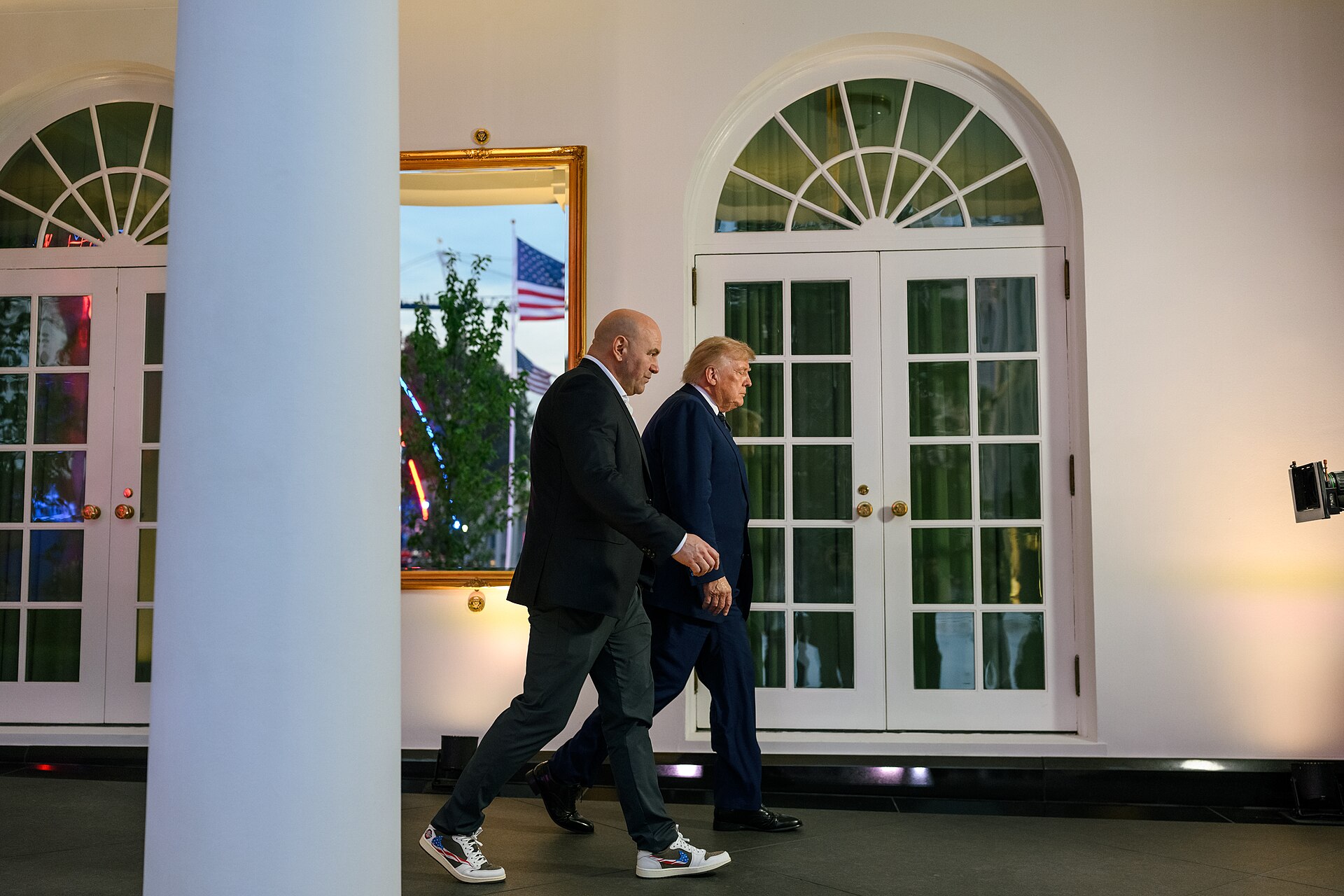
The June 14 fight card on the White House South Lawn mixed sports business, presidential symbolism and a costly logistics fight. The loss figure adds a new layer to questions about who benefited from the spectacle.
The UFC’s White House spectacle lost $30 million, TKO Group Holdings Inc. revealed, according to Bloomberg. Donald Trump was associated with the White House UFC event, staged on the White House South Lawn in Washington on June 14 as part of his celebrations for America’s 250th birthday.
The company said it also gained media exposure and partnership deals, making the headline loss only part of the story. For UFC, TKO and the White House, the Freedom 250 event was a rare collision of sports business, presidential pageantry and public-land controversy.
The $30 million headline
Bloomberg reported that TKO Group Holdings Inc. said it lost $30 million on UFC Freedom 250, the mixed martial arts event held at the White House. TKO is the company behind UFC, and its disclosure turns a political and cultural spectacle into a clearer business story.
The loss is striking because UFC events are usually evaluated through gate revenue, broadcast value, sponsorships, site fees and global attention. This one came with a setting no combat sports promotion had used before: the South Lawn of the White House.
TKO’s argument, as reported by Bloomberg, is that the event was not a simple money-in, money-out failure. The company said it gained in other ways, including media exposure and partnership deals.
That distinction matters. A $30 million loss can look damaging on a balance sheet, but a company may still treat the expense as marketing if it believes the event expanded reach, strengthened relationships or created brand value that does not show up immediately as event profit.
A fight card built for symbolism
Freedom 250 was tied to Trump’s broader celebrations for the nation’s 250th birthday. That framing made the event more than a fight night. It was positioned as patriotic entertainment, presidential staging and a UFC showcase all at once.
Bloomberg noted that the event was controversial and described it as the first combat sports contest staged on the White House South Lawn. That fact alone guaranteed attention, whether from UFC fans, Trump supporters, critics of the event or people who rarely follow mixed martial arts.
For UFC, the White House setting offered something traditional arenas cannot: symbolic scarcity. A fight card at T-Mobile Arena or Madison Square Garden can be important. A fight card on the South Lawn is built to become an image.
That is also why the loss figure is politically loaded. The setting was not neutral, the host was not merely ceremonial, and the event’s connection to Trump’s anniversary programming made every dollar part of a larger debate about public space and private promotion.
The cost questions came first
The financial scrutiny did not begin with TKO’s $30 million loss disclosure. Days before the event, the Associated Press reported on a legal filing that said preparations for Trump’s planned White House UFC fight had required more than seven federal agencies, hundreds of staff working onsite daily and at least $60 million.
According to AP, the filing said well over $60 million and tens of thousands of hours of labor had been expended, with the money coming from UFC and groups affiliated with it. The same report said the document did not specify the extent of government resources spent on the project, while noting that agencies including Homeland Security and the Federal Aviation Administration had allocated significant resources and manpower.
Those figures should not be treated as the same number. The AP-reported preparation spending and Bloomberg-reported TKO loss describe related but different financial views of the same spectacle. One speaks to the scale of staging and logistics; the other reflects what TKO says the event ultimately lost.
Together, though, they show why this event was never just another fight card. Its costs were tied to security, federal coordination, installations, crowd management and the political sensitivity of putting an Octagon on the White House grounds.
Why TKO may still claim value
The company’s best argument is exposure. A normal UFC event competes for attention in the sports calendar. A White House UFC event connected to Donald Trump generated coverage across sports, politics, business and culture.
That kind of attention can have real value, even when it is difficult to price. Sponsors may see a one-of-a-kind stage. Business partners may see access and ambition. International viewers may see UFC positioned as more than a sports league, closer to a global entertainment brand capable of occupying the most visible venues in American life.
There is also a strategic logic to taking a short-term loss for a long-term relationship. If the event helped TKO deepen commercial partnerships or attract future deals, the company can argue the $30 million loss functioned more like an acquisition cost than a conventional event failure.
The risk is that exposure cuts both ways. Controversy can amplify a brand, but it can also alienate fans, sponsors or public officials who see the event as too politically aligned. For a sport that has worked for years to broaden its mainstream appeal, the White House setting delivered visibility with baggage attached.
Public land, private spectacle
The sharpest criticism centered on the use of the White House grounds. AP reported before the event that two Virginia residents, represented by the Public Integrity Project, sued the National Park Service and sought to halt the fight. The lawsuit argued that Trump’s authorization violated National Park Service regulations prohibiting sporting events on federal parklands.
One attorney for the plaintiffs, Brendan Ballou, characterized the event to AP as a corrupt use of national monuments for private gain. The National Park Service pushed back in court, saying the challenge threatened to dash extensive preparations at the last moment.
That clash captures the central tension. Supporters could view the event as a bold public celebration using a popular sport to mark a major anniversary. Critics could view it as a private sports company receiving an extraordinary promotional platform at one of the country’s most symbolic public sites.
The event ultimately happened on June 14, which makes the later loss disclosure more than an accounting note. It adds a concrete price tag to a fight over symbolism, access and who gets to turn public ceremony into private commercial value.
What remains unanswered
The biggest open question is how TKO is measuring the upside. Media exposure and partnership deals can be valuable, but they are not as transparent as a reported event loss. Without more detail, outsiders cannot easily judge whether those benefits offset the $30 million shortfall.
It also remains unclear how much public-sector time and effort should be understood as part of the event’s real cost. AP reported that the legal filing did not specify the full extent of government resources spent, even as it described significant agency involvement.
For UFC fans, the fights may be remembered as a spectacle in an impossible-to-repeat location. For TKO investors, the question is whether the loss bought durable business value. For critics of the Trump-linked event, the number may reinforce concerns that the White House was used as a stage for a costly private promotion.
The clean takeaway is not simply that UFC Freedom 250 lost money. It is that TKO appears to be betting the White House spotlight was worth paying for, even at a reported $30 million loss. Whether that bet pays off will depend on what the company can turn the spectacle into next.
Leave a Reply