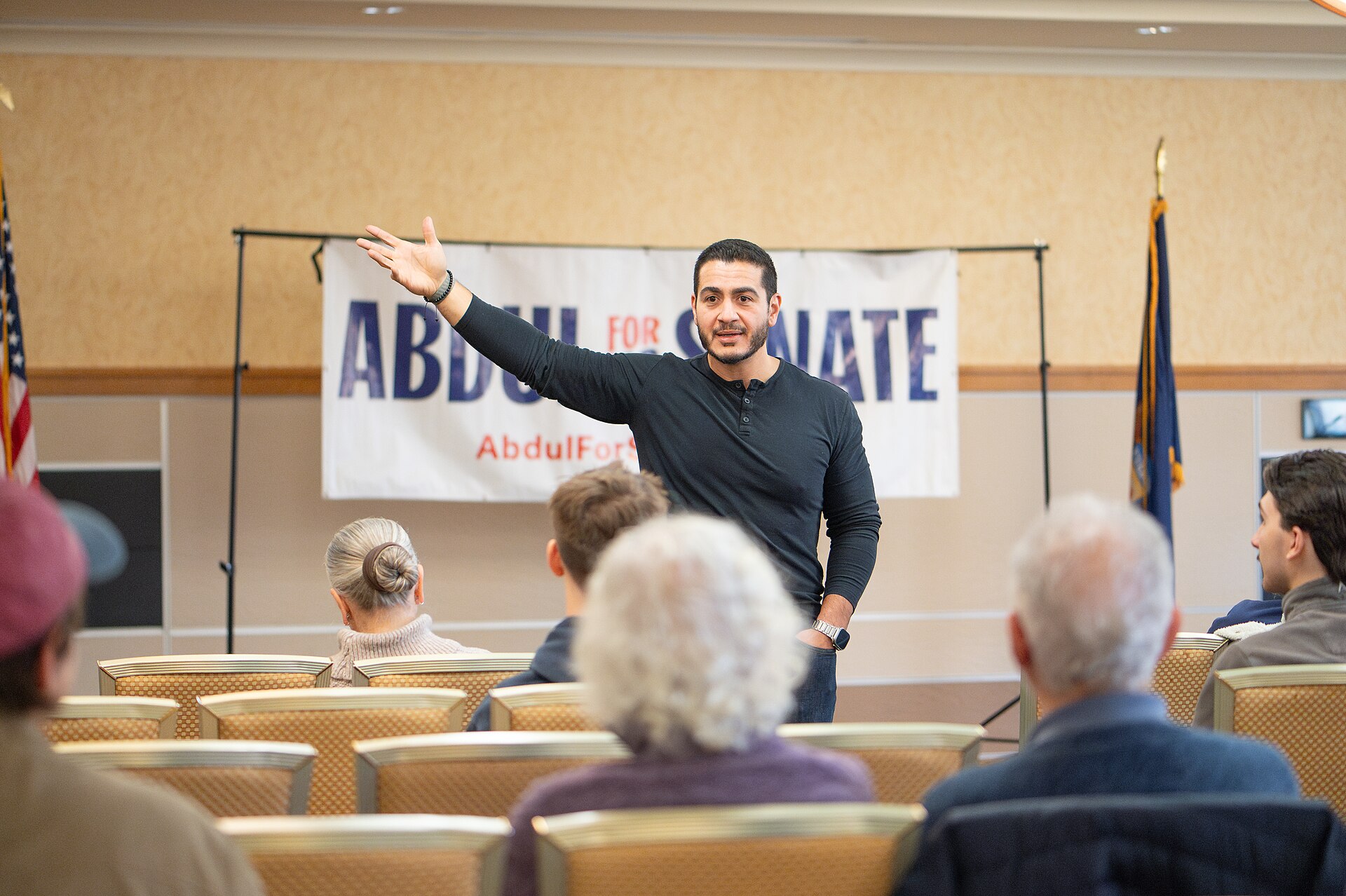
The progressive former health official’s win gives Democrats a high-stakes unity test in one of the Senate races that could shape control of the chamber.
Abdul El-Sayed defeated Haley Stevens to win the Democratic nomination for U.S. Senate in Michigan, according to the Associated Press, after a razor-thin Michigan Democratic Senate primary that put the party’s progressive wing over an establishment-backed congresswoman.
The political shorthand — El-Sayed defeats Stevens for the Democratic Senate nomination — carries immediate significance for Democrats because El-Sayed now advances to a general election against Republican Mike Rogers in a battleground race tied to control of the Senate.
A narrow win, not a landslide
The AP called the race for El-Sayed after updated returns Wednesday morning from Wayne and Oakland counties, two major vote centers in the Detroit area. The call came only after the news organization determined there were not enough outstanding votes for Stevens to catch and pass him.
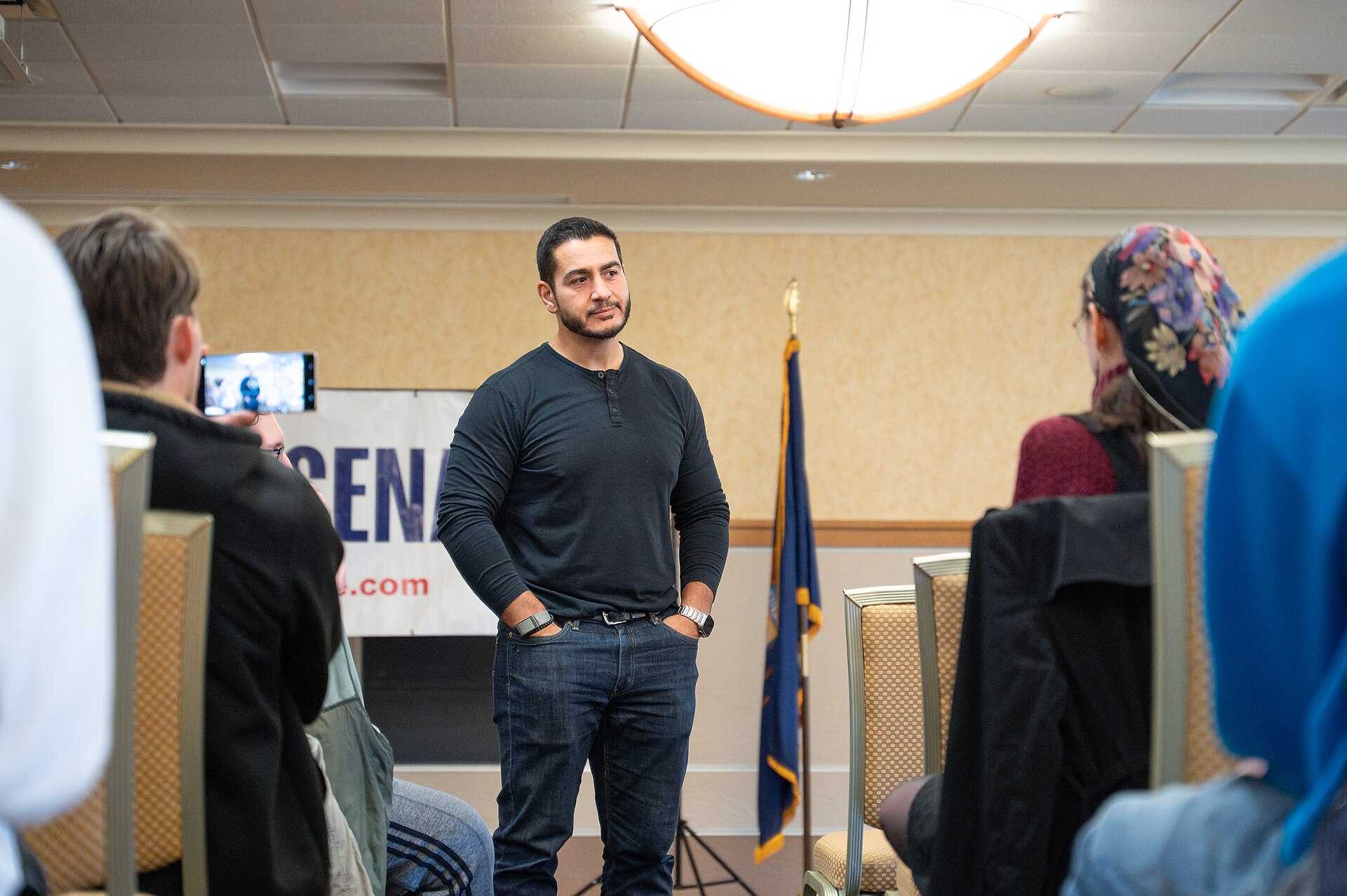
At the time of the AP’s projection, El-Sayed led by 14,893 votes, a margin of just under 1 percentage point, with more than 1.5 million ballots counted. That is a victory, but not the kind that lets a nominee pretend the party is already unified.
El-Sayed acknowledged the scale of the upset in remarks to supporters. “In the words of Muhammad Ali, we shook up the world,” he said Wednesday morning, according to the AP.
Stevens conceded and moved quickly to signal support for the nominee. She said she was “proud to offer my support as he takes on Mike Rogers in the general election,” adding that the campaign reflected the “full span of views within the Democratic Party.”
Progressives get a Michigan breakthrough
El-Sayed’s win is a major moment for Democrats’ progressive wing, especially because he had been here before and lost badly. In 2018, he ran for governor and was defeated in the Democratic primary by Gretchen Whitmer by 21 percentage points.
This time, he ran as an anti-establishment candidate with a platform that included Medicare for All, halting military aid to Israel and campaign finance reform. His campaign drew support from prominent progressives including Sen. Bernie Sanders and Rep. Alexandria Ocasio-Cortez.
That support helped frame the primary as more than a contest between two Michigan Democrats. To El-Sayed’s backers, it was a fight over whether the party should lean harder into economic populism, reject corporate influence and challenge its own Washington power centers.
Sen. Chris Van Hollen, a progressive Democrat, called the result a “wake-up call to the Washington Democratic establishment,” according to the AP. That message will resonate with activists who see El-Sayed’s victory as evidence that progressive energy can still win in a competitive statewide race.
Stevens represented a different bet
Stevens, a four-term member of Congress, made a more traditional electability argument. She emphasized manufacturing, the economy and her record winning competitive races. Her pitch was that Michigan Democrats needed a nominee already tested in difficult general elections.
She also carried establishment support, including from retiring Sen. Gary Peters, whose open seat created the primary in the first place. Peters congratulated El-Sayed after the result, the AP reported, but his endorsement of Stevens underscored how many party figures had viewed her as the safer November option.
The primary also drew heavy outside spending. Stevens benefited from tens of millions of dollars in outside support, including what the AP described as the largest investment in a race ever by the American Israel Public Affairs Committee, which backs pro-Israel candidates.
That spending became part of the larger argument El-Sayed wanted to have. His campaign cast the race as a choice between grassroots politics and big-money influence, a contrast that helped energize progressive voters but may leave some moderates uneasy heading into November.
The Rogers race starts now
El-Sayed’s general-election opponent is Mike Rogers, a former congressman who ran unopposed for the Republican nomination. Republicans have already reserved large sums of money for the general election, according to the AP, a sign of how aggressively both parties are expected to contest Michigan.
The Senate seat is pivotal to Democrats’ hopes of flipping the chamber during the final two years of President Donald Trump’s term. That makes the race both local and national at once: Michigan voters will choose a senator, but the outcome could help determine the balance of power in Washington.
El-Sayed signaled before the race was even called that unity would be his central task. Speaking to supporters Tuesday night, he said Democrats had a responsibility to “unite, unite to make sure that Mike Rogers never sees the inside of the U.S. Senate.”
Michigan Democratic Party chair Curtis Hertel made a similar plea after the primary. “We have got to work together to take this country back,” he said, while describing El-Sayed as “a fighter for the people,” according to the AP.
The party’s risk is obvious
El-Sayed’s supporters will see the result as proof that a progressive candidate can expand enthusiasm and meet the political moment. In that view, caution has not protected Democrats from losing ground, and a sharper message on health care, money in politics and foreign policy could bring in voters who feel ignored.
Moderates will see a different warning. A win by less than 1 percentage point after a bruising primary suggests El-Sayed has work to do with Democrats who preferred Stevens and with swing voters who may be more receptive to a conventional economic message.
Both views can be true. El-Sayed won the nomination, and he did it against a well-known member of Congress with powerful outside allies. He also won narrowly in a battleground state where even small defections can matter.
The immediate question is not whether the progressive wing had a good night. It did. The harder question is whether the coalition that won a Democratic primary can be widened quickly enough to win a statewide general election.
What remains unresolved
The next phase will test how Stevens’ supporters respond to her endorsement of El-Sayed. Her concession statement was notably direct in backing him against Rogers, but voter behavior does not always move as quickly as candidate statements.
El-Sayed also has to define himself for a broader electorate before Republicans define him first. His positions energized the left in the primary, but the general election will likely put them under sharper attack, especially on foreign policy and the role of government in health care.
For Democrats, the strategic challenge is to turn a primary that exposed real divisions into proof of democratic energy rather than disarray. For Republicans, the opportunity is to argue that Democrats nominated someone too far left for Michigan.
The primary settled the ballot line. It did not settle the bigger fight over what kind of Democrat can win Michigan in 2026. El-Sayed now carries that argument into November, with the Senate majority potentially hanging in the balance.
Leave a Reply