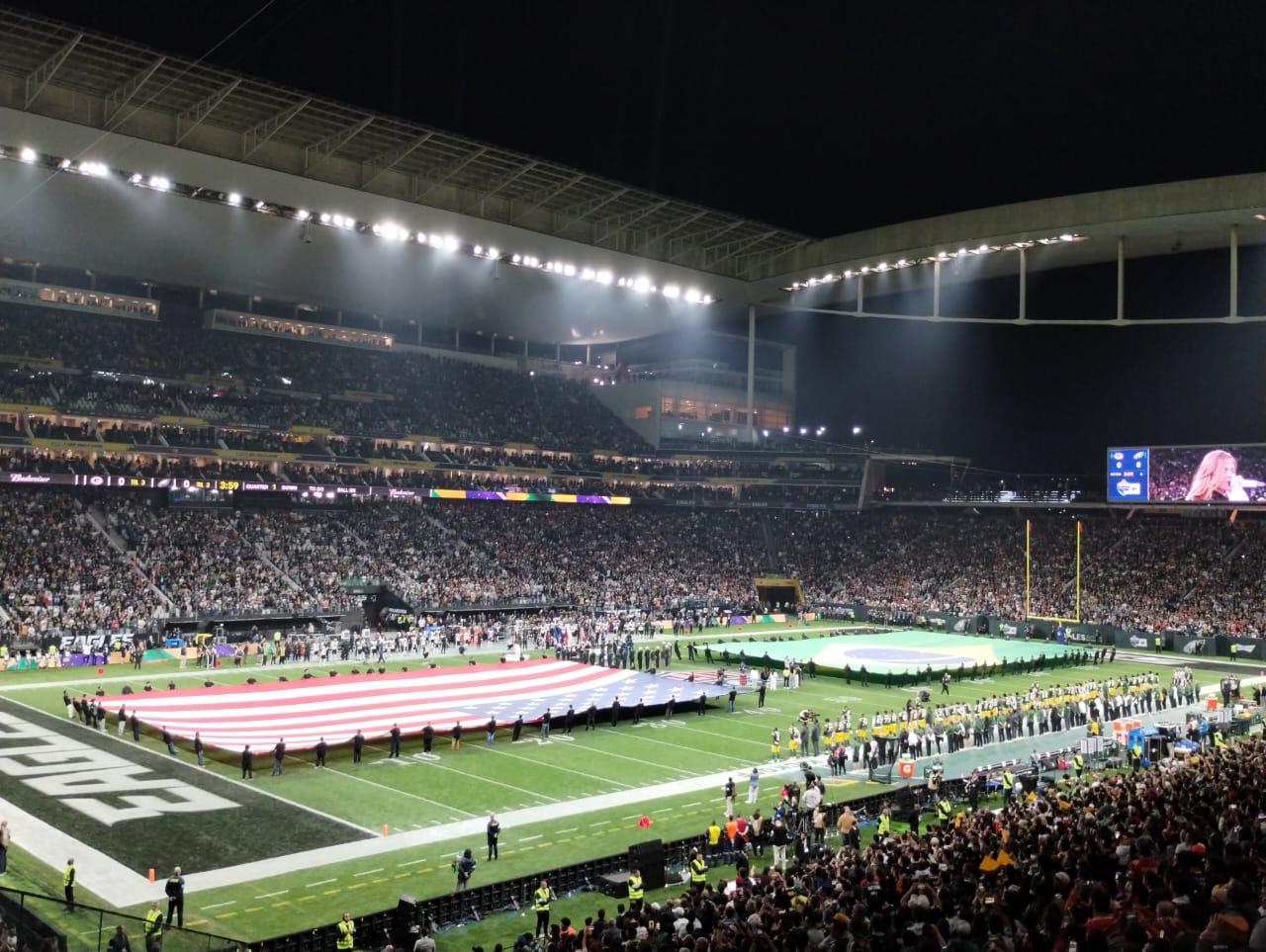
The World Cup is not just an event fans watch; it is a structure they grow up inside. That is the challenge facing the NFL as it tries to turn overseas curiosity into lasting loyalty.
The NFL can learn from the World Cup’s global takeover, but the lesson is not simply that FIFA staged a bigger party. The real comparison is between the NFL’s international growth efforts and the World Cup’s worldwide appeal: one league is trying to expand an American sport abroad, while FIFA’s showcase arrives already tied to national identity, local clubs and decades of habit.
That matters now because the NFL has moved from occasional overseas experiments to a standing global strategy, with more regular-season games abroad, new markets on the schedule and flag football headed to the 2028 Olympics.
A global event needs roots
The World Cup works because FIFA is not asking most fans to adopt something foreign for one weekend. The tournament plugs into a sport people already play, argue about and inherit. A child in Lagos, Buenos Aires, Seoul or London may never attend a World Cup match, but the event still feels close because soccer is already close.

The NFL’s challenge is different. It has the world’s richest sports league, a polished television product and star power. It also has a sport whose rules, equipment, weekly rhythm and physical demands are less familiar outside North America.
That does not make global expansion impossible. It does mean the NFL cannot treat international growth as a stadium-tour business alone. The World Cup’s lesson is that attention is easier to win than belonging.
The NFL already has momentum
The league has been moving in this direction for decades. The Athletic has traced the NFL’s international path from a 1976 preseason game in Tokyo to the American Bowl series, then to the first international regular-season game in Mexico City in 2005 and the launch of the International Series in London in 2007.
The pace has quickened. The Athletic reported that the 2024 season featured five international regular-season games across Brazil, Germany and England, and that the league planned eight international games in 2025, including Madrid. That is no longer a curiosity play. It is a calendar strategy.
Commissioner Roger Goodell has also been careful about what that future might look like. The Athletic quoted him saying he expects a very global NFL, not necessarily one built around overseas franchises. That distinction matters. The league appears more interested, at least for now, in making its games travel regularly than in immediately moving a team across the Atlantic.
That caution is sensible. A full-time international franchise would raise hard questions about travel, competitive balance, player preferences, tax rules, broadcast windows and whether local fans would embrace a permanent team after the novelty fades.
FIFA sells identity first
The World Cup’s advantage is emotional architecture. Fans do not just watch elite athletes; they watch countries. FIFA’s tournament turns geography, ancestry and civic pride into a simple rooting interest. Even casual viewers can understand the stakes before they understand the tactics.
That is hard for the NFL to copy. A regular-season game in London or São Paulo can be exciting, but it usually asks local fans to pick between two American franchises with histories rooted elsewhere. The Dallas Cowboys, Kansas City Chiefs or Jacksonville Jaguars may have international followings, but they are still American teams first.
The NFL’s closest bridge may be flag football. With flag football set to appear at the 2028 Los Angeles Olympics, the league has a version of the sport that is cheaper, safer and easier to teach globally than tackle football. It also gives countries a chance to compete under their own flags, which is the piece the World Cup has always understood.
If the NFL wants a World Cup-style growth engine, flag football may matter as much as Sunday inventory. It can create players before it creates subscribers.
Access can make or break loyalty
International fans are not starting from the same place as American fans. Time zones are punishing. Rules are dense. Broadcast rights can be fragmented. A three-hour game with frequent stoppages is a harder first date than a two-hour soccer match with a clock everyone understands.
The NFL has often solved this with spectacle: packed stadiums, familiar teams, special merchandise and broadcast packages. Those tools help, but the World Cup points to a deeper requirement. Fans need easy pathways in: clear scheduling, affordable viewing, explainers that do not condescend and local media voices who can translate the sport culturally, not just linguistically.
There is also a tension in putting international games behind exclusive streaming windows. Digital distribution can reach younger fans and global audiences, but it can also make a growing sport feel harder to find. For a league trying to build habits abroad, friction matters.
The World Cup is not frictionless either. FIFA has its own controversies over hosting, governance, costs and labor concerns. Still, when the ball rolls, the event is simple to locate in the public imagination. Everyone knows what it is, when it is, and why it matters.
Games abroad are only the start
The NFL can fill Wembley Stadium or draw huge interest in Germany and still face the bigger question: what happens after the teams fly home? The World Cup leaves behind memories, but soccer itself remains in schools, clubs, parks, pubs and local leagues. That is the ecosystem.
For the NFL, the next stage is less glamorous than a sold-out showcase. It means coaching clinics, youth participation, women’s flag football, local broadcasters, recognizable international players and year-round community touchpoints. It means giving fans abroad a reason to care in April, June and August, not only when a regular-season game lands nearby.
The league’s Global Markets-style approach, in which teams cultivate fan bases in specific countries, is one route. But the risk is treating markets like territories on a sales map. Local fans can spot the difference between being courted and being cultivated.
That is where FIFA’s model is useful even for critics of FIFA. The World Cup is the peak of a pyramid. The NFL is still building much of its international pyramid underneath the peak.
The real lesson for the NFL
The NFL does not need to become soccer. It should not pretend the Super Bowl can be remade into the World Cup, or that American football will suddenly match soccer’s global simplicity. The sports have different histories and different barriers to entry.
But the World Cup’s global popularity shows what durable sports power looks like. It is not just broadcast reach. It is identity, ritual, youth participation, national pride and the feeling that the event belongs to the viewer as much as to the organizer.
The NFL can keep exporting games and should. The crowds show there is demand. The harder job is turning demand into ownership, so a fan in Madrid, Munich, São Paulo or London does not feel like a visitor to someone else’s league.
That is the World Cup lesson hiding in plain sight: global takeover is not achieved by showing up everywhere. It comes when people everywhere believe the game has already shown up for them.
Leave a Reply