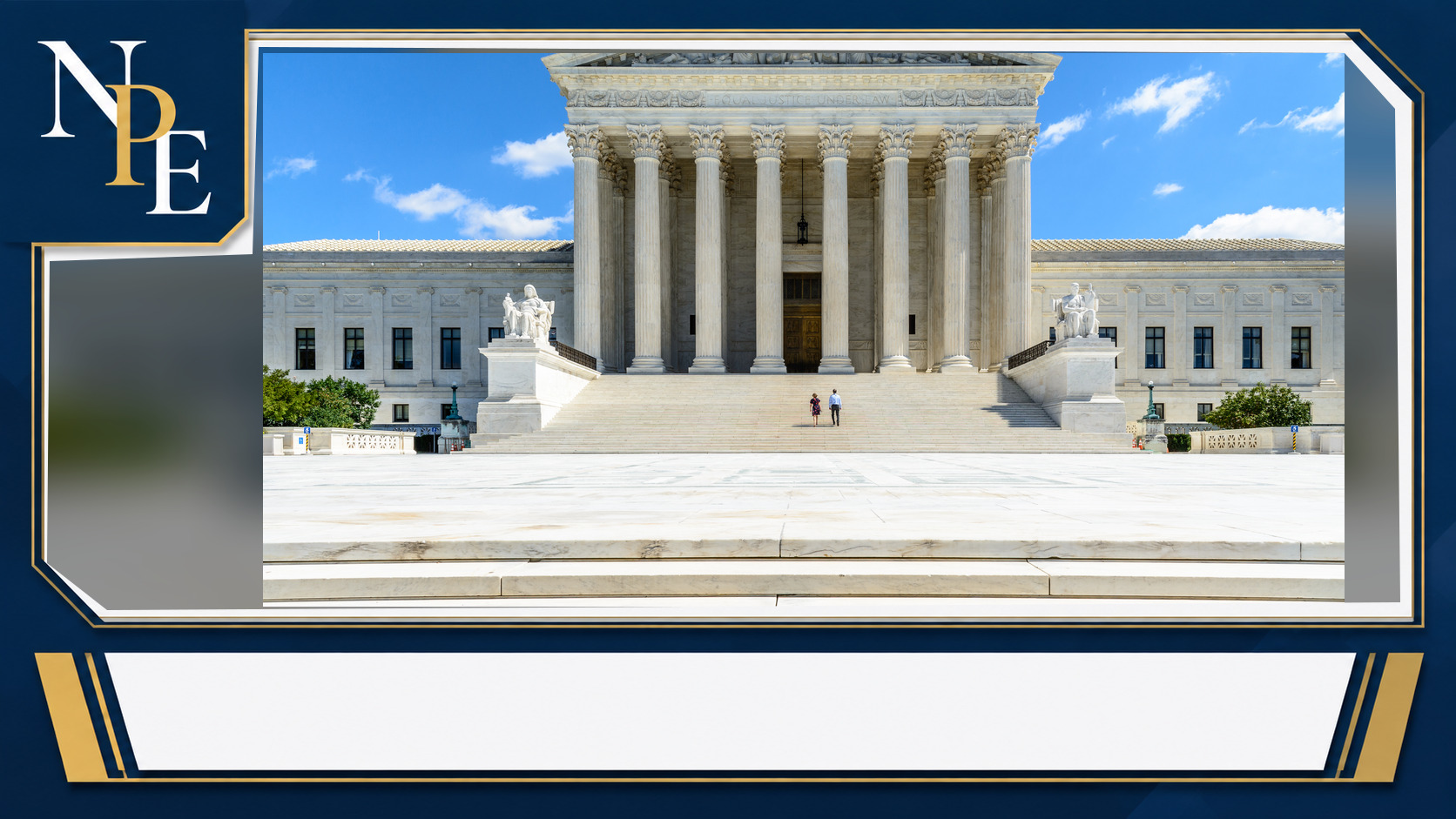
The argument over worship rights is often framed as a simple question of faith versus government. The Constitution’s religion clauses create a more demanding balance: protecting free exercise without allowing the state to favor a faith.
The right to worship shall not be infringed, advocates argue, because the First Amendment protects religious freedom and freedom of religion from government interference. That promise matters well beyond a church, synagogue, mosque or temple: it reaches belief, religious observance and, in some circumstances, conduct shaped by faith.
But the constitutional protection of worship is not a stand-alone guarantee with no competing concerns. The First Amendment also bars government establishment of religion, forcing courts and public institutions to weigh free exercise against equal treatment, public safety and the rights of people who do not share a particular belief.
Worship is only the starting point
The Constitution’s text does not use the phrase “right to worship.” It says that Congress shall make no law “respecting an establishment of religion, or prohibiting the free exercise thereof.” That language creates two related protections: government may not establish religion, and it may not prohibit its free exercise.

Worship is an obvious part of free exercise. People can gather, pray, observe holy days and organize religious communities. Yet the idea of religious liberty is broader than attendance at a service. It can include how a person expresses belief, observes dietary rules, wears religious clothing, raises children or participates in a faith community.
The Justice Department’s overview of federal religious-liberty protections makes that distinction directly: the Free Exercise Clause protects more than belief or worship alone; it can protect religiously motivated acts. The harder question is where that protection meets generally applicable laws and the rights of others.
Two clauses create one balance
Arguments for strong worship protections often focus on the Free Exercise Clause. That is only half of the constitutional framework. The Establishment Clause is the other half, and it exists to prevent the government from sponsoring, coercing or officially favoring religion.
Those principles can point in different directions. A public agency may need to accommodate a person’s religious practice so that policy does not single out faith. At the same time, the agency cannot use its authority to pressure others into religious participation or give one tradition official preference.
That tension explains why disputes about religion in schools, government funding, workplace rules and public ceremonies are rarely settled by the slogan that worship should be unrestricted. The relevant legal question is usually more precise: What did the government do, whom did it burden, and did it treat comparable religious and nonreligious activity fairly?
For supporters of expansive religious-freedom claims, a narrow reading of worship rights can leave people forced to choose between conscience and public life. Critics worry that broad exemptions can shift costs onto students, employees, patients or neighbors who have different beliefs. Both concerns are rooted in the same pluralistic society.
The Court has broadened key protections
Recent Supreme Court decisions show why the debate has intensified. In Carson v. Makin, decided in 2022, the Court held that Maine could not exclude religious schools from a tuition-assistance program merely because of their religious character or instruction. The ruling built on earlier cases addressing discrimination based on religious status.
The decision did not mean every government benefit must flow to every religious organization without conditions. It did reinforce a significant principle: once a state offers a generally available benefit, excluding otherwise eligible recipients because they are religious can raise a Free Exercise problem.
In Mahmoud v. Taylor, decided in 2025, the Supreme Court addressed parental religious objections to school instructional materials and described the Free Exercise Clause as protecting against more subtle forms of interference with religious exercise. The decision is a reminder that modern disputes are not confined to bans on services or direct punishment for prayer.
Still, court rulings are fact-specific. A religious-liberty claim can depend on whether an official policy is neutral, whether it targets religious conduct, how serious the burden is and whether the government has a sufficiently strong reason for its approach. Headlines about a “right to worship” cannot substitute for that analysis.
Freedom does not mean official favor
A serious defense of worship rights should include people of every faith and people with no religious affiliation. The First Amendment’s protection is strongest when it does not depend on whether government officials approve of a belief, regard it as familiar or find its practices convenient.
That is why the Establishment Clause is not the enemy of religious freedom. It protects against a different kind of coercion: a state that uses public power to decide which religious message is preferred. In practical terms, the freedom to worship includes freedom not to worship and freedom to change one’s beliefs without government penalty.
The U.S. Courts’ educational materials describe the two religion clauses as provisions that can come into conflict, with federal courts serving as the ultimate referees. That description captures the central challenge. Neither clause can simply erase the other.
There are also limits unrelated to theology. Religious conviction does not automatically invalidate every law involving health, safety, nondiscrimination or the administration of public programs. Governments may have compelling interests, and courts must assess whether a policy is actually necessary and whether it burdens religion more than required.
The real test is equal liberty
The principle that worship should not be infringed remains a powerful constitutional starting point. It cautions government against treating faith as a private indulgence that must disappear whenever it enters public life. It also rejects the idea that popular religious practices deserve more protection than minority ones.
Yet equal liberty is a better guide than a sweeping catchphrase. The goal is not to give religious institutions unchecked power, nor to force believers to abandon their convictions at the public square’s edge. It is to ensure that government neither suppresses religious exercise nor recruits its authority on behalf of religion.
That balance will continue to be tested in classrooms, benefit programs, workplaces and local communities. The unresolved fights will turn less on whether worship matters—it plainly does under the First Amendment—than on how to protect it without diminishing the constitutional freedom of everyone else.
Leave a Reply