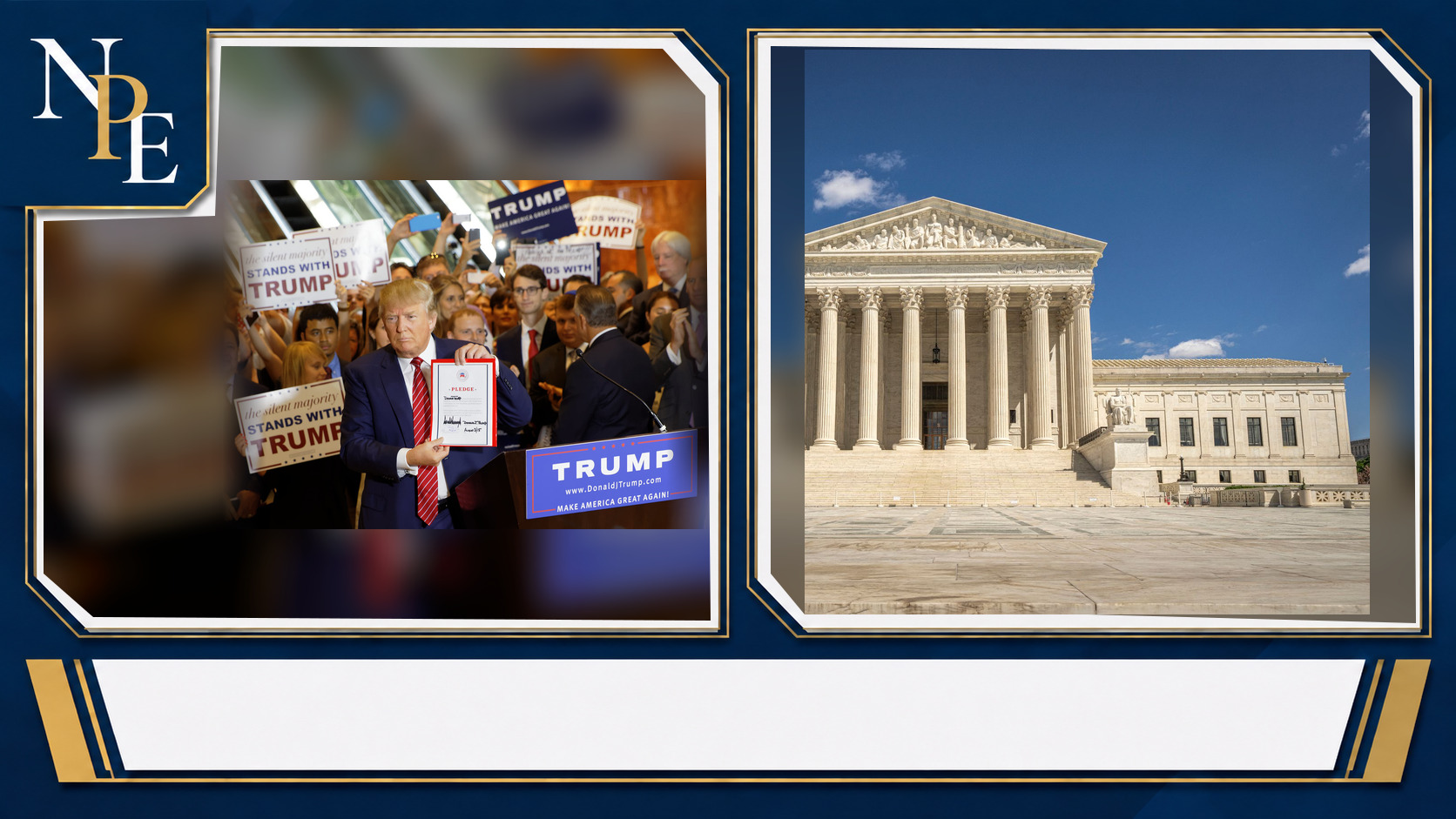
The court’s emergency ruling is not a final decision on whether President Donald Trump’s mail-voting order is legal. But it changes what the federal government may begin doing while the challenge from 23 states and Washington, D.C., continues.
On Monday, the Supreme Court cleared the way for the Trump administration to implement restrictions on mail-in voting under Executive Order 14,399, signed by President Donald Trump. The court paused a Boston federal judge’s injunction that had blocked parts of the order in the November elections for 23 states and the District of Columbia, changing the immediate legal landscape for election officials across the United States.
The ruling is a significant temporary victory for Trump, but it does not settle whether the executive order is lawful. A separate order still prevents the U.S. Postal Service from carrying out one provision nationwide, and the underlying challenge from the states remains unresolved.
A temporary win, not a final ruling
The Supreme Court acted on an emergency request from the Trump administration after lower courts had declined to put the Boston injunction on hold. Its 10-page unsigned opinion allowed federal agencies to move ahead with challenged portions of the order while the case continues.
The majority’s central reasoning was procedural: it said the states’ claims came too early because the administration had not yet implemented the order. In legal terms, the court concluded that the dispute was not sufficiently ripe for the states to pursue at this stage.
That distinction matters. The court did not issue a final declaration that the president may impose the restrictions, nor did it decide the full constitutional dispute over who controls key parts of election administration.
Instead, the justices concluded that the administration should not be barred from preparing to act before a more developed factual record shows how the agencies will apply the order.
What Trump’s order directs agencies to do
Trump signed the executive order in March, saying it was intended to maintain public confidence in federal elections. As the dispute reached the Supreme Court, three provisions were at the center of the states’ challenge.
- The Department of Homeland Security would create lists of adult U.S. citizens in each state and send them to states at least 60 days before a federal election.
- The attorney general would be directed to prioritize investigations and potential prosecutions of state and local officials who issue federal ballots to people ineligible to vote in federal elections.
- States would be required to provide the Postal Service lists of voters expected to receive mail ballots, while the Postal Service would be barred from mailing ballots to people absent from its lists of “enrolled” voters.
The order’s supporters frame those steps as election-integrity measures. Its opponents say the federal government is attempting to impose new demands on state-run election systems without clear congressional authorization.
Why 23 states sued in Boston
California led the coalition of 23 states and the District of Columbia that challenged the order in federal court in Massachusetts. The states argued that the Constitution gives them substantial authority over voter eligibility and the times, places and manner of congressional elections.
U.S. District Judge Indira Talwani found that the states could challenge the order as it related to the approaching November elections. She said the directives created a direct and immediate dilemma for state officials who would need to decide whether, and how, to respond.
Talwani blocked the federal government from enforcing the disputed provisions against the plaintiff states and Washington, D.C., on or before Nov. 3, 2026. She did not extend that finding to later federal elections, reasoning that claims about elections after that date were not yet ready for review.
The 1st U.S. Circuit Court of Appeals left Talwani’s injunction in place. It said the practical effects of the order meant the states had reason to respond now, even if agency implementation details had not yet been finalized.
The Postal Service limit still stands
One of the most important limits on Monday’s decision is easy to miss: it does not immediately free every part of the executive order to take effect.
In a separate case involving different plaintiffs, Talwani temporarily prohibited the U.S. Postal Service from implementing the provision tied to voter mailing lists anywhere in the country. That nationwide restriction remains in force for now.
As a result, the Supreme Court’s action gives the administration room to move on parts of the order challenged by the states, but it does not erase all court-imposed barriers surrounding mail-ballot delivery.
The split legal status could create operational uncertainty. State election offices, federal agencies and the Postal Service may have to navigate overlapping rulings as the November election approaches.
The dissent warns of election disruption
The court’s three Democratic-appointed justices dissented. Justice Ketanji Brown Jackson wrote a 23-page dissent arguing that the majority overlooked the practical consequences of allowing the administration to proceed before the election.
Jackson accused the majority of missing what she described as the government’s effort to obtain judicial approval for actions that could create disorder ahead of November. Her dissent reflects the broader argument from the plaintiff states: that waiting for full implementation could leave election officials with too little time to adapt.
The Trump administration took the opposite view. Solicitor General D. John Sauer argued that the lower court’s order improperly prevented the government from finalizing and carrying out policy before agencies had made key implementation decisions.
The competing positions turn partly on timing. The administration says courts should wait for concrete agency action; the states say the order itself forces them to make consequential choices now.
What remains unresolved before November
The Supreme Court’s order settles the immediate question of whether the Boston injunction will remain in force during the litigation. It does not resolve the states’ claims that the executive order exceeds presidential authority or conflicts with state control over election procedures.
Further court proceedings could clarify what agencies actually plan to do, whether particular actions impose enforceable duties on states, and whether Congress has authorized the federal role the administration envisions.
For voters, the most practical takeaway is that mail-in voting rules are still largely administered by states, but the federal-state fight over the Trump order is now active on a faster timetable. The ruling may affect election preparation well before the courts deliver a final answer on the order’s legality.
That makes the decision consequential without making it conclusive: the administration has gained breathing room, the states have lost a temporary shield, and the legality of the mail-voting restrictions remains an open question.
Leave a Reply