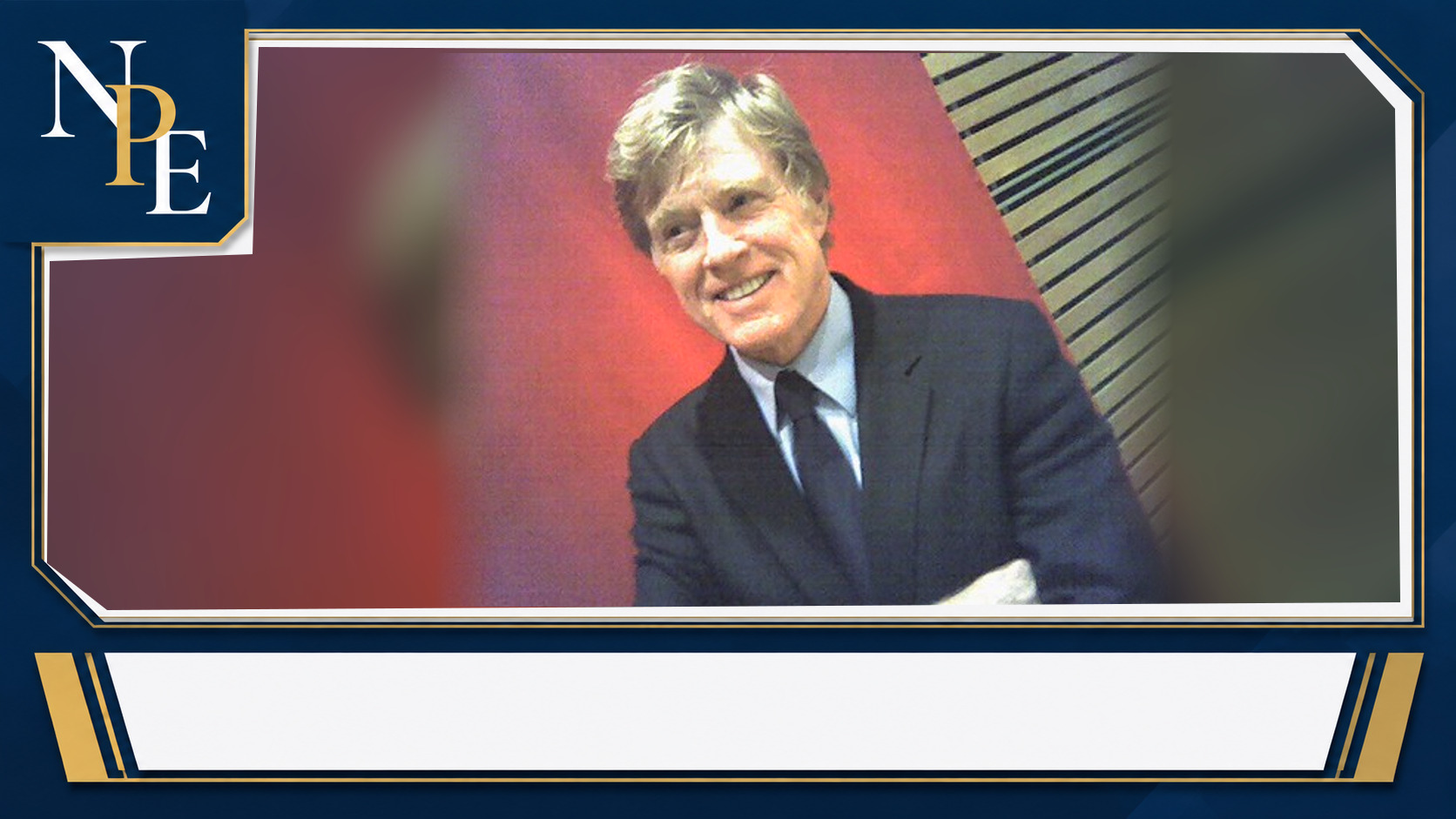
In All Is Lost, Robert Redford carried a nearly dialogue-free survival story as a sailor in crisis. The role offers a useful entry point to a career that repeatedly pushed beyond the ease of his leading-man image.
The 2013 film leaves little room for the tools usually associated with Redford: banter, romance, social status or the comfort of an ensemble. Its lone sailor must work through physical labor, frustration and fear. The performance shows how far Redford could travel from the polished screen presence that made him famous.
A late role strips back the persona
All Is Lost was a stark contrast to the familiar Redford of romantic dramas, capers and political thrillers. Playing a stranded 75-year-old sailor, he held the film together through action rather than extended dialogue.
That constraint made the work intensely physical and psychologically demanding. It also underscored that the famous face had never been the full measure of his ability as a performer.
Redford’s career included roles that gave audiences easy access to his charm, but he was also willing to play men whose confidence could not solve the problem in front of them.
The leading-man image was only a starting point
Redford’s blond hair, blue eyes and athletic ease made him a natural fit for the star-making machinery of the 1960s and 1970s. In Barefoot in the Park, The Way We Were and Butch Cassidy and the Sundance Kid, he brought lightness to scenes without making that lightness seem entirely effortless.
His Sundance Kid is cool under pressure, even as Paul Newman’s Butch supplies much of the comic momentum. In The Way We Were, Redford’s Hubbell Gardiner has charm and social fluency, yet those qualities cannot bridge the distance between him and Barbra Streisand’s Katie Morosky.
In The Sting, Johnny Hooker is magnetic and quick, but he is also a hustler learning the rules of a larger game. Across these roles, Redford could make the surface inviting while leaving room for uncertainty beneath it.
His 1970s films put him near power and danger
Redford’s image could move between popular entertainment and the more skeptical mood of the 1970s. In Sydney Pollack’s Three Days of the Condor, he plays a CIA researcher drawn into a deadly conspiracy and forced to survive a system that has already decided he is expendable.
In All the President’s Men, he played Washington Post reporter Bob Woodward. The controlled performance suits a film centered on reporting, procedure and persistence; the Library of Congress describes the film as a cultural phenomenon in its own right.
Those parts placed Redford in stories where institutions were opaque, corrupt or indifferent. They also offered a different use for his screen presence: not simply as a romantic ideal, but as a figure trying to understand the danger around him.
He worked beyond acting
Redford directed Ordinary People, a family drama far removed from the breezier confidence of many of his acting roles. He later directed Quiz Show, a drama about the 1950s television scandal that examines performance, class and the public appetite for manufactured authenticity.
NPR described Redford as an Oscar-winning director who founded the Sundance Institute and grew the Sundance Film Festival. That work placed him in an institutional role beyond his acting career.
The Boston Globe’s 2025 appreciation also pointed to the breadth of films associated with him, including Sneakers, The Natural, Indecent Proposal, Legal Eagles and his late-career appearance in Captain America: The Winter Soldier.
The range is the enduring point
Redford can be remembered through familiar images: an outlaw, a romantic lead, a political-thriller protagonist or a baseball player in a white uniform. But roles such as the sailor in All Is Lost make a different case for his career.
They show a performer prepared to let certainty fall away. Whether a character was charming, cornered or isolated, Redford could make assurance look less fixed than it first appeared.
That range, from major studio roles to directing and Sundance, is what makes his body of work feel larger than a collection of classic star turns.
Leave a Reply