
The dropped cases turned on proof, documents and timing — not just the public fight over damage to one of Washington’s most visible landmarks.
The Lincoln Memorial Reflecting Pool controversy now centers on a harder question than whether damage occurred: what prosecutors could prove about a blue liner that already had a troubled construction record. According to USA TODAY’s reporting and the court and contracting records it cited, the $16 million renovation, the Department of the Interior, the National Park Service and contractor Atlantic Industrial Coatings became part of a dispute over whether damage was caused by alleged vandals, rushed work or both.
That distinction mattered after felony vandalism charges against Olympic canoeist David Hearn and others were dropped. President Donald Trump criticized prosecutors for backing away from the cases, but the records described by USA TODAY show why the prosecution problem was rooted in the renovation itself.
The legal problem was proof
USA TODAY reported that the central turn came in a July 31 motion from the office of U.S. Attorney for the District of Columbia Jeanine Pirro. Prosecutors said extensive construction issues prevented them from proving that alleged damage to the Reflecting Pool lining reached the level required for a felony vandalism conviction.
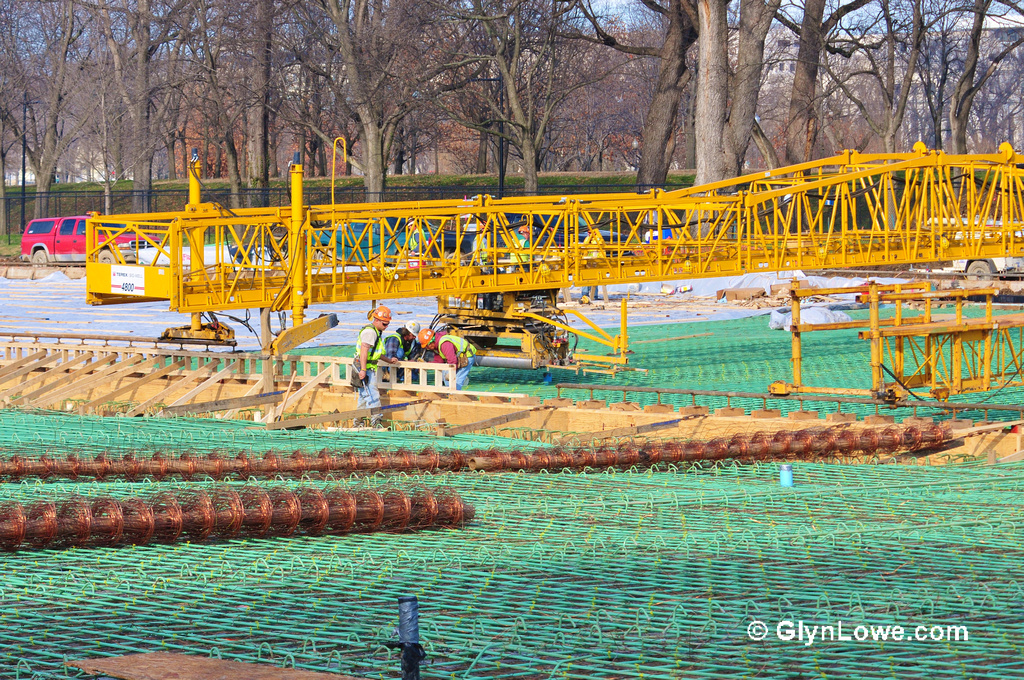
The motion did not say damage to the pool was unimportant. It said the government’s evidence was undermined by contractor flaws, failed testing and other problems documented by the Department of the Interior.
The filing also faulted delays in providing those documents to prosecutors. It said that if the department had been more forthcoming with information already in its possession, prosecutors would not have sought a grand jury indictment against Hearn.
Prosecutors also dropped similar vandalism charges in three other cases. That pushed attention away from a simple vandalism narrative and toward what officials knew about the liner before and after the alleged damage.
The liner had warning signs before the case unraveled
Documents cited in USA TODAY’s reporting put several dates at the center of the record: March 31, April 3, April 6, April 23 and April 24, 2026. Those dates marked early project steps before the vandalism controversy overtook the renovation.
On March 31, the National Park Service signed environmental and historic-preservation approvals for installation of a polyurea liner. USA TODAY reported that the option had been presented by the administration and had not previously been considered by the park service.
On April 3, the Department of the Interior awarded a no-bid $6.89 million contract to Atlantic Industrial Coatings. Temporary fencing began going up around the pool on April 6, cutting off visitor access while work was underway.
Trump publicly unveiled the project on April 23 and described the plan to coat the pool in American Flag Blue. A day later, workers began applying Rhino epoxy primer to prepare for the American Flag Blue Rhino Pipeliner 5000 coating.
Weather, materials and testing complicated the work
The renovation’s stated purpose was practical: restore the Reflecting Pool and prevent leaking. But the setting made every setback more visible because the pool sits on the photographed axis between the Lincoln Memorial and the Washington Monument.
In May, records cited by USA TODAY showed rain delays and concern that interruptions could affect coating adhesion. By May 7, after a rain delay, crews were cleaning and spraying 68,000 square feet of pool surface. A contractor monitoring Atlantic Industrial Coatings’ progress noted that the project was significantly behind schedule, according to the reported records.
The cost picture also changed. On May 8, the same day Trump’s motorcade drove across the empty Reflecting Pool, another $6.2 million in supplemental work was added to the contract. Three days later, the Cultural Landscape Foundation sued the Trump administration over the pool resurfacing.
Technical problems continued. A second trial installation of expansion joint sealant failed on May 16. On May 18, the contractor ran out of one coating. On May 20, a quality control inspector saw blistering in finished portions of the lining and notified the coating contractor that repairs were needed.
The alleged vandalism met a muddier record
By June 7, the bulk of the work was complete and water began refilling the pool, according to court documents described by USA TODAY. Two days later, Park Police responded to a National Park Service report of damage.
The reported damage included caulk over foam sealant that was cut with a sharp knife or razor, destruction of delaminating surface material, and roughly 70 fence posts thrown into the pool. Those details supported the initial suspicion that vandalism had occurred.
But the construction record complicated that theory. On June 11, a park service engineer observed peeling in the lining. The area was described as less than 1 square foot, with a 1-to-2-foot strip vulnerable to peeling. The email noted that the contractor attributed the problem to overspray from applying polyurea to a perimeter joint.
Then algae blooms turned the water green. On June 14, the park service said it would begin draining the pool after the July 4 celebration. By then, the renovation was a maintenance issue, a construction issue and a public-relations problem at once.
The political fight followed the prosecution decision
Trump repeatedly blamed damage to the pool on vandalism in Truth Social posts, according to USA TODAY’s reported timeline. After prosecutors moved to dismiss the charges, he criticized Pirro and said he disagreed with her decision.
For prosecutors, the narrower question was whether the evidence could support felony convictions. If documents showed the liner already had adhesion, blistering or peeling problems, proving what a particular defendant caused became much harder.
For preservation advocates and taxpayers, the broader issue is oversight. A $16 million project at one of the country’s most recognizable public spaces depends on a clear paper trail, careful testing and defensible supervision. The records described by USA TODAY suggest the paper trail was messier than the public explanation.
What remains unresolved
Several important pieces are still unresolved. USA TODAY reported that it sought responses and additional information from the Interior Department, the National Park Service and Atlantic Industrial Coatings, but had not received responses as of late afternoon on Aug. 3.
That leaves key questions hanging over the project:
- Who made the final call to use the polyurea liner, and how fully was that option reviewed before approval?
- What quality-control standards applied when blistering, failed sealant testing and weather delays appeared?
- How much of the observed damage came from alleged vandalism, and how much came from installation problems?
- Why were documents that later mattered to prosecutors not provided sooner?
The answer may not be one tidy explanation. The record described in court and contracting documents points to overlapping failures: alleged damage by individuals, technical defects in the liner, schedule pressure, weather and delayed disclosure.
That is why the controversy has lasted beyond a single dismissed case. The Reflecting Pool is a civic symbol, but the practical lesson is that when a public project is rushed, technically fragile and politically promoted, flaws can surface in the work, in court filings and in public trust.
Leave a Reply