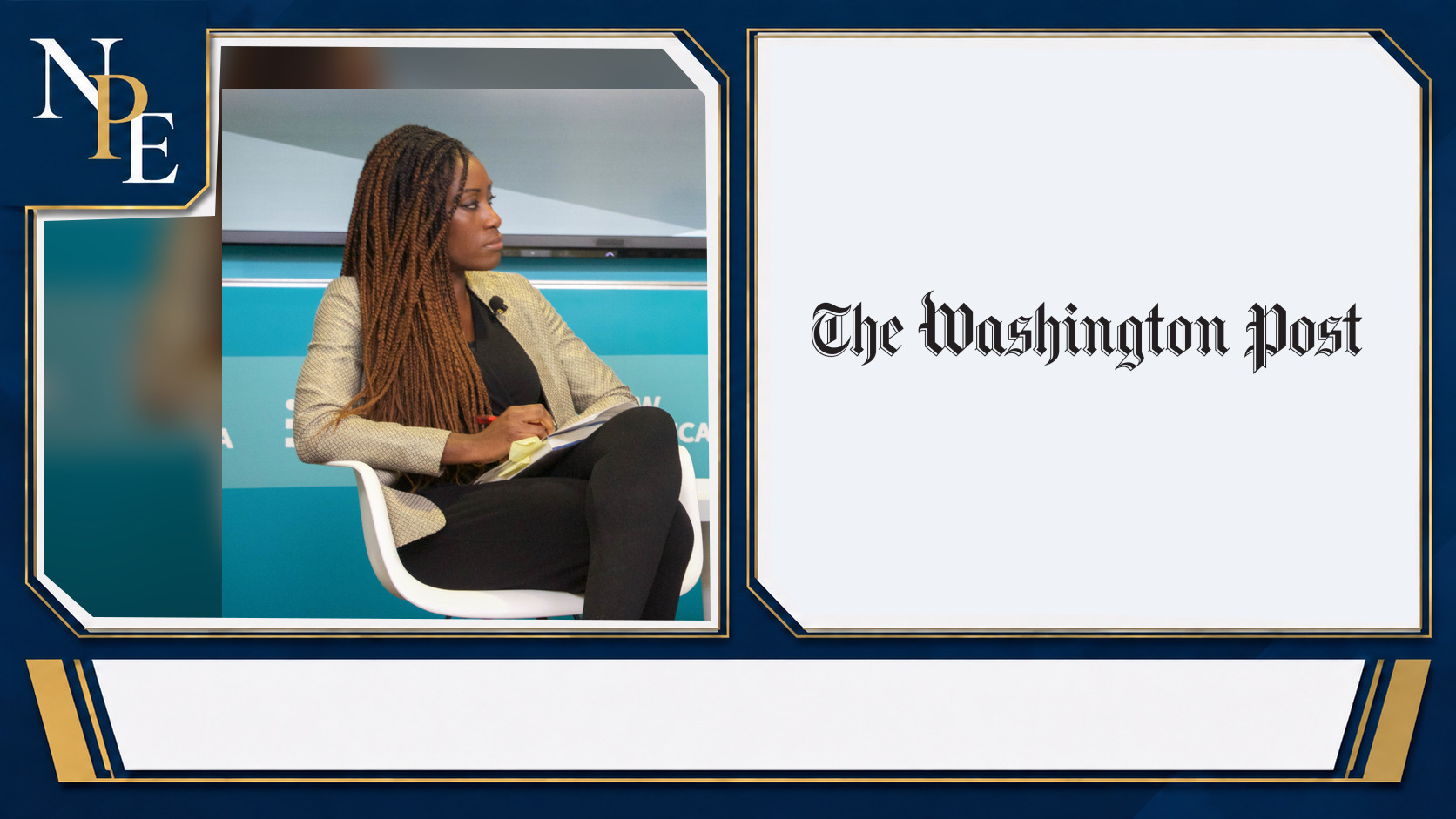
The decision gives Karen Attiah her job back after a year-long dispute and puts a fresh focus on newsroom social-media rules, union contracts and the limits of employer discipline.
An arbitrator ordered The Washington Post to reinstate Karen Attiah, a Black opinion writer fired over social media posts about Charlie Kirk after the conservative activist’s killing. The arbitrator found the newspaper lacked sufficient cause to terminate Attiah and ordered full back pay and lost benefits.
The ruling, issued Thursday by arbitrator Sarah Miller Espinosa, turns a high-profile newsroom firing into a test of what social-media policies can—and cannot—support under a union contract. Attiah says she has been ordered reinstated immediately; the scope and timing of her return were not clear in the reporting available.
The arbitration ruling in brief
Espinosa concluded that The Washington Post did not prove Attiah engaged in gross misconduct, according to the Associated Press. The ruling said the company did not have good and sufficient cause to end her employment.
That finding matters because Attiah’s dismissal was not decided simply through an internal newsroom review. It went through arbitration under the collective bargaining agreement covering the newspaper’s unionized employees.
The remedy was consequential: reinstatement, full back pay and lost benefits. In workplace disputes, those terms are intended to put an employee as close as possible to the position they would have held if the improper termination had not occurred.
Posts followed Charlie Kirk’s killing
Attiah, a founding global opinions editor at the Post and its only Black female opinion writer at the time, posted on Bluesky after Kirk was killed during a public appearance at Utah Valley University on Sept. 10 of the previous year.
Her posts addressed public mourning, race and what she described as the danger of excusing violent white men. They did not celebrate Kirk’s death, based on the AP account of the posts and the arbitration dispute.
Kirk, 31, founded Turning Point USA and became a prominent conservative media figure, podcaster and ally of President Donald Trump. His death triggered strong reactions across the political spectrum—and professional consequences for some people whose public comments about him were judged offensive or inflammatory by employers.
That charged backdrop is central to understanding the case. Attiah’s speech came amid raw grief, political anger and heightened concerns about threats against journalists and public figures.
Why the Post fired Attiah
The Post sent Attiah a termination letter on Sept. 11, accusing her of gross misconduct. The company said her public comments violated its social-media policies, harmed the organization’s integrity and could endanger staff safety, according to the AP.
News organizations have legitimate reasons to set standards for employees’ public conduct. Opinion journalists, in particular, may be closely identified with their employers even when they are speaking from personal accounts.
But a social-media policy is not a blank check. In a unionized workplace, an employer generally must also meet the disciplinary standard negotiated in the contract. Here, the arbitrator found the Post had not met that threshold.
The ruling does not erase the underlying disagreement over Attiah’s words or require readers to see them the same way. It does establish that the company’s stated rationale was insufficient under the applicable labor agreement.
A dispute over speech and standards
Supporters of Attiah are likely to see the decision as a warning against punishing journalists for politically unpopular speech, especially speech touching on race and violence. Attiah called the outcome a victory for journalists after announcing the decision on Instagram.
Others may argue that employers must retain room to respond when an employee’s public remarks create safety concerns or damage trust in a news brand. The Post’s original letter framed the matter in exactly those terms.
The tension is not easily resolved by broad slogans about free speech. Private employers are not government actors, and workplace speech rules can be enforceable. At the same time, employers with union contracts must apply those rules consistently and show adequate cause when imposing the most severe penalty: firing.
For opinion writers, the distinction can be especially difficult. Their jobs involve arguments, judgments and controversial subjects, while their employers also expect conduct that protects colleagues and the institution.
Race and representation sharpened the case
The case also drew attention because Attiah was the last Black full-time member of the Post’s opinion desk when she was fired, according to the AP. Her position made the dispute about more than one employee’s posts.
Newsrooms have long faced scrutiny over who gets to shape public debate, which voices are treated as authoritative and whether standards are applied evenly when writers address race, politics and power.
Those questions do not determine an arbitration outcome on their own. Still, they explain why Attiah’s dismissal drew wider attention and why her reinstatement has resonated beyond the Post.
What remains unresolved at the Post
The central legal-employment result is clear: Attiah must be reinstated and compensated for lost pay and benefits. The reporting did not establish when she will return, what role she will hold or whether The Washington Post will challenge any part of the award.
It is also unclear whether the newspaper will revise or clarify its social-media guidance after the ruling. Employers often revisit internal rules after a dispute exposes ambiguity between policy language and contractual discipline standards.
For now, the decision is a concrete reversal for Attiah and a reminder that a controversial firing can face a second, more formal assessment. The question was not whether everyone approved of her posts; it was whether The Washington Post had sufficient contractual cause to fire her. The arbitrator’s answer was no.
Leave a Reply