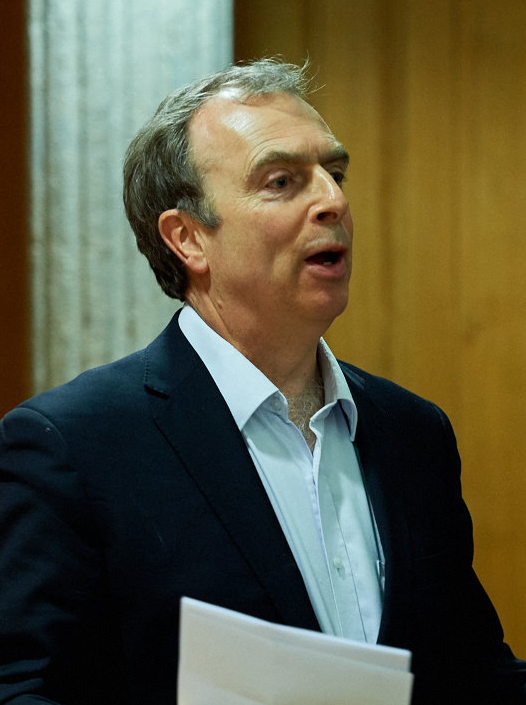
The British commentator’s new video column is less about one insult than about a wider political habit: treating Trump as spectacle while avoiding the harder question of power.
Peter Hitchens says Donald Trump is dangerous and worrying, and in a Daily Mail video column published July 30, 2026, he asks why people in media, politics and international circles do not stand up to Trump. Hitchens rejects the familiar charge that he has “Trump Derangement Syndrome,” arguing instead that the real problem is a reluctance to confront the President of the United States seriously.
The piece matters because it turns a common Trump-era insult back on its users. Hitchens is not asking why Trump has critics. He is asking why so many people who find him alarming still behave as if the safest response is mockery, silence or diplomatic evasion.
Hitchens turns the charge around
The published text accompanying Hitchens’s video is brief, but the core claim is blunt. He says he has been accused many times of having “Trump Derangement Syndrome,” which he describes as an insulting suggestion that his worry about Trump reflects something wrong with him.
His answer is to reverse the diagnosis. According to Hitchens, the problem lies with “many people in the media, in politics and in the international world” who, in his view, will not stand up to an “increasingly dangerous and worrying person.”
That is a sharper argument than a routine anti-Trump complaint. Hitchens is not only criticizing Trump. He is criticizing the ecosystem around him: commentators who reduce him to entertainment, politicians who calculate around him, and international actors who may decide that accommodation is less costly than confrontation.
Why this lands beyond Britain
Hitchens is a British commentator, but his target is not only Britain’s political class. His language points to a wider Western dilemma: how governments and institutions should deal with a U.S. president whose supporters see him as disruptive and necessary, while detractors describe him as unstable, authoritarian or reckless.
That same tension appeared in a BBC Moral Maze episode titled How should Britain deal with Donald Trump? The BBC framed the choice facing Britain as whether to emphasize friendship in hopes of influence in Washington, or to stand up to Trump knowing that it could damage relations.
The BBC program also set the debate against Ukraine, Gaza and an unstable global order. It noted that Trump’s supporters argue ending war can be the moral priority, even if peace involves painful concessions, while critics question whether Trump is a rational actor on the world stage.
That context helps explain why Hitchens’s column is not just about tone. It is about whether allied governments, media institutions and political leaders treat Trump as a negotiator to be managed, a democratic mandate to be respected, or a risk that requires open resistance.
The insult that shuts debate
“Trump Derangement Syndrome” has long functioned as a political shortcut. It suggests that criticism of Trump is not rooted in evidence or principle, but in hysteria, class disdain or partisan obsession.
Hitchens’s move is to reject that shortcut before making his case. He is saying, in effect, that alarm can be rational. A critic can dislike Trump’s conduct without being irrationally consumed by him.
That distinction matters because the phrase can discourage specific argument. If every objection is dismissed as derangement, then there is less need to answer the substance: conduct in office, foreign policy choices, treatment of allies, rhetoric about opponents, or pressure on democratic norms.
There is also a fair counterpoint. Some Trump supporters believe the label captures a real phenomenon: critics who interpret every gesture as catastrophe and refuse to acknowledge why voters support him. Hitchens’s challenge is strongest where it avoids reflex and focuses on the conduct he believes others are refusing to face.
Pragmatism versus moral lines
The hardest question in Hitchens’s argument is not whether Trump should be criticized. It is what “standing up” actually means when the United States remains central to Western security, finance and diplomacy.
For a British prime minister, European leader or foreign secretary, moral clarity can collide with practical dependency. Public confrontation may satisfy domestic critics but reduce access to Washington. Private persuasion may preserve influence but look like cowardice. Silence may avoid a diplomatic fight while normalizing behavior that should have been challenged.
The BBC’s framing captures that split: when is it better to be pragmatic than principled, and when should moral conviction outweigh realpolitik? Hitchens appears to be arguing that the balance has tipped too far toward caution.
That does not settle the policy question. Leaders have to decide whether confrontation would change Trump’s behavior or simply harden it. They also have to weigh the voters who support Trump and see foreign criticism as proof that entrenched elites fear a president willing to break old rules.
Stop treating Trump as spectacle
Hitchens’s most memorable line is also the cleanest summary of his warning: “Stop pretending Trump is a joke. It’s time to take it seriously.”
That sentence points to a media problem as much as a political one. Trump has often been covered as drama, performance and outrage cycle. The jokes, clips and insults can keep audiences engaged while flattening the stakes into personality combat.
For Hitchens, the danger is that ridicule becomes a substitute for judgment. If Trump is treated mainly as absurd, then his decisions and the incentives around him may not receive the scrutiny given to a more conventional leader.
Yet there is a trap on the other side, too. Treating every Trump statement as a historic emergency can exhaust readers and voters. The harder editorial task is to separate spectacle from consequence: which actions alter policy, pressure institutions or affect allies, and which are noise.
What remains unclear
Because the Daily Mail item points readers to a video, the short published text does not lay out a full program for what Hitchens thinks governments or institutions should do next. The broad demand is clear; the practical steps are not.
That unanswered part is central. Standing up to Trump could mean tougher public language, coordinated allied pressure, refusal to normalize certain claims, sharper media scrutiny, or political opposition at home. Each path carries different costs.
Hitchens’s argument is most useful as a challenge to complacency. It asks whether people with power are minimizing Trump because they approve of him, fear him, profit from the spectacle, or simply hope the problem can be managed without confrontation.
The takeaway is not that every critic of Trump is right, or that every supporter is ignoring danger. It is that dismissing concern as derangement can become an excuse not to judge the conduct itself. Hitchens is demanding that judgment now.
Leave a Reply