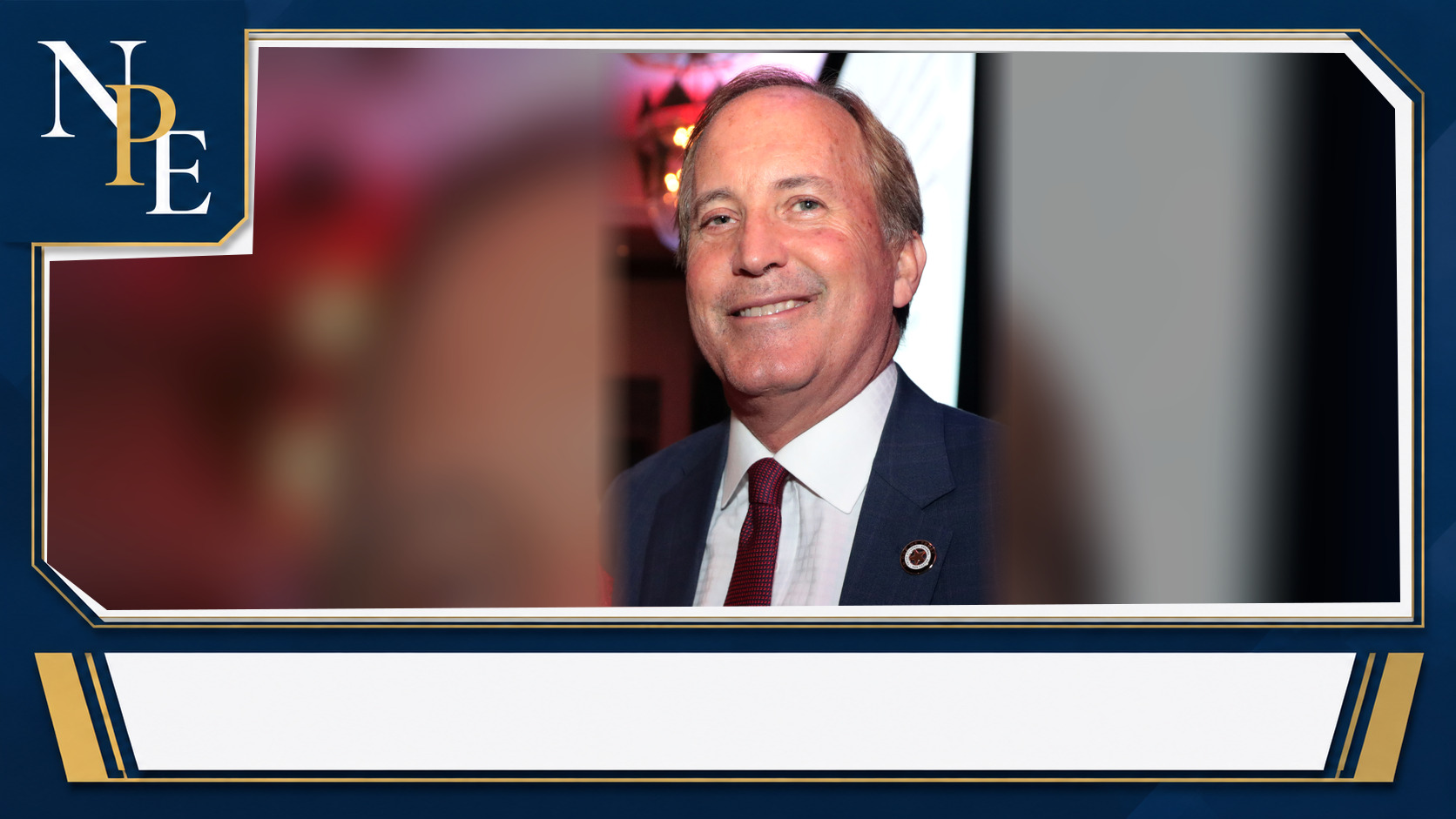
Paxton’s proposal puts electricity prices, rural development, water use and AI safety into one Texas political fight. The plan is still a set of proposed actions, leaving key questions about authority, enforcement and its effect on new projects.
Ken Paxton unveiled a four-point plan to curb data center growth in Texas, framing the proposal around Chinese technology, AI safety, electricity costs and rural community protections. Announced Aug. 24 as the Texas attorney general campaigns for the U.S. Senate, the plan aims to curb data center growth in Texas without laying out a single statewide halt on construction.
Instead, Paxton’s Texas First Data Center Plan combines proposed federal legislation with support for Gov. Greg Abbott’s state-level approach. It arrives as fast-growing demand for AI computing has made data centers a flashpoint over who pays for new power, how facilities affect nearby residents and whether Texas can expand the industry without adding strain to its grid.
Four proposals, not one ban
Paxton’s announcement bundles together four distinct policy moves. Some would require Congress to act, while others depend on Texas lawmakers and the governor’s agenda.

- Chinese technology: Paxton said he would introduce legislation barring Chinese technology from powering American data centers or being used in their infrastructure.
- AI safety: He said he would pursue legislation making data-center companies criminally liable if their facilities empower AI chatbots that undermine children’s safety.
- Electricity costs: He said he would co-sponsor the federal DATA Act, Senate Bill 3585, introduced by Sen. Tom Cotton of Arkansas. The measure is intended to change federal rules and create power systems intended to keep data centers from raising electricity costs for Texans.
- Texas siting and infrastructure: Paxton said he would back Abbott’s state plan, including limits on AI data centers in rural neighborhoods and requirements intended to address noise, lighting, traffic, water and grid impacts.
The framing matters. A data center is not simply a warehouse full of computers: large facilities can require major power connections, land, transmission work, cooling systems and local infrastructure. Paxton’s plan treats those pressures as parts of the same policy problem.
Rural communities are central
The state-level portion of the proposal is the clearest response to concerns from residents near potential projects. Paxton endorsed prohibiting the construction of AI data centers in rural Texas neighborhoods, though the announcement did not define which places would qualify or how a prohibition would be applied.
It also calls for what Paxton described as best practices: setbacks, noise-reduction technology, light controls, traffic improvements and emergency coordination during high-stress grid conditions. Those details point to the everyday issues that can turn an economic-development project into a local dispute.
Supporters of tougher siting rules argue that communities need enforceable safeguards before large facilities arrive. Developers and local officials who favor expansion may counter that broad location restrictions could make it harder to attract investment, tax revenue and construction jobs, especially in places seeking new employers.
The key distinction is between a project-specific local fight and a statewide rule. The announcement signals support for stronger guardrails, but it does not specify the permitting system, agency oversight, exemptions or penalties that would determine whether those guardrails have real force.
The grid is the economic fault line
Texas has become a major destination for data-center development, and the rise of AI has sharpened concerns about how large new users will affect power supply and household bills. Paxton’s plan says data centers should fund their own electricity needs and add to Texas electric capacity rather than detract from it.
That principle could be politically attractive across ideological lines. Residents worried about reliability and rising bills may welcome a requirement that major users shoulder more of the cost of serving their facilities. At the same time, the details matter: electricity planning involves generators, transmission providers, regulators, utilities, market rules and long construction timelines.
Paxton also backed repealing sales-tax exemptions and other incentives described as outdated. For critics, that is a question of whether public subsidies are still justified for an industry with enormous capital demands. For industry advocates, incentives can be part of the competition among states for major technology investments.
The proposal additionally calls for closed-loop water systems for cooling. That provision addresses another point of local concern, particularly in areas where water availability is already politically sensitive. The announcement does not say how such a mandate would work for existing facilities versus future projects.
Security and AI claims widen the debate
Two parts of Paxton’s agenda go beyond land use and electricity. One would prohibit Chinese technology in American data centers and related infrastructure, tying the issue to national-security concerns.
The other seeks criminal liability for data-center companies when facilities are used to power AI chatbots that undermine children’s safety. That is a sweeping idea because data-center operators typically provide computing infrastructure rather than build the consumer-facing software people use.
Any legislation would need to define what conduct triggers liability, what it means for a chatbot to endanger a child, and how responsibility would be divided among infrastructure providers, cloud companies, AI developers and app operators. Those unanswered questions could determine whether the proposal becomes a targeted safety measure or a much broader liability regime.
Paxton said his plan would protect Texas land, families and communities while ensuring data centers are not used to power AI platforms that endanger children. The policy argument joins issues that are often debated separately, potentially broadening its political appeal while making the eventual legislation more complicated.
Critics focus on Paxton’s record
The announcement landed in the middle of Paxton’s Republican U.S. Senate campaign and drew an immediate response from his Democratic opponent, state Rep. James Talarico. Talarico accused Paxton of reversing course after accepting industry-linked donations and supporting tax benefits that encouraged data-center growth.
Talarico also said Paxton had not acted on requests from two rural Texas counties that sought guidance earlier in the year on whether they could stop local data-center construction. According to the Houston Chronicle, cited by USA TODAY, Paxton’s office had not issued an opinion on those requests as of Aug. 24.
A Texas Democratic Party spokesperson made a similar argument, saying Paxton had supported data-center tax breaks without regulations. Those are political accusations from Paxton’s opponents, not findings in the announcement itself, but they highlight the central credibility fight around the new plan.
Paxton presents the proposal as a response shaped by conversations with Texans and national-security experts. His critics say the question is not whether new rules sound appealing, but why his office did not move earlier when communities raised concerns.
Legislation will decide its impact
For now, the Texas First Data Center Plan is a policy blueprint rather than enacted law. Its federal elements would require congressional action, and its state-level changes would depend on the Texas Legislature, the governor and the specific bills ultimately filed.
The next test is whether the broad commitments become precise standards: where AI data centers can be built, who pays for added grid infrastructure, how water rules apply, what technology is prohibited and when a company could face liability for AI-related harm.
Texas is trying to balance two goals that can collide: remaining a major hub for computing investment while protecting communities and the power system from the costs of rapid growth. Paxton’s four points put that tension at the center of his Senate campaign. The legislative language, if it arrives, will show whether the plan can do more than define the debate.
Leave a Reply