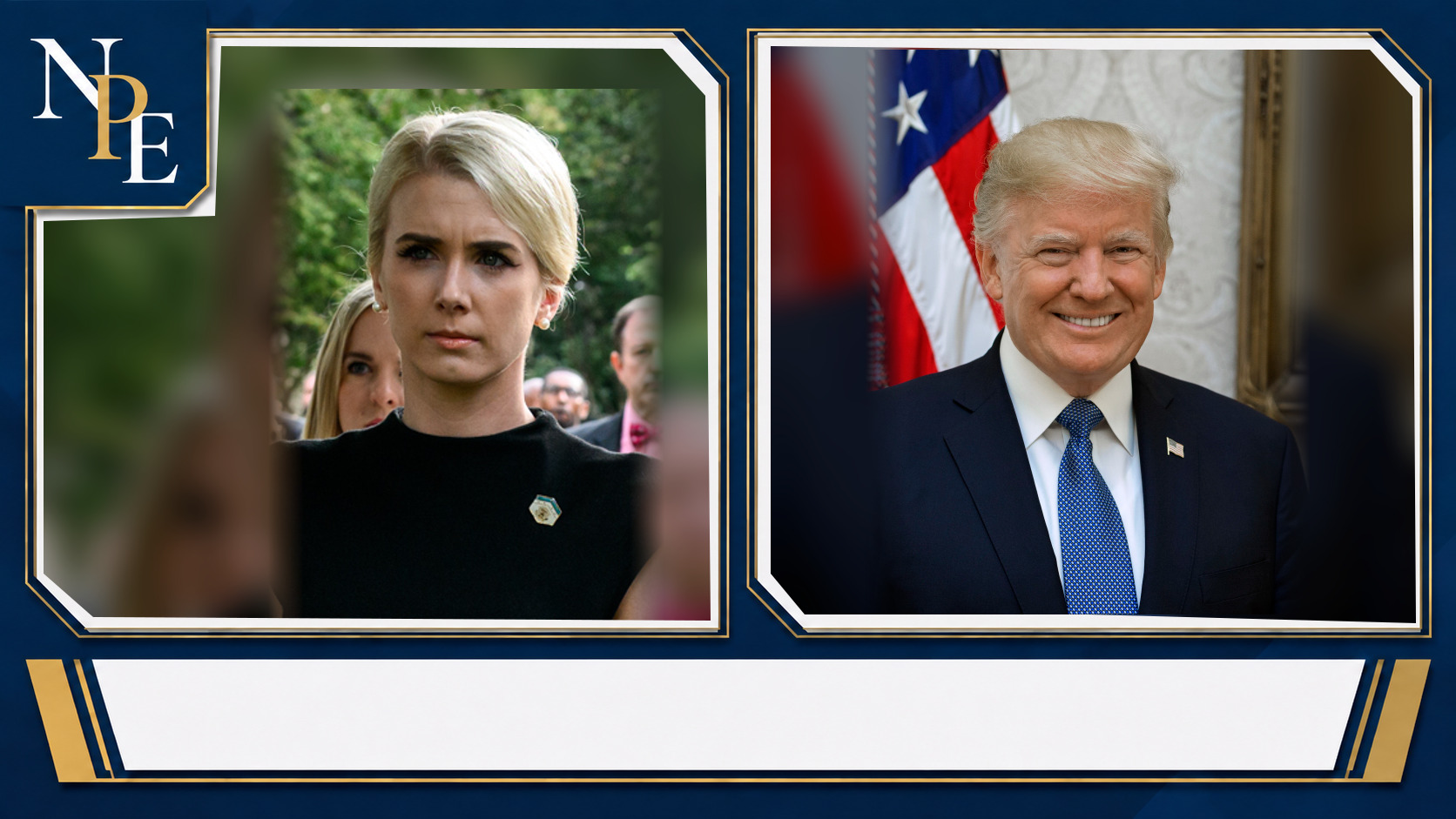
A golf-course appearance may look routine, but it adds to the growing public record of Harp’s close proximity to the president. Her visibility has prompted new attention to how influence works inside Trump’s White House.
Natalie Harp accompanied President Donald Trump on a golf course in what The Independent described as another golf-course outing involving the Trump aide and the president. The reported appearance matters because Harp has become one of the most visible people in Trump’s immediate circle, even though much of her work happens outside public view.
The available report does not identify the course, date or purpose of the outing. Still, the sighting fits a broader pattern: Harp is frequently at Trump’s side during travel, meetings and private time, making her proximity a continuing point of interest in Washington.
A familiar figure beside Trump
Harp’s presence on another golf course is not, by itself, a policy announcement or an official White House event. It is a small public detail that reinforces a larger impression of an aide who is often close to the president wherever he goes.
The New York Times recently described Harp, 35, as a West Wing aide and a major gatekeeper around Trump. In an Aug. 18 report based on interviews with people familiar with her role, the newspaper said she works from the Oval Office, travels on Marine One and helps handle information flowing to the president.
That reporting helps explain why a seemingly casual outing draws attention. Access to a president is one form of influence, especially when an aide is present beyond formal meetings and scheduled public appearances.
Why a golf outing draws scrutiny
Presidents have long used golf courses and other private settings for downtime, fundraising, relationship-building and informal conversations. A person regularly included in those settings may be able to hear concerns, reinforce messages or flag issues before they reach a larger staff process.
There is no indication in the available reporting that Harp made decisions or conducted official business during this particular golf-course outing. Nor is there a public account of who else attended or what was discussed.
But visibility can shape perceptions. For supporters, a trusted aide staying close to the president can signal discipline, loyalty and a direct line to the person elected to make final decisions. For critics, the same arrangement can prompt questions about whether informal access is outweighing traditional channels of advice and review.
Harp’s role has drawn attention
Harp has received growing attention because her role appears to extend beyond the narrow public profile of many White House aides. The Times reported that she is involved in drafting social-media posts with Trump and communicating on his behalf, while portraying her as a conduit of information operating outside the usual chain of command.
Those descriptions are based on reporting, not a formal public job description. Harp did not respond to the Times’ request for comment, according to that article, and the White House has not publicly laid out a detailed account of her responsibilities in the material available here.
That lack of a clear public blueprint has fueled competing interpretations. Allies have defended Harp amid political criticism, with some casting scrutiny of her as sexist. Detractors have focused on whether a largely behind-the-scenes aide has acquired an unusually expansive role around the president.
Access is power in any White House
Every White House has gatekeepers. Chiefs of staff, senior advisers, schedulers and communications aides all influence which information arrives at the Resolute Desk, when it arrives and how it is framed. A president’s confidence in an aide can matter as much as an organizational chart.
The distinction in Harp’s case is the reported breadth of her access. The Times said she has a regular place on Marine One and is present in the Oval Office, while recent public images and reports have repeatedly placed her near Trump during high-profile travel and events.
That does not establish that Harp has authority equal to Cabinet officers or Senate-confirmed officials. It does underscore a basic reality of presidential politics: proximity can create influence without a title that fully captures it.
The facts still not public
The Independent’s golf-course report establishes the central point that Harp was again alongside Trump during an outing. The available source material does not establish whether the visit was personal, political, official or business-related, and it does not detail any government work performed there.
Those gaps matter. It is easy for observers to turn a photograph or a brief sighting into a larger claim about power, but public appearances alone cannot reveal the substance of private conversations or the limits of an aide’s authority.
At the same time, repeated appearances can be meaningful when viewed alongside reporting about an aide’s daily access. Harp’s role is attracting notice not simply because she was seen at a golf course, but because the outing is another visible example of her close place in Trump’s orbit.
What the appearance signals now
The immediate takeaway is modest but clear: Harp remains a consistent presence around Trump, including during time away from the formal setting of the White House. That makes her an increasingly important figure to watch as the administration’s internal hierarchy and decision-making habits come into sharper focus.
Whether that visibility reflects a durable institutional role, a uniquely personal trust relationship or both remains unclear. For now, another golf-course appearance adds one more public data point to the story of an aide whose influence is being debated precisely because she is so often nearby.
Leave a Reply