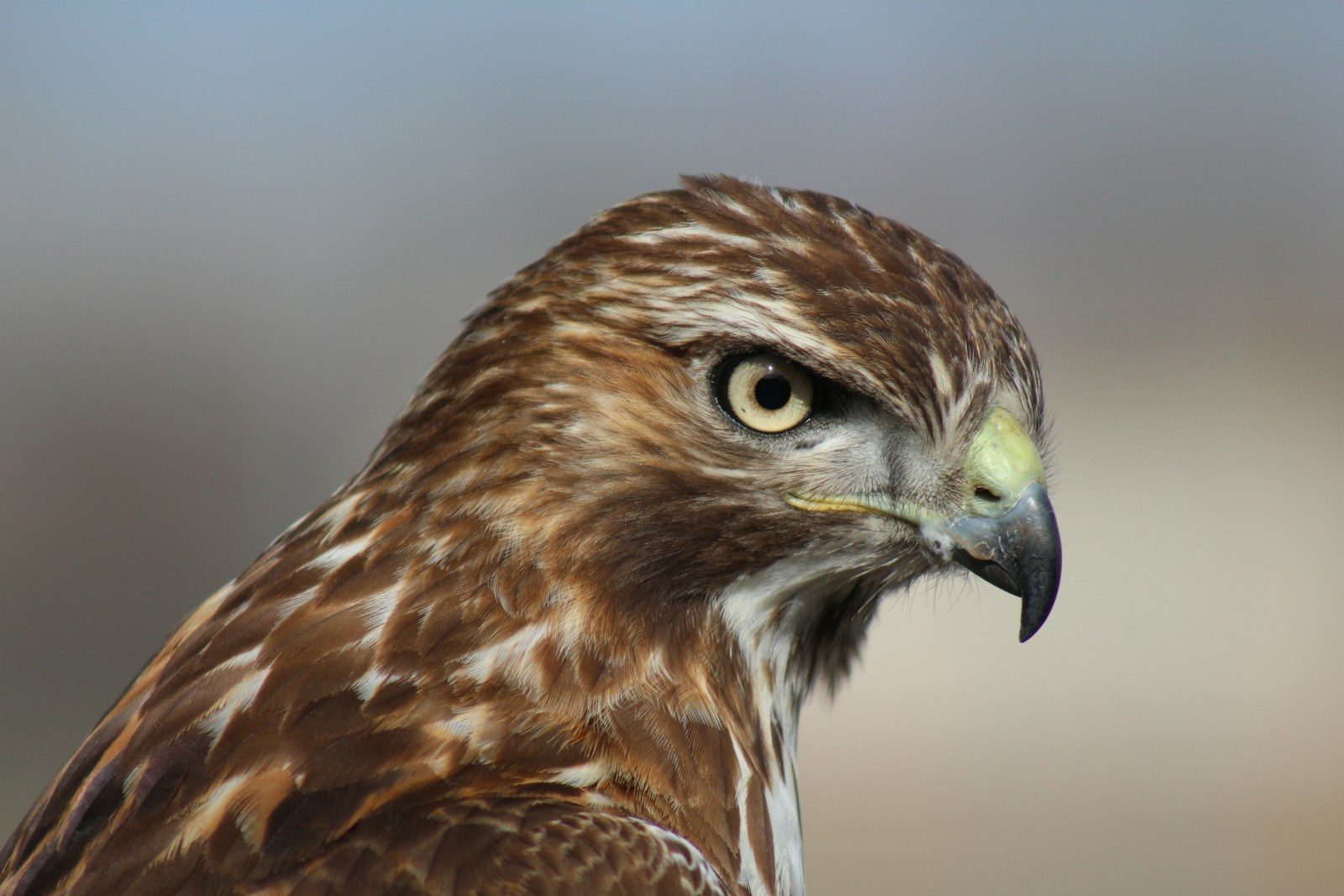
A startling sight above a New York street turned an ordinary phone call into a wildlife emergency. The episode also shows why people should call trained responders—not attempt a risky rescue themselves—when a raptor is stranded near power equipment.
Nancy Nix abruptly ended a phone call with her sister this past July after spotting a hawk trapped above her in New York. The hawk was hanging upside down from the top of an electric pole, and Nix sought help from local authorities and WNY Raptor and Wildlife Care, where wildlife-care expert Bernie C. responded to the emergency.
The encounter began with a frightening image: a wild raptor clinging precariously near electrical equipment, beyond the reach of a bystander. What happened next matters because an animal in visible distress can trigger an understandable impulse to intervene, yet power poles and injured birds of prey are both situations that call for trained help.
A phone call became an emergency
Nix was speaking with her sister when she noticed the hawk overhead, according to the account shared about the incident. Rather than continue the conversation, she ended the call and focused on getting assistance for the bird.
The key detail was not simply that a hawk had landed somewhere unusual. It was reportedly trapped upside down at the top of an electric pole, a position that suggested it could not easily free itself.
That distinction is important. Wildlife officials often advise people to give wild animals space when they appear alone, because many healthy young animals are temporarily unattended by parents. A bird visibly stranded on utility infrastructure is a different kind of concern: it may require specialized assessment and equipment.
Why the electric pole changed everything
A utility pole is not a place for an untrained rescue attempt. The electrical hazard is obvious, but there are other risks as well: climbing equipment can fail, traffic may be nearby, and a frightened hawk can defend itself with sharp talons and a hooked beak.
For the bird, panic can make a difficult situation worse. Attempts to pull, grab or startle a trapped raptor from below could cause additional injury or make it lose whatever purchase it still has.
That is why Nix’s decision to seek outside help was the consequential part of the episode. Her role was not to physically remove the hawk. It was to recognize that the situation had moved beyond what a passerby should handle and to alert people positioned to respond.
Wildlife care expertise was needed
WNY Raptor and Wildlife Care and Bernie C. became part of the response after Nix reached out for help. The available account identifies them as the wildlife-care contacts involved, though it does not establish the bird’s medical condition or provide a detailed public accounting of the rescue’s final outcome.
That uncertainty is worth keeping in view. A dramatic wildlife incident can spread quickly because the first images are compelling, while the operational details—whether a utility crew was needed, how the bird was removed, and what evaluation followed—may not be released right away.
Still, the response reflects a basic principle behind licensed wildlife rehabilitation. State wildlife agencies generally require rehabilitators to meet training, facility and veterinary-support standards before caring for wild animals.
South Dakota Game, Fish, and Parks, for example, says prospective wildlife rehabilitators must meet qualifications, work with a licensed veterinarian as needed and maintain suitable facilities. Those rules are state-specific, but they illustrate why wildlife care is typically handled by trained, permitted professionals rather than well-meaning residents.
When helping can create more risk
The instinct to help a struggling animal is a good one. The safest version of that help is often observational: keep a distance, keep children and pets away, note the exact location and contact the appropriate authority.
Wildlife agencies commonly caution people not to capture or feed a wild animal unless they have been directed to do so by officials. Handling can increase stress for the animal, expose people to bites, scratches or parasites, and complicate the animal’s eventual return to the wild.
With a hawk, the stakes are even clearer. Raptors are powerful predators, and their defensive behavior can be dangerous even when they are exhausted or injured. Add electrical equipment to the scene, and waiting for responders is not passive—it is the responsible choice.
- Keep back: Do not climb poles, use ladders or try to dislodge the bird.
- Document safely: Note the pole’s location, nearby landmarks and the bird’s visible condition from a distance.
- Call the right people: Contact the local utility if electrical infrastructure is involved, along with local animal control, a wildlife agency or a licensed raptor rehabilitator.
- Limit the crowd: Keep pets and onlookers away so the bird is not further stressed.
The outcome still needs clarity
Nix’s account offers a useful model for the first minutes of an unexpected wildlife emergency: notice the danger, resist a hazardous DIY response and get the situation to qualified people. Her call for help brought local authorities and wildlife-care expertise into a scenario no bystander could safely solve alone.
What remains unclear from the available reporting is precisely how the hawk was freed, whether it needed rehabilitation and whether it was ultimately released. Those details matter, particularly because a bird that appears intact from the ground may still have injuries caused by entanglement, exhaustion or the fall that can follow a rescue.
For now, the clearest verified takeaway is the chain of action Nix set in motion after looking up and seeing the hawk hanging on above her: she ended the call with her sister, sought help and treated a dangerous scene as a job for responders rather than a personal rescue mission.
Leave a Reply