Melania Trump’s low-profile approach has created room for intense public speculation about the president’s marriage and her role as first lady. The available reporting confirms an unusually limited public schedule, but not the personal conclusions now being attached to it.
Melania Trump has been absent from public view and Washington for what the trend report describes as four weeks, reviving the “Trump missing mystery” around her limited White House presence. An unnamed insider claimed that she has grown apart from Donald Trump, the president, but that personal assertion has not been independently substantiated.
The known facts are narrower: Melania Trump has maintained a notably selective public schedule and has spent limited visible time at the White House. That makes her whereabouts a political and cultural fascination, while leaving major questions about her marriage unanswered.
A visible absence, not a disappearance
Calling a first lady “missing” can turn an absence from public events into something more dramatic than the evidence supports. There is no indication in the available reporting that Melania Trump is missing in a literal sense or that she has been cut off from her family, staff or public responsibilities.
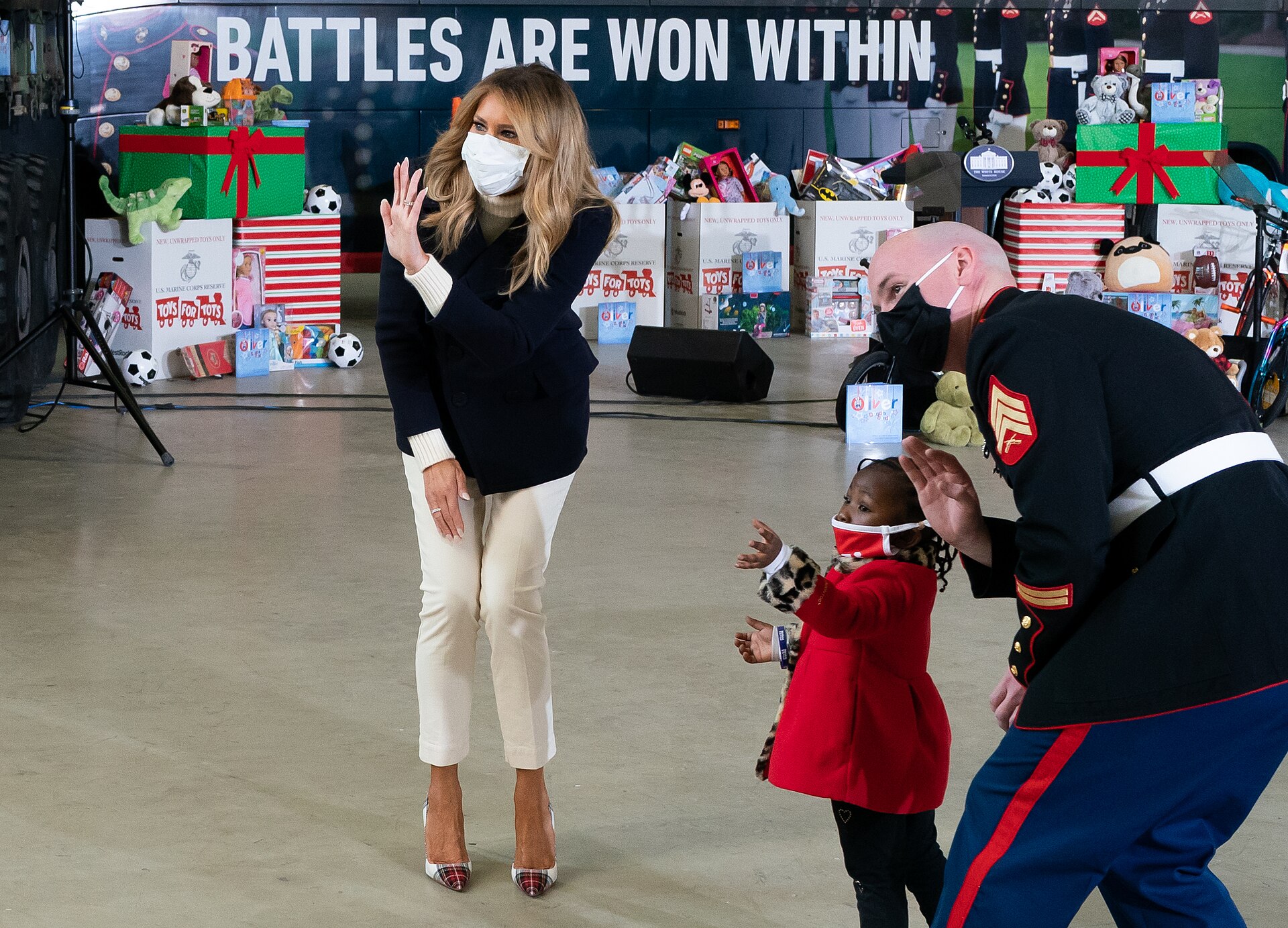
The issue is visibility. Presidents are photographed, quoted and tracked almost constantly; first ladies often have their own official calendars, staffs and initiatives. When that public-facing activity becomes scarce, it creates an information vacuum that political media and social media are quick to fill.
For Melania Trump, this is not entirely new. She has long favored a more guarded public role than many of her recent predecessors, appearing for selected ceremonial events while offering relatively few interviews and limited access to her day-to-day routine.
That history matters because a low public profile can be a personal choice, a scheduling decision, a security consideration or a sign of a different view of the first lady’s job. It cannot, on its own, establish a problem in a marriage.
What the reporting actually shows
A May 2025 report by The New York Times described Melania Trump as spending weeks at a time out of public view, including time in New York and Florida. The newspaper reported that two people familiar with her schedule said she had spent fewer than 14 days at the White House during Donald Trump’s first 108 days back in office.
Administration officials told the newspaper that she was at the White House more often than the public knew, but did not provide a clear public accounting of when or for how long. White House offices declined repeated requests for comment in that report.
Those details support the basic observation that she has had a limited visible presence in Washington. They do not prove why she has spent time elsewhere, whether her private schedule has changed, or what it says about the Trumps’ relationship.
That distinction is central: documented absences from public events are facts; conclusions about a couple’s emotional life require direct evidence that has not been made public.
The anonymous-insider claim
The new claim that Melania Trump has “grown apart” from Donald Trump comes from an unnamed insider cited in the trend item. Anonymous sources can provide useful reporting when they have direct knowledge and when a news organization explains enough about their access, motive and corroboration.
In this case, the material available for review does not identify the person, describe their proximity to the Trumps, provide supporting evidence or show an on-the-record response from Melania Trump, Donald Trump or the White House. That makes the assertion impossible to independently verify.
It is reasonable to report that an unnamed source made the claim. It is not responsible to present that claim as an established account of the Trumps’ marriage.
There are competing interpretations. Critics may see a first lady’s absence from regular Washington life as a meaningful break from convention. Supporters may view it as a deliberate assertion of privacy by someone who has never embraced a traditional, highly visible East Wing role. Both views go beyond the public calendar unless backed by direct evidence.
A first lady with a different model
Melania Trump said in a January 2025 Fox News interview that she expected to be in the White House, New York and Palm Beach as needed. She described her priorities as being a mother, first lady and wife, while saying that public service begins once a president takes office.
Her family circumstances have also changed since Donald Trump’s first term. Their son, Barron Trump, is now an adult and a student in New York, while Melania Trump has maintained ties to both New York and Florida. Reporting has also noted that security concerns have been important to her.
None of those factors settles the question of where she spends most of her time. They do show why a simple comparison with first ladies who lived full-time in Washington can be incomplete.
The White House role itself has no constitutional job description. Some first ladies build public policy portfolios, lead major initiatives and host frequent events. Others take a more ceremonial or private approach. The political consequences can still be real, because the first lady’s public presence often helps shape an administration’s image.
Why the White House gap matters
Public interest in Melania Trump’s schedule is not merely celebrity curiosity. The first lady is a prominent representative of the administration at commemorations, diplomatic events, military-family programs and White House traditions. Her absence changes who performs those functions and how visible the East Wing is.
The Times reported that Donald Trump had taken on some tasks commonly associated with a first lady, including work related to the White House residence and certain public-facing duties. That is a practical sign of a less conventional division of roles, regardless of the couple’s private dynamic.
There is also a transparency question. The public does not need a minute-by-minute account of a first lady’s private life. But when a White House repeatedly offers little clarity about the public role of such a high-profile figure, speculation becomes more likely.
That speculation can be unfair, especially when it turns routine privacy into a presumed personal crisis. Yet the administration’s limited explanation leaves reporters and the public with a small set of visible appearances from which to draw conclusions.
What remains unknown
No public evidence in the available reporting confirms that Melania Trump and Donald Trump have grown apart. The unnamed-insider allegation remains a claim, not a verified finding.
It is also unclear whether the four-week absence cited in the trend report refers to time away from Washington, a stretch without official appearances, or a broader period outside public view. Those are different measurements and should not be treated as interchangeable.
What is clear is that Melania Trump’s limited public presence has become part of the story of this White House. The more officials decline to define her schedule or role, the more an ordinary preference for privacy can become a national mystery.
The responsible takeaway is straightforward: her low visibility is documented; the explanation for it, and the state of the Trumps’ private relationship, remain unconfirmed.
Leave a Reply