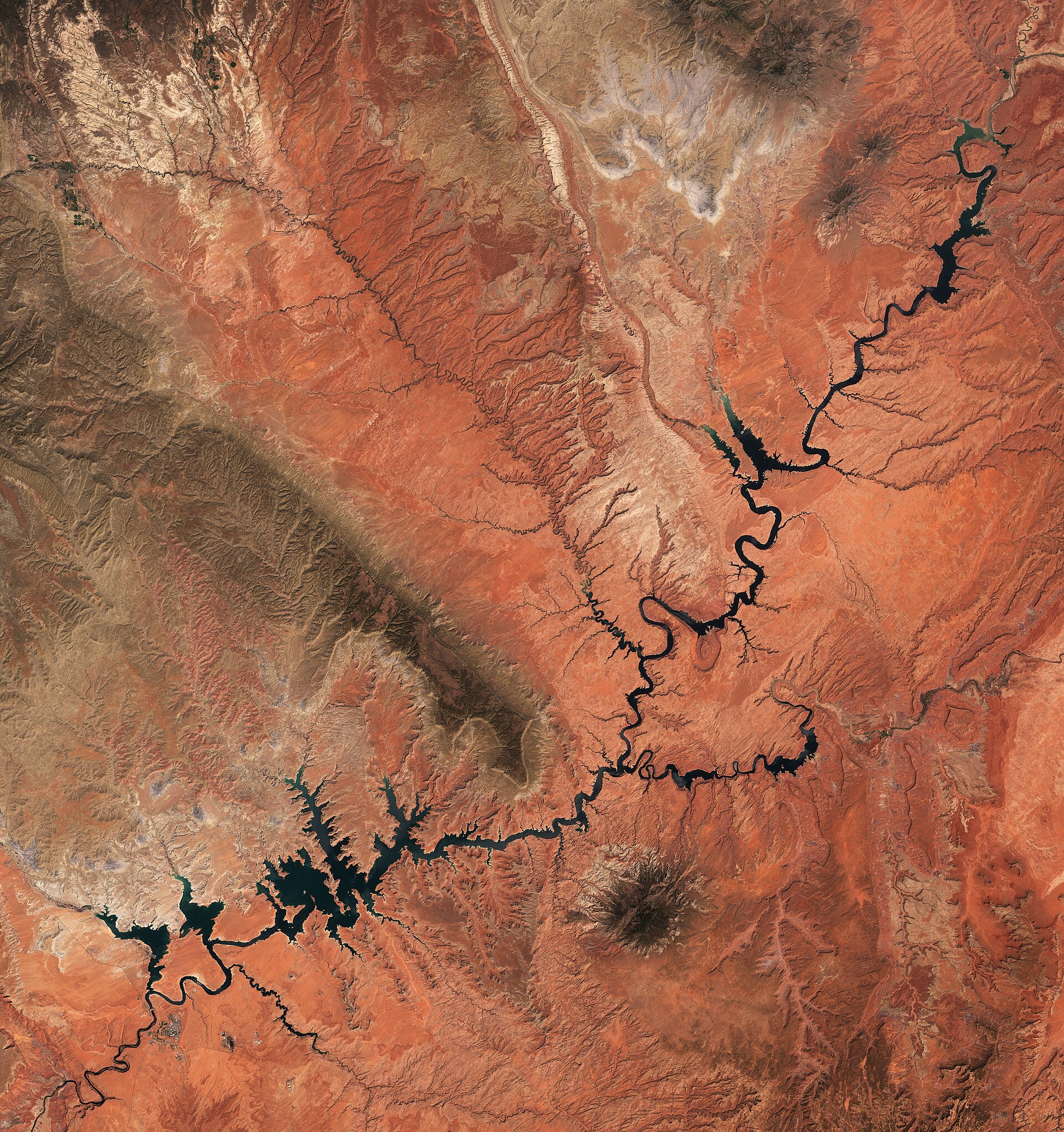
The new record is only a fraction below the previous one, but it highlights how little room remains in a water system serving cities, farms, Tribes and power customers across the West.
Lake Powell fell to its lowest water level on record, reaching 3,519.91 feet on Saturday, as further cuts to Colorado River water use are looming. The reservoir behind Glen Canyon Dam in the Colorado River basin is now less than 30 feet from the level at which hydropower generation becomes impossible, putting Western water supplies and hydropower under closer scrutiny.
The new low, below the 3,519.92-foot record set in April 2023, does not mean taps will suddenly run dry for the roughly 40 million people tied to the Colorado River system. It does show how narrow the safety margin has become for a river that supports the Western United States.
A tiny drop with major meaning
The difference between Lake Powell’s new record and its previous record is just 0.01 foot. On its own, that measurement is small. Its importance lies in what it represents: the reservoir has fallen below a low reached during the Colorado River basin’s severe drought conditions only a few years ago.
Lake Powell is the second-largest reservoir in the United States. Located behind Glen Canyon Dam on the Arizona-Utah border, it was built as a large storage reserve that could release water downstream during dry periods while helping meet legal obligations and water needs.
Reservoirs are expected to move up and down through the year. Snowmelt in spring and early summer can refill them, followed by declines as water is released and used. The concern is not routine seasonal movement; it is that recent gains have not reversed a much longer decline in stored water.
The power threshold is closer
The immediate issue at Glen Canyon Dam is known as minimum power pool. At 3,490 feet, the water pressure would be too low for the dam’s turbines to generate hydropower.
With Lake Powell at 3,519.91 feet, the reservoir is just under 30 feet above that threshold. The dam’s eight turbines have historically produced enough electricity to serve nearly 500,000 households annually, with that power used across Colorado, Utah, Wyoming, New Mexico, Arizona, Nevada and Nebraska.
Hydropower matters beyond the total amount of electricity it generates. Dam operators can adjust production quickly when the grid needs more supply. If that flexible generation were lost, utilities would need other resources to fill the gap, potentially increasing costs or reliance on fossil fuels depending on what is available.
There is an even lower benchmark: dead pool, below 3,370 feet. At that point, water could no longer pass through Glen Canyon Dam downstream in the usual way. Experts cited by CNN said they do not expect officials to allow that outcome without drastic conservation measures, but the warning levels are no longer merely theoretical planning markers.
Two reservoirs hold the system
Lake Powell and Lake Mead are central to the Colorado River’s ability to absorb dry years. In practical terms, they function like linked savings accounts separated by the Grand Canyon. Together, they hold just under 60% of the water currently stored in the Colorado River basin, according to the reporting.
Lake Mead, the nation’s largest reservoir, has also recently reached its lowest level since it was first filled about nine decades ago. When both reservoirs decline, water managers have fewer ways to shift shortages from one part of the system to another.
The river begins in the Rocky Mountains and flows toward Mexico. It supports roughly 40 million people and irrigates more than 5 million acres of farmland across California, Arizona, Nevada, New Mexico, Wyoming, Colorado and Utah.
Source reporting attributes the broader decline to hotter conditions, persistent drought, reduced snowmelt and decades of high water use. The Colorado River has shrunk by roughly 20% since 2000, exposing the difficulty of sustaining water commitments developed during a wetter 20th-century climate.
Shortages will not hit everyone equally
A record-low reservoir is not the same as an immediate drinking-water emergency. Water experts say large cities have spent years preparing for reduced Colorado River deliveries through conservation, groundwater reserves, water banking and alternative supplies.
Phoenix and Tucson, for example, have pursued backup strategies because they know significant reductions are possible. That preparation is one reason experts do not currently expect millions of urban residents to abruptly lose water access.
Those protections are not spread evenly across the basin. Smaller communities and Tribes may have fewer financial resources for costly alternatives, while farms often cannot simply switch to another water source when river deliveries are cut.
That creates a central tension in the debate over conservation. Reducing use can help protect the system, but any new limits raise difficult questions about which users should give up water first and which communities can afford to adapt. Agricultural reductions can also affect food production, rural jobs and local economies.
Federal rules remain unresolved
The seven Colorado River states have struggled to agree on how future reductions should be divided. After years of negotiations did not result in a final deal, federal authorities stepped in and were expected to release a plan outlining required cuts through 2028.
The Bureau of Reclamation and the Department of the Interior have said they remain committed to reducing the risk that Lake Powell and Lake Mead fall below critical elevations. What that pledge means in practice will depend on the eventual rules, changing reservoir conditions and whether states, water districts and users accept deeper conservation.
There is room for cautious optimism if El Niño conditions bring additional rain and snow to parts of the Southwest. But one wet winter would not erase a water shortage built over more than two decades. A strong snowpack may provide breathing room, not a permanent settlement between shrinking supply and long-established demand.
The real test is demand
Lake Powell’s record reading is a signal that the Colorado River system has less cushion before it faces harder choices about electricity, water deliveries and mandatory conservation. The headline number is 3,519.91 feet, but the larger issue is how much room remains before key operations are compromised.
The next meaningful measure will not simply be whether the reservoir rises after a favorable season. The more consequential question is whether the basin can reduce demand enough to protect both Lake Powell and Lake Mead when dry conditions return.
Leave a Reply